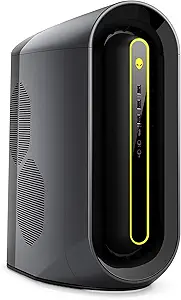
MSI vs Alienware: Overview
Comparing MSI and Alienware helps you determine which brand is best suited for your needs in Prebuilt PC. Both brands offer strong choices depending on your budget and key feature requirements.
Key Features & Comparison
Evaluate factors such as build quality, warranty, customer satisfaction, and total value before making your final purchase choice between MSI and Alienware.
Features
MSI’s feature set is distinguished by the high-caliber motherboard BIOS features and comprehensive suite of proprietary software integrations derived from its standalone component division. Desktops built by MSI feature consumer-grade motherboards that provide unrestrained access to granular BIOS overclocks, precision fan curves, and advanced thermal telemetry via the MSI Center software. Furthermore, MSI excels in native hardware connectivity, typically integrating full-bandwidth PCIe expansion slots, multiple M.2 NVMe heatsink shields, and expansive rear I/O connectivity that includes high-speed USB-C interfaces and robust 2.5GbE networking options right out of the box.
Alienware counters with a feature ecosystem deeply integrated with the Alienware Command Center (AWCC), designed to provide streamlined control over system profiles, audio tuning, and the iconic AlienFX RGB lighting matrix. Alienware machines frequently offer modern wireless innovations, such as low-latency Killer Wi-Fi chipsets, alongside front-accessible port clusters engineered for desktop ergonomics. However, Alienware’s feature sheet is compromised by locked or simplified BIOS interfaces that restrict advanced memory tuning (such as aggressive XMP/EXPO profiles) and a limited number of onboard expansion headers, constraining the addition of auxiliary drive bays, capture cards, or custom liquid-cooling loops.
Performance
In terms of sustained gaming and computational performance, thermal headroom dictates the clear separation between the two manufacturers. MSI systems benefit substantially from high-airflow chassis architectures that accommodate standard 240mm, 360mm, or even larger all-in-one (AIO) liquid coolers alongside unrestricted mesh intake panels. This allows top-tier Intel Core i9 or AMD Ryzen 9 processors and NVIDIA GeForce RTX 40-series GPUs to maintain their peak boost clocks under prolonged heavy workloads without aggressive thermal throttling. Power delivery is similarly robust, utilizing standard gold-rated power supplies capable of handling sharp modern GPU transient power spikes effortlessly.
Alienware has historically struggled with thermal dynamics in its Aurora chassis, owing to compact interior volumes, cramped component spacing, and restrictive airflow channels. While newer iterations like the Aurora R16 have made meaningful strides in reducing noise levels and lowering CPU temperatures through redesigned ventilation, thermal saturation can still manifest during multi-hour render sessions or extended competitive gaming. Alienware’s custom cooling assemblies and restricted fan configurations mean that while burst performance aligns well with baseline component expectations, MSI consistently delivers superior sustained clock speeds and lower acoustic output when under maximum system load.
Design
MSI's industrial design language is firmly anchored in contemporary enthusiast aesthetics, characterized by geometric front fascias, tempered glass side panels, and addressable RGB illumination that integrates smoothly with external peripherals. Because MSI utilizes conventional steel chassis frames with spacious dual-chamber designs, internal component routing is remarkably tidy, emphasizing clean cable management and efficient thermal pathways. While some users might find MSI's designs less experimental, the practical benefit is effortless access to components, universal screw patterns, and zero obstruction when swapping full-length graphics cards or standard power supplies.
Alienware is celebrated for its distinctive, sci-fi-inspired industrial design, often referred to as the 'Legend' design language. Machines like the Aurora stand out instantly with their sculpted, oval silhouettes, stadium-shaped lighting loops, and futuristic aesthetics that cannot be mistaken for generic gaming towers. However, this aesthetic daring incurs severe internal compromises. The interior of many Alienware systems feels congested, often utilizing swing-out power supply brackets and tight cable runs that make user maintenance frustrating. Alienware's exterior is visually arresting and undeniably premium, but MSI’s design remains functionally superior in terms of spatial optimization and cooling mechanics.
Compare current retail pricing, active promotions, and verified stock availability directly from authorized stores: