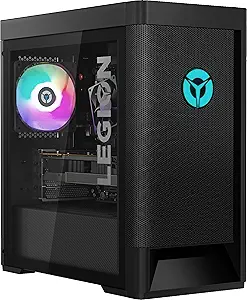
Lenovo vs Ibuypower: Overview
Comparing Lenovo and Ibuypower helps you determine which brand is best suited for your needs in Prebuilt PC. Both brands offer strong choices depending on your budget and key feature requirements.
Key Features & Comparison
Evaluate factors such as build quality, warranty, customer satisfaction, and total value before making your final purchase choice between Lenovo and Ibuypower.
Features
Feature distribution highlights the stark operational differences between the two brands, particularly in BIOS functionality, component provenance, and software integration. iBUYPOWER systems feature mainstream consumer retail motherboards from brands like ASUS, MSI, and ASRock, granting users full access to expansive, unlocked UEFI interfaces. This setup allows hardware tweakers to fine-tune memory profiles via XMP/EXPO, adjust fan curves, and perform precise voltage regulation without OEM firmware restrictions. On the software side, iBUYPOWER leaves the operating system largely unburdened by bloatware, though coordinating RGB illumination often requires navigating multiple disjointed third-party software suites, such as those from the respective motherboard and GPU manufacturers.
Lenovo counterbalances this with a highly cohesive, proprietary feature set unified by the Lenovo Vantage software dashboard. Through Vantage, users can easily access system diagnostics, automated driver deployments, network boost protocols, and coordinated thermal profiles with a single click, catering to users who prefer software stability over granular BIOS tampering. Furthermore, Lenovo Legion towers frequently incorporate thoughtful hardware touches like integrated rear-mounted headphone cradles, robust internal GPU support brackets to combat transport sagging, and clean internal wiring channels. While Lenovo's UEFI environments are typically more locked-down—limiting deep manual memory timing adjustments—their integrated companion tools and native feature consolidation provide a far more seamless user experience for mainstream consumers.
Performance
Performance metrics between iBUYPOWER and Lenovo depend heavily on thermal architecture and power limits applied to standard silicon. iBUYPOWER can theoretically achieve superior peak performance profiles because their systems utilize retail motherboards and widely available AIO liquid coolers or dual-tower air heatsinks that strictly adhere to, or exceed, Intel and AMD power limit guidelines. When configured with high-airflow cases, iBUYPOWER desktops allow processors and graphics cards to maintain sustained maximum boost clocks under continuous synthetic or gaming loads. However, the performance floor can vary based on case selection, as certain entry-level iBUYPOWER enclosures with choked solid-front glass panels cause thermal throttling that degrades hardware longevity and dampens potential frame rates.
Lenovo counters with meticulous, bespoke thermal engineering that guarantees thermal consistency across all Legion configurations. Leveraging custom-engineered vapor chambers, targeted chassis baffles, and high-static-pressure fans, Lenovo’s thermal architectures often yield remarkable thermal dissipation relative to their noise output. While Lenovo may enforce stricter motherboard power limits (PL1 and PL2) on processors to ensure silent operation and component longevity, the real-world gaming performance remains exceptionally stable without the temperature spikes that occasionally plague less airflow-optimized custom rigs. Enthusiasts seeking pure overclocking headroom will lean toward iBUYPOWER, but users who value sustained gaming performance with an acoustically tuned, quiet thermal profile will find Lenovo’s calibrated thermal envelope superior.
Design
The industrial design of iBUYPOWER caters unapologetically to core gaming sensibilities, characterized by expansive tempered-glass enclosures, prominent dynamic addressable RGB arrays, and vivid showcase chassis. Because they utilize standard ATX cases—either third-party designs from manufacturers like HYTE and NZXT or custom-branded variants—the aesthetics scream high-performance boutique. Internal cable management is generally cleanly executed, with visible custom liquid cooling lines and multi-fan arrays displayed prominently. This approach is visually striking for battlestation setups, but the expansive glass and high-profile lighting can feel garish in professional office environments, and larger chassis footprints demand significant desk real estate.
Lenovo adopts a more understated, mature, and functional design language with its Legion line of gaming desktops. Clad in raven black finishes with minimalist accents and an illuminated, subtle Legion icon, these chassis fit seamlessly into a dual-purpose hybrid office and gaming room. The engineering emphasizes utility: structural steel chassis offer exceptional internal rigidity, vented top-and-front bezel matrices maximize linear airflow, and functional integrated carry handles on certain models emphasize transportability. The trade-off is an aesthetic that may feel somewhat pedestrian or industrial to gamers seeking ostentatious showcase builds, but Lenovo’s refined fit-and-finish, tight structural tolerances, and understated lighting deliver a timeless, durable elegance.
Compare current retail pricing, active promotions, and verified stock availability directly from authorized stores: