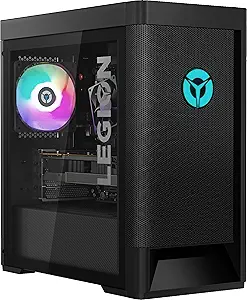
Lenovo vs CyberpowerPC: Overview
Comparing Lenovo and CyberpowerPC helps you determine which brand is best suited for your needs in Prebuilt PC. Both brands offer strong choices depending on your budget and key feature requirements.
Key Features & Comparison
Evaluate factors such as build quality, warranty, customer satisfaction, and total value before making your final purchase choice between Lenovo and CyberpowerPC.
Features
From a feature and software perspective, Lenovo delivers a unified and purpose-built software environment led by Lenovo Vantage. This suite offers consolidated control over hardware diagnostics, fan telemetry, automated network prioritization, and precise power-state tuning, tailored specifically to the unique sensor arrays on Lenovo motherboards. Lenovo desktops often integrate modern connectivity options such as native Wi-Fi 6E/7 with high-gain internal antenna arrays, customized thermal backplates, and intuitive tool-less drive sleds. However, Lenovo's proprietary ecosystem can occasionally constrain features like advanced UEFI BIOS tweaking, where memory overclocking profiles (XMP/EXPO) or voltage offsets may be locked down or limited compared to full-featured retail consumer motherboards.
CyberpowerPC contrasts sharply by omitting intrusive proprietary bloatware, providing clean Windows installations paired directly with standard retail component utilities. Because CyberpowerPC utilizes standard consumer motherboards, users gain unrestricted access to full retail UEFI BIOS environments, allowing for granular adjustments to fan curves, memory sub-timings, CPU voltage limits, and PCIe bifurcation settings. On the hardware side, CyberpowerPC machines typically boast standard ARGB ecosystems controlled via standard 3-pin headers and universal lighting software, extensive chassis expansion with standardized 2.5-inch and 3.5-inch drive cages, and standard ATX power supplies with fully modular cabling. While Lenovo wins on integrated software polish and unified system telemetry, CyberpowerPC leads in low-level platform autonomy and hardware versatility.
Performance
Performance in Lenovo prebuilt PCs is defined by meticulous thermal management, validated power limits, and balanced acoustic performance. In their Legion series, Lenovo frequently designs specialized dual-chamber or cold-front thermal solutions featuring custom vapor chambers, optimized fan ducting, and tailored fin-density radiators that maintain steady boost clocks during prolonged computational and gaming workloads. Lenovo often tunes their systems toward sustainable thermal ceilings, preventing thermal throttling through carefully balanced power curves that sacrifice a negligible percentage of theoretical peak performance in exchange for whisper-quiet acoustics and reduced system wear over extended operational cycles.
CyberpowerPC focuses squarely on maximizing raw compute throughput and unlocking maximum component potential. Because their systems deploy standard retail cooling solutions—ranging from budget tower coolers to 240mm or 360mm all-in-one (AIO) liquid coolers—and high-airflow mesh chassis, they often allow unlocked processors and factory-overclocked graphics cards to sustain their absolute maximum boost frequencies without aggressive power throttling. The trade-off manifests in consistency: low-tier CyberpowerPC configurations may occasionally feature entry-level CPU coolers or basic airflow configurations that generate noticeable fan whine under heavy load. When adequately configured with premium cooling options, CyberpowerPC can outpace Lenovo in raw frame rates and sustained multicore rendering, whereas Lenovo delivers a more predictable, thermally disciplined operational profile.
Design
The design philosophy of Lenovo balances aggressive gaming flair with understated, clean industrial minimalism. Lenovo Legion chassis are engineered from the ground up as bespoke, cohesive units, often featuring clean front-panel ventilation patterns, seamlessly integrated RGB logos, sturdy steel internal sub-frames, and hidden cable routing channels molded directly into the structure. Their industrial design often avoids excessive, sharp geometric gamification, making their towers aesthetically suitable for professional studio environments, hybrid office setups, or living spaces. The interior reveals a clean, purposeful layout, though the custom motherboard shapes and dedicated shroud layouts prioritize factory assembly efficiency over standard ATX layout conventions.
CyberpowerPC champions the enthusiast custom-PC aesthetic, primarily utilizing retail mid-tower and full-tower cases equipped with tempered glass side panels, aggressive front mesh intake grilles, and abundant addressable RGB fan arrays. Their designs celebrate visibility, showcasing internal components such as liquid-cooling tubing, branded graphics card backplates, and illuminated memory modules. While this delivers high visual impact and superior airflow optimization directly to core components, build craftsmanship can vary slightly across production runs, occasionally resulting in less refined rear cable management compared to Lenovo's factory-molded harnesses. CyberpowerPC’s aesthetic is unmistakably gamer-centric and transparent, serving users who want their hardware proudly on display, whereas Lenovo offers a more refined, architecturally cohesive product enclosure.
Compare current retail pricing, active promotions, and verified stock availability directly from authorized stores: