Dell vs Thermaltake: Overview
Comparing Dell and Thermaltake helps you determine which brand is best suited for your needs in Prebuilt PC. Both brands offer strong choices depending on your budget and key feature requirements.
Key Features & Comparison
Evaluate factors such as build quality, warranty, customer satisfaction, and total value before making your final purchase choice between Dell and Thermaltake.
Features
Dell and Thermaltake diverge significantly in their ecosystem integrations, BIOS capabilities, and internal expansion options. Dell’s desktop ecosystem leans heavily into specialized software suites like Alienware Command Center or Dell SupportAssist, which automate driver deployment, basic telemetry tracking, and rudimentary thermal profiles. However, this convenience often comes at the expense of BIOS granularity; Dell motherboards tend to feature locked-down firmware with strict memory speed limitations and sparse voltage or timing controls. Furthermore, Dell systems often incorporate proprietary front-panel connectors and custom motherboard form factors that restrict chassis reusability and eliminate mainstream retail power supply compatibility due to non-standard pinouts.
Thermaltake, by contrast, prioritizes enthusiast-grade feature parity by outfitting its prebuilt systems with standard retail motherboards (frequently sourced from vendors like MSI or ASUS) and its own well-regarded retail cooling components. This grants users access to full-fledged UEFI BIOS platforms equipped with comprehensive overclocking headroom, robust fan curves, and unlocked XMP/EXPO memory profiles. In addition, Thermaltake systems embrace open RGB ecosystems—often driven by standard ARGB headers and controllable via motherboard software or Thermaltake’s TT RGB PLUS software—rather than closed-loop proprietary lighting controllers. The presence of high-efficiency, fully modular Thermaltake power supplies also ensures immediate expansion capability for higher-draw modern graphics cards down the line.
Performance
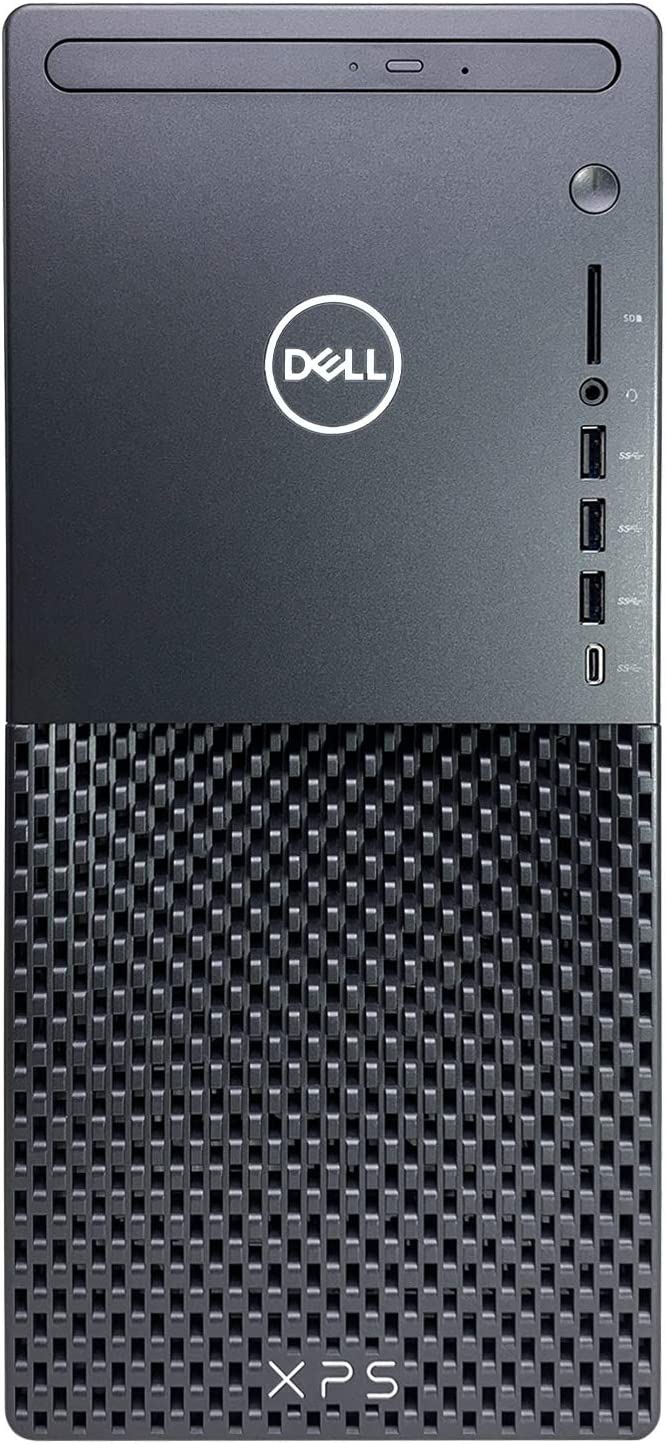
On a silicon-level basis, both Dell and Thermaltake utilize contemporary processors from Intel and AMD alongside the latest graphics architectures from NVIDIA and AMD, but how each manufacturer manages thermal headroom directly impacts real-world performance. Dell has historically faced criticism regarding thermal dissipation in its prebuilt chassis, where compact internal volumes, limited intake venting, and modest proprietary liquid cooling units can result in thermal throttling under prolonged rendering or multi-hour gaming workloads. While Dell has attempted to remediate these issues in recent chassis iterations with expanded perforated surface area, the internal thermal mass remains relatively constrained, which can cause sustained CPU package boost clocks to decline prematurely.
Thermaltake holds a decisive mechanical advantage in thermal dissipation and sustained clock velocity. Because the company specializes in liquid cooling loops, high-static-pressure fans, and airflow-optimized chassis layouts, its systems are engineered to expel heat efficiently out of the chassis. Thermaltake prebuilts often integrate 240mm or 360mm all-in-one liquid coolers with thick radiators, coupled with mesh front panels or dual-chamber designs that completely decouple power supply thermals from GPU and CPU intake air. Consequently, Thermaltake machines typically maintain higher sustained boost clocks under sustained 100% core saturation, experience lower acoustic noise floors due to larger fan sweeps, and yield superior benchmark stability in demanding AAA titles and creative compute workflows.
Design
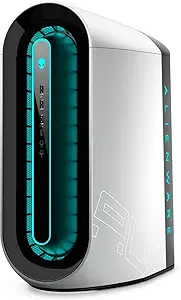
Dell's industrial design ethos is defined by aggressive, futuristic styling—particularly within the Alienware portfolio—characterized by rounded sculptural shells, stadium ambient lighting, and bespoke toolless interior release mechanisms. Dell’s structural chassis are deeply integrated, utilizing stamped steel internal sub-frames enveloped in dense molded plastics. While this creates a recognizable and unified aesthetic that appeals to mainstream buyers seeking a distinct, console-adjacent machine, it often introduces a dense internal layout where cabling is tightly integrated into proprietary channels, making internal maintenance somewhat cramped and aesthetically utilitarian once the side panel is removed.
Thermaltake’s visual and structural design language reflects modern custom DIY trends, highlighted by extensive use of thick tempered glass panels, open-frame chassis variants (such as the Core P-series), and high-visibility panoramic enclosures. Rather than concealing internal components behind opaque covers, Thermaltake highlights the hardware, utilizing clean cable combs, uniform component matching, and expansive internal space that showcases retail-grade cooling blocks and illuminated RAM modules. The physical construction favors serviceability, as all structural panels use standard thumb screws, standard standoff spacing, and standard dust filters. This design ethos results in a system that looks distinctly bespoke, offering the visual craftsmanship and component transparency of a custom-built desktop showcase.
Compare current retail pricing, active promotions, and verified stock availability directly from authorized stores: