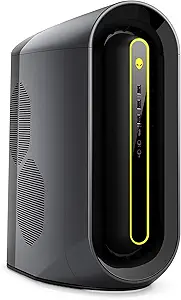
Alienware vs Omen: Overview
Comparing Alienware and Omen helps you determine which brand is best suited for your needs in Prebuilt PC. Both brands offer strong choices depending on your budget and key feature requirements.
Key Features & Comparison
Evaluate factors such as build quality, warranty, customer satisfaction, and total value before making your final purchase choice between Alienware and Omen.
Features
In terms of feature sets and software ecosystems, Alienware integrates deeply with the proprietary Dell infrastructure. The Alienware Command Center (AWCC) serves as the centralized hub for overclocking, thermal profile management, and AlienFX lighting customization. High-end Alienware rigs often feature custom-molded motherboards equipped with specialized daughterboards, advanced liquid cooling configurations, and extensive front-panel I/O arrays tailored to high-bandwidth peripherals. However, this heavy reliance on proprietary components represents a double-edged sword: while out-of-the-box integration is seamless, it severely restricts user-driven motherboard swaps, aftermarket cooler installations, or power supply upgrades down the line.
HP Omen, conversely, distinguishes itself through the Omen Gaming Hub, which strikes a competitive balance between functional telemetry and accessible performance tuning, including undervolting and network boosting tools. The standout feature of modern Omen systems—particularly the 40L and 45L lines—is the commitment to standardized, off-the-shelf components. HP frequently partners with recognized enthusiast brands such as Kingston (Fury RAM), Western Digital (Black SSDs), and Cooler Master for power delivery and cooling. This standard ATX layout gives Omen a distinct edge in user serviceability, toolless entry mechanics, and broad component compatibility, making it far superior for post-purchase expansion.
Performance
Performance delivery reveals stark thermal and acoustic differences between the two brands despite using identical silicon from NVIDIA, AMD, and Intel. Alienware configurations frequently squeeze formidable clock speeds out of flagship components, but historically, their compact and enclosed chassis have struggled with thermal dissipation. Although recent redesigns like the Aurora R16 have significantly improved airflow by abandoning overly restrictive outer shells and optimizing internal fan pathways, sustained thermal throttling under heavy CPU and GPU loads can still emerge compared to roomier desktop towers, often resulting in higher acoustic output from the localized cooling fans.
HP Omen machines, especially higher-tier models featuring the proprietary 'Cryo Chamber' external radiator housing, demonstrate exceptional thermal efficiency and acoustic stability. By isolating the liquid cooling radiator outside the primary chassis chamber, Omen pulls cool ambient air rather than pre-warmed internal air across the fins, resulting in lower CPU temperatures under sustained rendering or gaming workloads. This superior thermal headroom allows Omen systems to sustain higher boost clocks on top-tier chips without excessive fan whine, granting them a measurable advantage in long-term thermal management and quiet operation.
Design
Design is where these two brands diverge most visibly in visual identity and structural intent. Alienware embraces an aggressive, futuristic design language often referred to as the 'Legend' aesthetic. Characterized by sculpted curves, stadium-shaped lighting loops, and an unmistakably sci-fi appearance, an Alienware chassis is designed to be a centerpiece. The internal engineering is remarkably dense, often employing internal swing-out power supply brackets and tightly routed proprietary cabling. While visually arresting from the outside, the internal complexity can make basic cleaning, drive additions, and hardware maintenance considerably more tedious for the user.
HP Omen adopts an understated, modern minimalist aesthetic that integrates comfortably into both dedicated gaming stations and professional office setups. Featuring a clean rectangular footprint, tempered glass side panels, and tastefully subdued RGB lighting accents, Omen avoids the polarizing nature of extraterrestrial styling. Mechanically, the chassis design emphasizes high-volume front-to-back airflow with wide-mesh intakes and completely standard internal spatial layouts. This functional, minimalist approach prioritizes natural airflow channels and effortless interior access, resulting in a cleaner interior layout that is far more welcoming to traditional PC builders.
Compare current retail pricing, active promotions, and verified stock availability directly from authorized stores: