Alienware vs CyberpowerPC: Overview
Comparing Alienware and CyberpowerPC helps you determine which brand is best suited for your needs in Prebuilt PC. Both brands offer strong choices depending on your budget and key feature requirements.
Key Features & Comparison
Evaluate factors such as build quality, warranty, customer satisfaction, and total value before making your final purchase choice between Alienware and CyberpowerPC.
Features
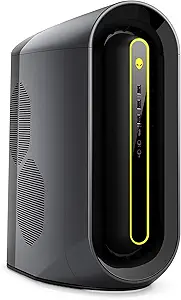
Alienware desktop systems are distinguished by their deeply integrated proprietary feature set, centralized through the Alienware Command Center (AWCC). This software suite gives users precise, unified control over system diagnostics, customized overclocking profiles, fan curves, and coordinated AlienFX per-zone RGB lighting. Furthermore, modern Alienware machines, such as the Aurora series, incorporate custom-tailored liquid cooling configurations with specialized thermal heat exchangers engineered specifically for their distinct chassis dimensions. Dell also augments its feature package with robust enterprise-level add-ons, including premium support tiers, accidental damage coverage, and factory-tuned configurations straight out of the box.
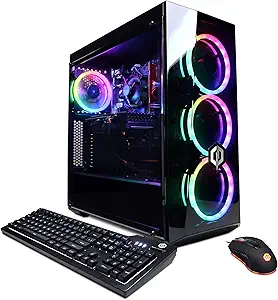
In contrast, CyberpowerPC delivers a feature set defined by open-platform versatility and hardware transparency rather than proprietary software ecosystems. Because they utilize off-the-shelf retail motherboards and standard cooling assemblies, CyberpowerPC rigs afford users full access to native UEFI BIOS settings without manufacturer-imposed thermal or power limits. Builders can leverage industry-standard software like ASUS Armoury Crate or MSI Center depending on the installed components, avoiding proprietary bloatware. CyberpowerPC also features unmatched configurability at the point of sale, allowing buyers to select specific brands and models for GPUs, RAM, liquid cooling radiators, and power supplies, yielding a truly customized build experience.
Performance
Performance delivery in Alienware desktops is deeply intertwined with thermal dynamics and Dell's power management profiles. While Alienware outfits its systems with top-tier silicon from Intel, AMD, and NVIDIA, historically, some iterations of their compact or unconventional chassis designs have faced thermal constraints, requiring aggressive liquid cooling setups and higher fan RPMs to prevent thermal throttling under sustained multi-threaded workloads. Recent revisions like the Aurora R16 have substantially improved thermal surface area and airflow dynamics, ensuring that modern components achieve stable boost clocks and deliver smooth, high-fidelity 4K and high-refresh-rate 1440p gaming performance, though often operating with tighter component spacing.
CyberpowerPC typically demonstrates superior thermal-to-performance efficiency due to its reliance on standard high-airflow enthusiast cases and standard-sized All-in-One (AIO) liquid coolers. By deploying spacious chassis models fitted with mesh front panels and multiple 120mm or 140mm intake fans, CyberpowerPC systems frequently keep ambient internal temperatures lower. This allows GPUs and unlocked CPUs to sustain maximum boost frequencies for longer durations without aggressive acoustic penalties. Furthermore, because CyberpowerPC does not impose proprietary power-delivery restrictions often found on OEM motherboards, hardware enthusiasts can achieve marginally higher baseline throughput and better manual overclocking headroom.
Design
Alienware is globally recognized for its bold, futuristic visual identity, heavily influenced by its proprietary "Legend" industrial design language. Machines like the Aurora boast a striking sci-fi aesthetic with contoured panels, integrated ambient ring lighting, and custom molded tooling that cannot be replicated with off-the-shelf parts. However, this distinct exterior comes at the cost of internal spatial efficiency; internal cabling and chassis structural members are tightly packed around custom PCB form factors. While the visual presence is unmistakably unique and modern, servicing these systems can be awkward due to cramped internal clearance and non-standard mounting brackets.
CyberpowerPC embraces the prevailing aesthetics of custom DIY PC building, featuring clean, minimalist designs centered around tempered glass side panels, mesh ventilation, and standardized internal layouts. Their cases showcase familiar dual-chamber interiors, panoramic glass enclosures, and visible, universally mounted retail components illuminated by addressable RGB fans. This design philosophy places a premium on functional accessibility: cable routing channels are standard, interior volume is generous, and upgrading components requires only standard screwdrivers without navigating proprietary latches. While it lacks the singular industrial exclusivity of Alienware, CyberpowerPC's design provides unmatched practicality and universal hardware harmony.
Compare current retail pricing, active promotions, and verified stock availability directly from authorized stores: