






Sceptre vs BenQ: Overview
Comparing Sceptre and BenQ helps you determine which brand is best suited for your needs in Monitors. Both brands offer strong choices depending on your budget and key feature requirements.
Key Features & Comparison
Evaluate factors such as build quality, warranty, customer satisfaction, and total value before making your final purchase choice between Sceptre and BenQ.
Affordability
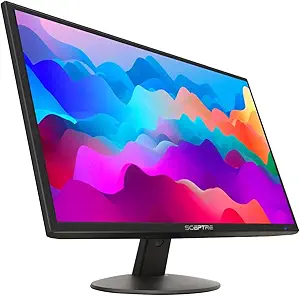
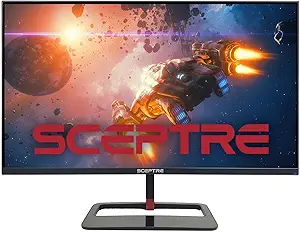
Sceptre dominates the ultra-budget segment of the monitor market, positioning itself as the go-to brand for price-to-performance shoppers. By leveraging cost-effective manufacturing pipelines and utilizing high-yield panels (frequently VA technology), Sceptre is able to deliver high-refresh-rate gaming monitors and everyday productivity displays at price points that significantly undercut mainstream competitors. Consumers can routinely find curved gaming panels boasting 144Hz to 240Hz refresh rates from Sceptre at prices where major brands only offer entry-level 60Hz or 75Hz office panels. However, this aggressive pricing strategy relies on omitting non-essential luxuries, such as versatile ergonomic stands, robust integrated sound systems, and premium packaging, passing the raw cost savings directly to the buyer.
BenQ occupies a higher pricing tier, structuring its product catalog across enthusiast, professional, and specialized demographics rather than competing in a race to the bottom. While BenQ does maintain a selection of budget-friendly office panels within its GW-series, the brand primarily focuses on specialized product lines—such as the ZOWIE esports series, the MOBIUZ immersive gaming line, and the DesignVue PD-series for creative professionals. These monitors carry a distinct price premium, reflecting substantial investments in proprietary feature engineering like hardware color calibration, specialized eye-care tech (Brightness Intelligence Plus), and esports-grade motion clarity algorithms (DyAc+). For consumers, BenQ demands a larger upfront financial commitment, but justifies it with specialized performance, targeted feature sets, and superior ecosystem integration.
Customer Support & Warranty
Sceptre’s post-purchase infrastructure is characteristic of an aggressive value-tier electronics manufacturer, providing a functional but relatively streamlined support experience. The brand offers standard limited warranties—typically spanning one to two years depending on the retailer and specific model—that cover fundamental component failures and severe panel defects. However, Sceptre’s customer service pipeline is largely handled through basic web-ticket systems and centralized North American email and phone routing. Users may encounter slower turnaround times for technical inquiries, and the brand's dead-pixel and panel replacement thresholds are comparatively strict, which can lead to friction when dealing with minor panel anomalies or backlight bleed issues that fall just outside defined defect metrics.
BenQ provides a notably more robust and professional support framework, reflecting its established global presence and penetration into commercial and creative industries. The brand generally backs its monitors with comprehensive three-year limited warranties that frequently include specialized dead-pixel policies, particularly on their professional-grade PhotoVue and DesignVue displays. BenQ’s customer support channels are more comprehensive, featuring responsive live chat, direct technical assistance, and streamlined RMA turnaround logistics. Furthermore, BenQ actively supports its ecosystem with ongoing firmware updates, dedicated utility software (such as Display Pilot and Palette Master Element), and comprehensive knowledge bases, providing a safer long-term investment for users who rely on their displays for mission-critical workflows.
Picture Quality
Sceptre prioritizes punchy, high-contrast performance tailored primarily toward casual entertainment and budget-conscious gaming. A substantial portion of Sceptre's lineup utilizes VA (Vertical Alignment) panels, which naturally deliver deep black levels and static contrast ratios often reaching 3000:1, outperforming standard IPS panels in dim environments. However, Sceptre monitors generally lack precise factory color calibration, frequently exhibiting delta-E variations that require manual OSD tweaking out of the box to correct color shifts or oversaturation. Furthermore, while their high refresh rates are appealing on paper, Sceptre’s budget panels often suffer from visible pixel response latency, leading to noticeable motion smearing and dark-level ghosting during rapid transitions in fast-paced content.
BenQ excels in delivering tailored, class-leading picture quality optimized for specific operational use cases. For digital creatives, BenQ's IPS-based professional monitors deliver near-perfect factory calibration with verified Delta E ≤ 2, extensive coverage of DCI-P3 and Adobe RGB color spaces, and integrated uniform luminance compensation across the panel surface. For competitive gamers, BenQ’s ZOWIE line fine-tunes TN and fast-IPS panels with proprietary Dynamic Accuracy (DyAc) technology to eliminate motion blur, favoring competitive clarity over cinematic contrast. Across all tiers, BenQ applies sophisticated panel driving technology, wide viewing angles, and automated ambient light sensors that dynamically adapt color temperature and brightness, resulting in an objectively cleaner, more accurate, and versatile visual output.
Build Quality & Durability
Sceptre displays are constructed with a clear focus on utility and cost-efficiency, which translates to a distinctly lightweight and plastic-heavy chassis design. The bezels and rear casings utilize basic ABS plastics that provide adequate internal component housing but can feel hollow to the touch and exhibit slight flex when handled. One of the most prominent hardware compromises across the Sceptre catalog is the stand design: included pedestals are often minimalist metal or plastic fixtures that offer only basic tilt adjustment, lacking height, swivel, or pivot capabilities. While Sceptre smartly includes standard VESA mounting patterns on almost all displays to offset this limitation, the internal power supplies and localized soldering are engineered strictly for consumer longevity rather than the rigorous wear-and-tear of heavy commercial usage.
BenQ monitors showcase superior industrial design, structural rigidity, and material quality across their entire portfolio. Housings are engineered with high-grade, textured plastics and internal metal reinforcement brackets that minimize chassis flex, creaking, and thermal expansion noise. Ergonomics represent a major technical strength for BenQ; their monitor stands are heavily weighted, smooth-gliding mechanical assemblies that routinely offer full four-axis adjustability (height, tilt, swivel, and pivot) with integrated cable management channels. The internal components, ranging from heavy-duty power boards to heat dissipation pathways, are engineered for sustained thermal stability, ensuring prolonged component lifespans and structural durability that reliably hold up over years of intensive daily operation.