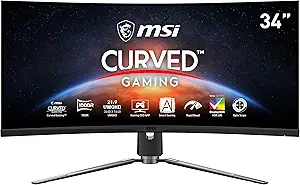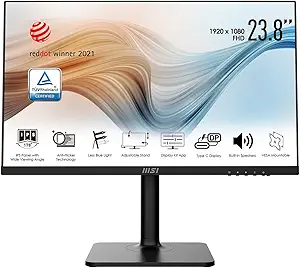





MSI vs Sceptre: Overview
Comparing MSI and Sceptre helps you determine which brand is best suited for your needs in Monitors. Both brands offer strong choices depending on your budget and key feature requirements.
Key Features & Comparison
Evaluate factors such as build quality, warranty, customer satisfaction, and total value before making your final purchase choice between MSI and Sceptre.
Affordability
When evaluating affordability, Sceptre positions itself as one of the most aggressive budget-oriented brands in the display industry, routinely undercutting nearly all competitors. By trimming auxiliary features such as advanced ergonomic adjustability, expansive USB hubs, and certified HDR implementations, Sceptre manages to deliver baseline gaming and office specifications—such as 1080p or 1440p resolutions paired with high refresh rates—at rock-bottom price points. For consumers strictly focused on raw pixel count and frame rates per dollar spent, Sceptre represents an entry point that is tough to match, frequently making curved ultrawides and 165Hz displays accessible to shoestring-budget builders.
MSI operates within a higher pricing tier overall, though it maintains a strong presence across entry-level, mid-range, and premium enthusiast segments. While an MSI monitor generally commands a higher price tag than an identically spec’d Sceptre on paper, the cost disparity reflects substantial engineering dividends. MSI incorporates superior scaler chips, proprietary software integration (such as Gaming Intelligence), better factory color calibration, and robust chassis designs. Consequently, while Sceptre easily claims victory in pure, upfront cost reduction, MSI delivers significantly better value retention and feature density for buyers willing to spend moderately more.
Customer Support & Warranty
Customer support and warranty policies highlight a notable divergence in brand infrastructure and consumer protection. MSI offers a relatively standardized and competitive global warranty network, typically covering gaming monitors for up to three years with clear policies regarding bright and dead pixel thresholds. Furthermore, MSI’s recent expansion of dedicated warranties—including a three-year burn-in protection package for its premium QD-OLED models—demonstrates a proactive commitment to consumer confidence. While navigating MSI’s RMA ticketing system can sometimes involve procedural delays, the presence of localized service hubs provides a dependable recourse for critical hardware failures.
Sceptre operates on a leaner post-sale support framework, generally offering a one-year limited warranty across most of its consumer monitor line. Navigating Sceptre’s customer service can occasionally prove challenging, as users frequently report strict requirements for diagnostic evidence, sluggish communication cadences, and consumer-borne shipping costs for warranty evaluations. While Sceptre’s domestic US-based support line is accessible via phone and email, the truncated coverage duration introduces higher long-term risk. Buyers prioritizing peace of mind and structured warranty terms will find MSI to be the far safer, more consumer-friendly choice.
Picture Quality
In terms of optical performance, MSI holds a decisive technological advantage across virtually all panel categories. MSI’s portfolio heavily features high-grade Rapid IPS, tuned VA, and cutting-edge Quantum Dot OLED panels that excel in color gamut coverage, dynamic contrast, and pixel response times. With factory calibration reports often accompanying their performance-oriented displays, MSI minimizes color banding, maintains tight Delta E tolerances, and leverages sophisticated Overdrive algorithms that mitigate ghosting and motion blur. Enthusiasts, competitive esports players, and creative professionals will immediately appreciate MSI’s superior brightness levels, wide viewing angles, and accurate color volume.
Sceptre relies primarily on cost-effective VA and standard IPS panels sourced to deliver acceptable visual fidelity for casual use. While their high-contrast VA panels provide respectable black levels suitable for dark-room entertainment, Sceptre displays frequently suffer from slower pixel response times, leading to noticeable dark-level smearing and motion artifacts in fast-paced gaming. Additionally, peak brightness rarely exceeds budget thresholds, making true HDR performance practically nonexistent, and out-of-the-box color accuracy tends to lean cool or oversaturated. For everyday productivity and non-critical media consumption, Sceptre is adequate, but MSI dominates in pure visual fidelity and motion clarity.
Build Quality & Durability
MSI’s mechanical engineering and material choices reflect a brand accustomed to high-performance computing standards. Their monitors feature structurally rigid frames, heavy-duty metal-reinforced bases, and fully articulated ergonomic stands offering height, tilt, swivel, and pivot adjustments on mid-tier and premium models. Thermal dissipation is carefully engineered—particularly in their QD-OLED and high-refresh panels utilizing custom heatsinks and graphene films—which enhances component longevity and prevents premature panel degradation. Buttons and on-screen display (OSD) navigators are robust, usually operated via an intuitive 5-way joystick rather than cheap, mushy rocker switches.
Conversely, Sceptre’s build quality highlights where manufacturing costs were curtailed to achieve low retail prices. Sceptre chassis are constructed largely from lightweight, hollow-feeling plastics that exhibit flex under minor stress. Their monitor stands are notoriously minimalist, often restricted strictly to tilt adjustments with wobbly, thin metal or plastic feet that provide marginal desk stability. While internal components are generally reliable enough to survive standard office environments, the exterior finish, basic tactile OSD buttons, and rudimentary heat management make Sceptre feel utilitarian. In durability and physical refinement, MSI is clearly the superiorly engineered product.