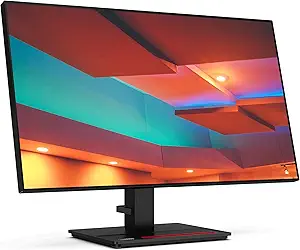





Lenovo vs Sceptre: Overview & Brand Philosophy
When shopping for a display, buyers often find themselves torn between established enterprise giants and aggressive budget disruptors. Lenovo, a multinational technology powerhouse with roots deeply planted in professional computing, approaches the monitor market with a focus on enterprise-grade reliability, ergonomic engineering, and broad ecosystem integration. Through its ThinkVision, Legion, and IdeaCentre sub-brands, Lenovo caters to corporate workstations, creative professionals, and dedicated gamers alike. Their design philosophy emphasizes color fidelity, sustainable manufacturing, eye-care certifications (such as TÜV Rheinland), and seamless functionality with docking ecosystems.
Conversely, Sceptre is an American consumer electronics company headquartered in California that has spent decades mastering the art of low-cost hardware delivery. Unlike Lenovo, Sceptre does not attempt to conquer the high-end corporate or luxury creator tiers. Instead, Sceptre's mission is purely value-driven democratizing modern display specifications such as high refresh rates, curved panels, and ultra-wide form factors for price-conscious consumers. By focusing primarily on direct-to-consumer online distribution and trimming non-essential peripheral features, Sceptre delivers displays that offer high raw hardware metrics per dollar spent.
Understanding these distinct approaches is vital for consumers. Choosing between Lenovo and Sceptre is rarely an apples-to-apples hardware duel; it is fundamentally a trade-off between Lenovo’s premium build quality, ergonomic sophistication, and long-term support versus Sceptre’s aggressive price-to-performance ratio that brings gaming and high-resolution features down to entry-level budgets.
Key Differences & Technological Comparison
The technical divergence between Lenovo and Sceptre is most apparent in panel selection, chassis engineering, port connectivity, and quality control tolerances.
Panel Technology and Color Reproduction: Lenovo relies heavily on high-grade In-Plane Switching (IPS) panels sourced from Tier-1 fabricators. In their ThinkVision and creator series, displays often feature factory color calibration covering 99% or more of sRGB and DCI-P3 color spaces with low Delta E values. Sceptre, targeting gamers and budget desks, leans predominantly toward Vertical Alignment (VA) panels, alongside entry-level IPS. While Sceptre's VA panels provide deep native contrast ratios (frequently 3000:1 or higher), they routinely suffer from black-level smearing in fast-motion scenes, narrower viewing angles, and less accurate out-of-the-box color profiles compared to Lenovo's finely tuned IPS offerings.
Ergonomics and Mechanical Build: Build quality is an area of significant divergence. Lenovo monitors are engineered for physical adjustability and workplace longevity. Most mid-to-high tier Lenovo stands offer full articulation: height adjustment, tilt, swivel, and 90-degree pivot, encased in rugged, matte plastics with internal metal reinforcement. Sceptre units, by contrast, frequently feature lightweight plastic housings and basic tilt-only stands. While Sceptre displays include standard VESA mounting patterns to circumvent this limitation, the initial out-of-box ergonomic experience is distinctly basic compared to Lenovo's fully adjustable setups.
Connectivity and Modern Standards: Connectivity reveals Lenovo's commitment to modern workflow integration. Many of Lenovo's modern business panels feature fully functional USB-C upstream hubs capable of carrying video, data, and up to 90W–100W of Power Delivery (PD) to charge laptops simultaneously, alongside integrated RJ45 Ethernet ports and daisy-chain DisplayPort outputs. Sceptre prioritizes sheer port count over advanced bus protocols, generally outfitting displays with multiple HDMI and standard DisplayPort inputs. USB-C with power delivery is rare in Sceptre's catalog, making Lenovo the far superior choice for single-cable laptop dock setups.
Pros & Cons Comparison
Lenovo Monitors
- Pros:
- Superior factory color calibration and wide color gamut coverage (ideal for creative and professional work).
- Advanced ergonomics featuring robust stands with height, tilt, swivel, and pivot adjustments.
- Comprehensive enterprise connectivity, including modern USB-C single-cable docking and daisy-chaining.
- Rigorous quality assurance resulting in lower rates of dead pixels and backlight bleed.
- Cons:
- Significantly higher cost-per-spec ratio compared to budget-focused competitors.
- Entry-level gaming monitors from Lenovo often command a price premium without offering higher refresh rates.
Sceptre Monitors
- Pros:
- Unmatched pricing across almost all categories, from basic office panels to 240Hz gaming monitors.
- High native contrast ratios courtesy of widespread use of curved VA panels.
- Accessible high-refresh rates (144Hz, 165Hz, and 240Hz) available at entry-level price brackets.
- Universal VESA mount compatibility across nearly their entire display lineup.
- Cons:
- Basic, rigid stands that often only support vertical tilt, requiring aftermarket arms for full adjustment.
- Frequent motion blur and ghosting (black smearing) on budget VA gaming panels.
- Inconsistent panel uniformity, with higher occurrences of edge backlight bleed.
- Lacks advanced workplace connectivity like high-wattage USB-C Power Delivery.
Performance, Durability & Value Analysis
In terms of performance, both brands meet their intended objectives through different engineering compromises. Lenovo delivers predictable, highly refined execution. Their gaming panels (Legion) exhibit strict pixel response time overdrive tuning, keeping overshoot artifacts minimal while delivering crisp motion clarity. In office environments, their displays resist glare effectively and maintain uniform luminance across the entire surface. Sceptre pushes raw specifications to the forefront, delivering high refresh rates and deep blacks that look impressive on paper and during casual play. However, Sceptre displays regularly show weaknesses under scrutiny: their pixel response times often struggle to keep pace with their high refresh rates, and color shifting can be noticeable toward the edges of their wider, flat panels.
Durability and lifecycle value sharply favor Lenovo. Lenovo manufactures enterprise-grade displays designed to run 8 to 12 hours a day for multiple years without panel degradation or power board failure, backed by standardized 3-year commercial warranties. Sceptre operates on much tighter margins, utilizing consumer-grade internal capacitors, lighter external frames, and often covering hardware with shorter 1-year limited warranties. While Sceptre offers exceptional initial value—giving cash-strapped users access to curved or high-refresh computing—Lenovo provides far stronger residual value, structural longevity, and customer support infrastructure over a multi-year timeline.
Final Verdict: Which Brand Should You Choose?
Your choice between Lenovo and Sceptre boils down to the specific application, your budget elasticity, and whether you value build refinement over raw spec sheets.
Choose Lenovo if: You are a remote worker, creative professional, or corporate user who values ergonomics, color accuracy, and clean cable management. If you need a USB-C hub monitor to charge your laptop, require full stand adjustability out of the box, or demand reliable hardware backed by a multi-year warranty, Lenovo's ThinkVision and Legion lines are well worth the premium investment.
Choose Sceptre if: You are operating on a strict budget, building your first entry-level gaming PC, or outfitting a secondary workstation for routine web browsing and document editing. If your primary goal is securing the highest possible refresh rate (such as 165Hz or 240Hz) or a large curved panel for the lowest amount of money—and you don't mind utilizing an aftermarket VESA mount—Sceptre delivers unbeatable upfront hardware per dollar.
Affordability
When evaluating affordability in the monitor space, Sceptre and Lenovo approach budget constraints from entirely different manufacturing philosophies. Sceptre positions itself as a price-to-performance disruptor, aggressively slashing entry barriers to high-spec gaming and productivity displays. By utilizing cost-effective VA (Vertical Alignment) panels and stripped-down, lightweight plastic chassis, Sceptre is able to deliver high refresh rates (often 144Hz to 240Hz), curved screens, and basic HDR support at prices that undercut almost every legacy brand. The trade-off for this exceptionally low price tag is evident in the technical corners that get cut: Sceptre displays typically feature bare-minimum stand ergonomics with tilt-only functionality, basic external power bricks, subpar integrated speakers, and factory color calibrations that require significant manual adjustment. For pure hardware-metric per dollar, however, Sceptre is difficult to beat for consumers strictly prioritizing budget.
Conversely, Lenovo approaches affordability through a holistic enterprise-and-lifestyle lens, meaning its budget-friendly models in the L-Series, C-Series, and Legion gaming lines represent "value engineering" rather than outright bottom-dollar pricing. A budget Lenovo display may carry a 15% to 30% price premium over a spec-matched Sceptre, but that difference is immediately tangible in engineering quality and reliability. Lenovo heavily favors superior IPS panels over inexpensive VA alternatives in its entry-tier lineups, ensuring superior color consistency, wider viewing angles, and more reliable pixel response times. Furthermore, Lenovo monitors often include TUV Rheinland low-blue-light hardware certifications, more robust cable management, intuitive on-screen display (OSD) controls, and superior stand stability. Their enterprise-grade supply chain also translates into tighter quality control, minimizing common low-budget panel issues like dead pixels, excessive IPS glow, or severe backlight bleeding.
Ultimately, the practical affordability equation depends on how a user balances short-term savings against long-term operational satisfaction. Sceptre provides unbeatable immediate monetary value, making it the premier choice for budget gamers and casual users who want modern performance metrics like high refresh rates or ultrawide form factors without the standard market cost. Lenovo represents calculated affordability, serving buyers who are willing to spend slightly more for better chassis durability, true-to-life color reproduction, and an ergonomic standard that holds up over daily eight-hour workdays. While Sceptre wins on raw price and specification density, Lenovo captures superior functional value by maintaining critical structural and optical standards even at lower price thresholds.
Customer Support & Warranty
When evaluating the post-purchase experience and hardware protection in the monitor market, Lenovo and Sceptre approach customer support and warranty coverage from fundamentally different corporate philosophies. Lenovo operates primarily as a tier-one global enterprise manufacturer, backing its consumer and ThinkVision enterprise displays with robust, standardized protections. Most Lenovo monitors feature a comprehensive three-year limited warranty—with baseline consumer models rarely dropping below one year—that covers internal component degradation, backlighting failure, and controller board issues. Furthermore, Lenovo maintains a transparent, enterprise-grade ISO 9241-307 pixel policy that strictly defines coverage for bright and dark sub-pixel anomalies. In contrast, Sceptre is structured as a budget-oriented, consumer-direct hardware vendor, offering a standardized one-year limited warranty across the vast majority of its monitor lineup. While Sceptre's coverage protects against major electrical defects and total panel failures, its dead-pixel thresholds are notoriously less forgiving, and its operational support relies largely on localized, centralized depot facilities rather than a globally distributed logistics infrastructure.
The technical and operational mechanisms of their respective customer support channels further illustrate this divide in service caliber. Lenovo leverages a sophisticated support ecosystem featuring automated serial-number entitlement, a vast repository of driver and firmware updates, dedicated software utilities like Lenovo Vantage, and tiered phone and live-chat diagnostic services. For its higher-tier ThinkVision and Legion lines, Lenovo often offers rapid advanced replacement programs, mitigating professional downtime by dispatching a functional replacement unit before the defective unit is even returned to the depot. Sceptre, conversely, relies on a more traditional, streamlined support structure handled primarily via basic web-ticketing, email queues, and standard telephone support during select business hours. Troubleshooting firmware-level bugs or edge-case compatibility issues is far more challenging with Sceptre, as the brand lacks the deep enterprise software development pipelines seen at Lenovo, occasionally resulting in protracted back-and-forth exchanges for complex display issues.
The primary consumer trade-off centers on upfront hardware savings versus lifecycle reliability and total cost of ownership. Sceptre delivers undeniable value per pixel, packing high refresh rates and curved VA or IPS panels into ultra-low price brackets, but buyers absorb the risk of shipping costs for warranty claims, slower RMA turnaround times, and a warranty window that expires just twelve months after purchase. Lenovo commands a higher initial price point, but this premium directly funds superior quality control, longer-lasting multi-year hardware guarantees, and an enterprise logistics network capable of servicing products reliably over a multi-year deployment. For budget-conscious gamers, Sceptre’s straightforward support may suffice, but for creators, professionals, and long-term home-office users, Lenovo’s institutional support infrastructure and three-year warranty represent a vastly superior layer of investment security.
Picture Quality
When evaluating picture quality between Lenovo and Sceptre, the fundamental divergence lies in panel engineering, color accuracy, and manufacturing quality control. Lenovo, predominantly through its ThinkVision and Legion lines, places a heavy emphasis on professional-grade visual fidelity. Lenovo monitors frequently leverage premium In-Plane Switching (IPS) panels that are factory-calibrated to deliver high delta-E accuracy, covering wide color gamuts such as 99% sRGB and extensive DCI-P3 spaces. This results in remarkably uniform color distribution, consistent luminance across wide viewing angles, and natural tonal gradations that cater to productivity, content creation, and nuanced gaming. Furthermore, Lenovo invests in superior anti-glare coatings, minimal backlight bleed, and advanced low-blue-light hardware solutions like Natural Low Blue Light, which preserve color integrity without introducing an abrasive yellow tint.
Sceptre, conversely, operates as a high-value disruptor, optimizing its picture quality strategy around high-refresh-rate gaming and high static contrast ratios at accessible price points. Sceptre heavily utilizes Vertical Alignment (VA) panels, which intrinsically excel at delivering deep, inky blacks and contrast ratios often reaching 3000:1 or 4000:1, starkly outperforming Lenovo’s standard IPS contrast. This makes Sceptre displays particularly compelling for dark-room gaming and cinematic media consumption. However, this engineering focus comes with distinct visual trade-offs: Sceptre panels commonly exhibit noticeable color shifting and gamma degradation at off-center viewing angles. Pixel response times on budget Sceptre panels are also slower, leading to visible ghosting and smearing in high-contrast transitions, and factory color calibration is largely omitted, resulting in out-of-the-box color profiles that can appear oversaturated or excessively cool.
Ultimately, the practical choice comes down to fidelity versus dynamic punch. Lenovo monitors represent the superior choice for users who prioritize color precision, clean motion clarity without smearing, and uniform panel lighting across diverse professional and competitive gaming environments. Sceptre, while lacking the chromatic refinement, panel uniformity, and stringent quality control of Lenovo, delivers formidable dynamic range and black levels that punch well above their weight class for budget-conscious consumers focused primarily on immersive, direct-angle gaming and casual viewing.
Build Quality & Durability
When evaluating build quality and durability in the monitor market, Lenovo and Sceptre approach product engineering from fundamentally different philosophies. Lenovo, drawing from its legacy in enterprise and professional computing, prioritizes rugged reliability, structural rigidity, and meticulous fit-and-finish. The chassis of a Lenovo monitor—whether in the enterprise ThinkVision lineup or the gaming-focused Legion family—routinely features high-density, matte-finish polycarbonate polymers over reinforced metal internal frames. Conversely, Sceptre operates predominantly as a value-driven consumer brand, and its engineering reflects deliberate cost-saving measures. Sceptre displays typically utilize thinner, lightweight plastics that are prone to chassis flex, creaking under torsion, and exhibiting hollow seams. While Sceptre produces visually appealing displays with ultra-slim bezels, its physical construction relies heavily on cosmetic styling rather than structural resilience, making Lenovo the objectively superior manufacturer in raw material integrity.
This divergence in build philosophy becomes particularly pronounced in the mechanical implementation of the stands and mounting hardware. Lenovo stands are heavily engineered technical assets, often integrating solid-core steel counterweights, premium gas-spring mechanisms, and comprehensive ergonomic adjustments—such as height, tilt, swivel, and bi-directional pivot—that glide smoothly while resisting wobble. They also feature native, structurally reinforced 100x100mm VESA plates directly integrated into the metal chassis. Sceptre, by contrast, frequently ships models with bare-minimum functionality, such as basic tilt-only mechanisms anchored by thin, stamped-metal or rigid plastic necks that translate desktop vibrations directly into screen shake. Furthermore, several budget Sceptre monitors eschew standard VESA mounting patterns entirely, requiring proprietary bracket adapters that introduce additional failure points and mechanical instability when mounted on monitor arms.
From a long-term reliability and component endurance perspective, the practical trade-offs delineate clear use cases for consumers. Lenovo monitors are engineered for thermal dissipation and electrical longevity, utilizing robust internal power supplies, industrial-grade capacitors, and superior panel-binned modules that minimize the risk of premature backlight degradation, dead pixels, and edge-lit bleeding over multi-year cycles. This reliability is backed by comprehensive three-year commercial warranties. Sceptre displays are functional and offer exceptional initial price-to-performance ratios, but trade-offs emerge in lower-grade panel binning, external "power brick" dependency that exposes cables to stress, and a higher statistical prevalence of dead-on-arrival subpixels or early capacitor failure. For institutional deployments or users requiring dependable, multi-year mechanical resilience, Lenovo is an unmatched investment, whereas Sceptre serves as a pragmatic, if fragile, budget compromise.