



Dell vs Sceptre: Overview
Comparing Dell and Sceptre helps you determine which brand is best suited for your needs in Monitors. Both brands offer strong choices depending on your budget and key feature requirements.
Key Features & Comparison
Evaluate factors such as build quality, warranty, customer satisfaction, and total value before making your final purchase choice between Dell and Sceptre.
Affordability
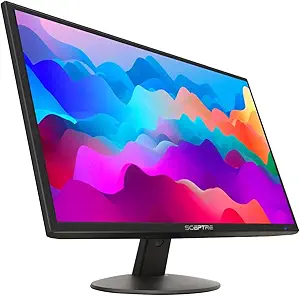
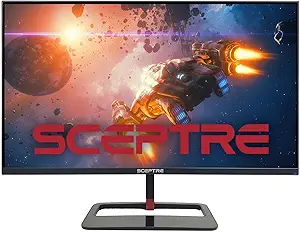
When evaluating affordability, Sceptre is widely recognized as an aggressive price leader in the consumer display market. The brand focuses almost exclusively on delivering core technical specifications—such as high refresh rates and expanded screen real estate—at rock-bottom price points. Sceptre manages this by stripping away premium add-ons, utilizing cost-effective plastics, implementing basic tilt-only stands, and sourcing budget-tier panel assemblies. For cash-strapped gamers, students, or home office workers seeking functional multi-monitor arrays, Sceptre offers an exceptionally low barrier to entry that few legacy brands can match dollar-for-dollar.
Dell occupies a broader pricing spectrum, spanning from entry-level SE and S-series monitors to high-end UltraSharp and Alienware lineups. While Dell's budget offerings rarely undercut Sceptre on pure sticker price, they integrate higher baseline engineering, superior ergonomics, and better peripheral connectivity, such as multi-port USB hubs and USB-C power delivery. Dell's affordability is best understood through the lens of long-term value and total cost of ownership; buyers pay an upfront premium, but they receive superior quality assurance, standardized enterprise reliability, and monitors designed to maintain their operational integrity over a longer lifecycle.
Customer Support & Warranty
Dell sets the benchmark for post-purchase support and warranty coverage across the monitor industry. Most consumer and enterprise Dell displays include a standard three-year Advanced Exchange Service, meaning Dell ships a replacement unit the next business day before you even send back the defective one. Furthermore, Dell’s Premium Panel Exchange ensures that if even a single bright sub-pixel is detected during the warranty period, the screen qualifies for a zero-cost replacement. For professionals and commercial environments where downtime correlates directly to revenue loss, Dell's extensive global logistics and standardized ticketing infrastructure provide unmatched peace of mind.
In contrast, Sceptre operates on a leaner post-sale model consistent with a value-oriented brand. Sceptre displays typically carry a one-year limited parts and labor warranty, requiring consumers to pay for return shipping to Sceptre's California-based facility for inspection and repair. While their direct support agents are responsive via phone and email, turnaround times for warranty claims can extend into weeks, and dead-pixel policies are far less generous, adhering strictly to industry-standard defect thresholds. For users who cannot afford display downtime, Sceptre's support infrastructure represents a noticeable trade-off relative to Dell's enterprise-grade service ecosystem.
Picture Quality
Dell delivers consistently superior image fidelity, driven by meticulous factory calibration, wide color gamut coverage, and advanced panel integration. Dell's professional UltraSharp series routinely achieves Delta E < 2 color accuracy out of the box, with full coverage of sRGB, Adobe RGB, and extensive DCI-P3 spectrums, making them the standard for photo editing, graphic design, and video production. Even Dell's mainstream panels exhibit excellent uniformity, minimal backlight bleed, and sophisticated IPS implementations that retain contrast and color consistency across wide viewing angles, supported by anti-glare coatings that handle bright ambient environments effectively.
Sceptre focuses heavily on high refresh rates (often 75Hz to 240Hz) and fast response times at budget price points, frequently relying on VA (Vertical Alignment) or budget IPS panels. While Sceptre's VA screens offer deep native contrast ratios and satisfying black levels for movie watching and casual gaming, they often exhibit noticeable ghosting or black smearing during rapid motion. Out-of-the-box color accuracy is generally mediocre, suffering from oversaturated presets and gamma inaccuracies that require manual calibration to rectify. For everyday browsing and recreational gaming Sceptre's picture quality is completely serviceable, but it lacks the precision, panel uniformity, and high-end processing of Dell displays.
Build Quality & Durability
In terms of structural engineering and component longevity, Dell operates in a substantially higher tier than Sceptre. Dell monitors utilize robust, rigid internal chassis, dense plastics, and heavy metal-reinforced stands that provide full ergonomic adjustability—including height, tilt, swivel, and 90-degree pivot. The mechanical tolerances on Dell displays are tight, ensuring zero stand wobble and long-term durability across years of adjustments. Internally, Dell specifies higher-grade power supplies and thermal management solutions, which prevent premature capacitor failure and panel degradation caused by heat buildup over prolonged usage.
Sceptre cuts costs visibly in the mechanical and structural domain, resulting in lightweight, all-plastic housings that can feel hollow and prone to chassis flex. Their bundled stands are notoriously basic, frequently offering only limited tilt adjustment, small footprints that wobble when bumped, and hollow metal or plastic neck assemblies. While Sceptre smartly includes VESA mount compatibility across nearly their entire catalog to circumvent stand limitations, the underlying electronic components and external power bricks are engineered to minimum cost thresholds. Consequently, Sceptre monitors are functional for stationary desk setups, but they lack the premium tactile refinement and multi-year resilience inherent to Dell's construction.