Asus vs Samsung: Overview & Brand Philosophy
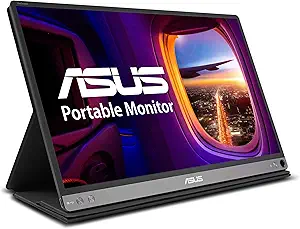
In the modern computing and entertainment landscape, selecting the right display defines the quality of user interaction. Asus and Samsung stand as two titans in the monitor industry, yet their underlying philosophies, engineering pathways, and target audiences exhibit stark differences. Asus, originating as a component and computing hardware specialist, approaches monitor design primarily through the lens of performance tuning, competitive gaming, and color-critical creative production. Through sub-brands like Republic of Gamers (ROG), TUF Gaming, and ProArt, Asus prioritizes niche utility, advanced firmware calibration, and aggressive thermal and panel tuning tailored for desktop-centric enthusiasts.
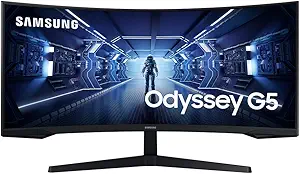
Samsung, by contrast, operates as a global display fabrication powerhouse. Because Samsung Display develops the foundational technologies—such as proprietary Quantum Dot OLED (QD-OLED) and advanced VA (Vertical Alignment) architectures—the consumer-facing Samsung monitor division often acts as the pioneer for new form factors and display panel tech. Samsung's overarching philosophy treats monitors as versatile convergence devices, blending traditional computing displays with smart television capabilities (via Tizen OS), deep immersive ultrawide curvatures, and modern industrial aesthetics typified by the Odyssey and ViewFinity lines.
While Asus thrives by perfecting the integration of third-party and custom-specified panels with hyper-focused user firmware, Samsung leverages vertical integration to push boundary-breaking specifications to mass production first. Understanding this core divergence—Asus as the dedicated systems enhancer versus Samsung as the fundamental display innovator—is essential for any consumer looking to make an informed investment.
Key Differences & Technological Comparison
The technological battleground between Asus and Samsung revolves around panel implementation, firmware behavior, gaming ergonomics, and industrial design. While both manufacturers offer panels ranging from entry-level office monitors to high-end OLED powerhouses, their execution differs significantly across multiple vectors:
- Panel Technology and Sourcing: Samsung leads through direct innovation, driving the market in 1000R deep-curve VA panels (notably in the Odyssey G7 and G9 lines) and cutting-edge QD-OLED displays that offer class-leading color volume and black levels. Asus functions as an agnostic panel integrator, sourcing top-tier IPS, Fast IPS, and OLED panels from LG Display, AU Optronics, and Samsung Display itself, while adding custom heatsinks and uniform brightness technologies to mitigate panel degradation.
- OSD, Firmware, and Usability: Asus consistently delivers the most intuitive, responsive On-Screen Display (OSD) controls in the industry, powered by responsive physical directional joysticks, dedicated macro keys, and deep software-based calibration controls like DisplayWidget. Samsung frequently integrates its Tizen Smart TV OS into flagship monitors, which introduces useful streaming capabilities and remote-control functionality, but at the expense of slower menu navigation, occasional input-switching latency, and cumbersome desktop adjustments.
- Creative Professional Features: Asus dominates the non-broadcast production space with its ProArt series, offering factory-calibrated Delta E < 1 or 2 accuracy, hardware look-up tables (LUTs), Calman verification, and extensive native I/O including multi-stream Daisy Chaining and full-bandwidth USB-C Power Delivery. Samsung's productivity alternative, the ViewFinity line, offers sharp resolutions and elegant styling, but generally lacks the exhaustive color-space switching and hardware-level calibration depth native to ProArt.
- Gaming Ecosystem: Asus focuses heavily on motion clarity metrics, popularized by technologies like ELMB-Sync (Extreme Low Motion Blur running simultaneously with Variable Refresh Rate) and ultra-high refresh rate milestones (up to 540Hz). Samsung focuses heavily on visual immersion, cinematic scale, and extreme aspect ratios (such as 32:9 Super Ultra-Wide formats with massive 49-inch to 57-inch dual-4K spans).
Pros & Cons Comparison
Asus Monitors
- Pros:
- Exceptional OSD interface with rapid, dedicated hardware controls and robust software suites.
- Class-leading ProArt color accuracy, complete with factory certification and advanced LUT calibration.
- Superior motion clarity tuning (ELMB-Sync) and custom cooling solutions in OLED models to prevent burn-in.
- Highly ergonomic, durable monitor stands offering full-range tilt, swivel, pivot, and height adjustments.
- Cons:
- Often commands a price premium compared to identically specced competitors.
- Industrial design in the gaming category can be overly aggressive and polarizing.
- Slower to release non-standard form factors compared to panel manufacturers.
Samsung Monitors
- Pros:
- Industry-leading implementation of ultra-immersive 1000R curves and ultra-wide display formats.
- Direct integration of QD-OLED and Mini-LED technologies ensures elite contrast and vibrant color volume.
- Smart TV (Tizen) features allow monitors to function as standalone entertainment hubs without a PC.
- Aggressive market pricing and frequent promotional discounts deliver exceptional price-to-panel-size value.
- Cons:
- Tizen OS interface can feel bloated, sluggish, and unintuitive for pure PC workflows.
- Historical quality control variances regarding early-batch firmware bugs and panel seams.
- Aggressive screen curves are unsuitable for geometric CAD, digital illustration, and architecture work.
Performance, Durability & Value Analysis
From a longevity and reliability standpoint, both brands exhibit distinct track records tied to their manufacturing models. Asus enjoys a strong reputation for out-of-the-box reliability and rock-solid firmware. Its ProArt and ROG monitors are engineered with robust passive thermal architectures—such as custom heatsinks and optimized internal airflow—which has proven particularly advantageous for keeping thermals low on high-refresh OLED panels, thereby reducing long-term burn-in risks. However, Asus's customer service channels have faced scrutiny regarding warranty processing friction. In contrast, Samsung's aggressive push to be first-to-market with revolutionary form factors (such as the massive 57-inch Odyssey Neo G9) has occasionally resulted in early adopters experiencing scanline artifacts, thermal popping sounds, or firmware glitches requiring successive post-launch patches.
In terms of pure price-to-performance value, the winner depends largely on the category. Samsung frequently undercuts the premium market through scale; its high-end ultrawide and QD-OLED monitors often drop substantially in price several months post-launch, offering unmatched screen real estate and raw display specifications per dollar. Asus rarely discounts its flagship hardware as aggressively, maintaining higher MSRPs for its ROG and ProArt hardware. However, the value of an Asus display is realized through sustained software stability, superior port selections, precise ergonomic stands, and predictable color reproduction that requires little to no post-purchase troubleshooting.
Final Verdict: Which Brand Should You Choose?
Both brands represent the pinnacle of modern display manufacturing, but your purchase decision should be determined by your primary use case:
- Choose Asus if: You are a competitive esports gamer demanding maximum frame rates and zero-blur motion clarity, or a content creator, graphic designer, or video editor who needs reference-grade color profiles out of the box. Asus is also the clear choice for users who want a pure, responsive desktop monitor free from smart TV bloatware, complemented by robust physical menu navigation.
- Choose Samsung if: You prioritize maximum visual immersion, panoramic gaming, and versatile media consumption. If you desire a massive curved ultrawide display for flight simulators, racing rigs, or deep multi-window multitasking—or if you want a hybrid screen that can stream video services via remote control without turning on your computer—Samsung delivers an unmatched sensory experience at an aggressive price point.
Affordability
When assessing affordability in the monitor space, Asus strategically leverages market segmentation to offer aggressive price-to-performance ratios, particularly in the budget-to-midrange gaming and productivity sectors. Through its TUF Gaming and ProArt lines, Asus emphasizes component-level engineering that delivers essential performance metrics—such as high refresh rates, adaptive sync, and factory color calibration—without the premium surcharge often associated with prestige branding. In the entry-level sub-$200 category, Asus monitors frequently outspec competitors by incorporating robust stand ergonomics and proprietary feature-sets like Extreme Low Motion Blur (ELMB). The trade-off, however, lies in physical materials; Asus often utilizes cost-effective, utilitarian plastics to keep retail prices down, prioritizing the internal display controller, firmware stability, and panel responsiveness over luxury aesthetics.
Conversely, Samsung approaches affordability through massive vertical integration, utilizing its proprietary panel manufacturing capabilities to aggressively price advanced display technologies like deep-curved VA, Quantum Dot, and Mini-LED. While Samsung's ultra-budget office panels (such as the Essential series) can feel technically compromised with mediocre viewing angles and barebones tilt-only stands, the brand dominates the value proposition in the ultra-wide and high-end visual segments. Through seasonal aggressive discounting, Samsung frequently lowers the financial barrier to entry for curved, high-resolution gaming experiences via its Odyssey line, delivering visual immersion that Asus cannot easily match at identical discounted price points. However, the trade-off with Samsung's budget-conscious engineering often manifests in software bloat, such as sluggish Tizen OS integrations on modern panels, and historically higher instances of quality control variance in cheaper chassis assembly.
From an analytical value perspective, the purchasing decision regarding affordability hinges on targeted utility versus visual scale. Asus provides superior transactional value for competitive esports enthusiasts, students, and budget-conscious content creators who demand reliable color accuracy, predictable pixel response times, and sturdy functional design per dollar spent. Samsung delivers greater economies of scale for media consumers and immersive gamers who prioritize aggressive panel curvatures, deep contrast ratios, and large screen real estate at competitive price thresholds. Ultimately, Asus wins on structural and technical reliability at lower price tiers, whereas Samsung excels at making premium, large-format panel technologies temporarily affordable through sheer manufacturing volume and aggressive retail price slashes.
Customer Support & Warranty
When evaluating the post-purchase experience for computer monitors, Asus generally holds an engineering and service advantage over Samsung, particularly within the dedicated gaming and professional creative segments. Asus supports its mainstream, ROG, and TUF gaming displays with standard three-year limited warranties, frequently bundled with proprietary Rapid Replacement services that offer cross-shipping to minimize user downtime. For creative professionals, the ProArt series stands out with an industry-leading zero-bright-dot guarantee alongside extended multi-year coverage. Furthermore, Asus has adapted its RMA protocols for its newer OLED panels to include explicit burn-in warranties, engineered with firmware-level preventative measures (such as pixel cleaning and uniform brightness limiters) to mitigate long-term degradation. By contrast, Samsung typically adheres to a baseline one-year to three-year warranty depending on the regional tier and product line, with standard Odyssey gaming monitors frequently constrained by shorter factory coverage and strict pixel anomaly thresholds that require multiple dead sub-pixels before authorizing a panel swap.
From an operational standpoint, the practical customer support experience reveals distinct trade-offs between a specialized IT hardware manufacturer and a broad-scale consumer electronics conglomerate. Samsung’s customer support infrastructure leverages a massive global network, offering integrated SmartThings diagnostics, live chat, and ubiquitous local authorized service centers. However, this vast scale often acts as a double-edged sword; tier-one support representatives frequently lack deep technical knowledge of niche monitor issues like variable refresh rate (VRR) flicker, Display Stream Compression (DSC) handshake bugs, or localized dimming artifacts. Asus provides a more technically competent, enthusiast-oriented support desk tailored to PC ecosystems, yet it has faced public scrutiny regarding RMA handling, strict physical inspection standards, and inconsistent turnaround times. Ultimately, Asus delivers the superior warranty framework on paper with gamer- and creator-friendly replacement guarantees, while Samsung offers broader accessibility and repair logistics that are occasionally undermined by generic customer support tiers and more restrictive defect policies.
Picture Quality
When evaluating picture quality, Asus and Samsung approach display engineering from fundamentally different product philosophies. Asus relies heavily on meticulous factory calibration, panel variety, and specialized hardware tuning tailored to distinct user niches. Its professional ProArt series frequently utilizes premier IPS and specialized OLED panels calibrated to delta E values under two, ensuring industry-leading color accuracy, wide Rec. 709 and DCI-P3 gamut coverage, and stable viewing angles critical for graphic design. Conversely, its Republic of Gamers (ROG) line prioritizes motion clarity and luminance, deploying advanced trace-free overdrive and Extreme Low Motion Blur (ELMB) technologies to eliminate ghosting. Samsung, as a vertically integrated panel manufacturer, commands a structural advantage in panel innovation, championed by its cutting-edge QD-OLED and Quantum Mini-LED technologies. Samsung’s Odyssey and high-end lifestyle displays excel in raw visual impact, boasting extraordinary peak brightness, infinite contrast ratios, and the deep, inky blacks typical of self-lit or multi-zone backlighting configurations.
The technical trade-offs between the two brands ultimately reflect this divergence between analytical precision and dynamic vibrancy. Asus excels in visual fidelity, offering uniform luminance distributions, comprehensive user-accessible color profiles, and robust internal look-up tables (LUTs) that appeal to visual purists who demand zero color drift or artifacting. However, Asus often lags in absolute contrast performance on its mainstream IPS offerings, which are vulnerable to traditional IPS glow and low native static contrast ratios. Samsung, by contrast, dominates High Dynamic Range (HDR) presentation; its Quantum Dot layers deliver superior color volume at extreme brightness levels, avoiding the desaturation sometimes seen in high-nit environments. The compromise with Samsung often lies in factory color calibration and processing consistency; its consumer-oriented displays tend toward an aggressively saturated, cool-biased factory tuning that requires extensive user adjustment to achieve true color neutrality, and its aggressive local dimming algorithms can occasionally introduce blooming or shadow-crushing in dark scenes.
Ultimately, both manufacturers occupy high-tier positions for picture quality, but their respective engineering designs cater to different visual priorities. Consumers seeking uncompromised color accuracy, dependable sub-pixel clarity for text and UI rendering, and precise, linear tone curves will find Asus the superior choice, particularly within their ProArt and upper-echelon gaming segments. Conversely, users prioritizing immersive HDR depth, cinematic contrast, and cutting-edge display technologies like curved QD-OLED will experience a more visually arresting picture from Samsung, provided they are willing to navigate slightly less rigorous out-of-the-box color fidelity.
Build Quality & Durability
When evaluating the structural engineering and manufacturing integrity of monitors, Asus and Samsung exhibit fundamentally different design philosophies. Asus, primarily through its dedicated Republic of Gamers (ROG) and ProArt lineups, emphasizes rugged, heavy-duty construction engineered for long-term endurance. The brand frequently employs reinforced internal metal skeletons, robust aluminum baseplates, and high-tolerance dual-stage mechanical hinges that offer exceptional resistance to wobbling and mechanical fatigue. In contrast, Samsung focuses on futuristic industrial design, characterized by sleek profiles, ultra-thin bezels, and aggressive screen curvatures, such as those found on the Odyssey Neo G9. While Samsung’s external aesthetic is visually striking, the company relies far more heavily on lightweight polymer plastics and friction-fit seams. Consequently, users often report auditory thermal expansion—slight popping or cracking noises as internal components heat up—and occasional panel creaks that detract from the tactile sense of physical permanence found more consistently across Asus's premium offerings.
From a technical reliability standpoint, longevity hinges significantly on thermal regulation and panel quality control. Asus incorporates proactive thermal management into its high-end monitors, utilizing custom heavy heatsinks and even intelligent fan-based active cooling on its flagship OLED and high-refresh-rate IPS models. This thermal headroom directly preserves panel longevity, reducing the risk of catastrophic burn-in, capacitor swelling, and panel delamination over years of continuous use. Samsung, as an industry-leading panel manufacturer (responsible for pioneering advanced QD-OLED and curved Mini-LED technologies), provides remarkable display innovations, yet it faces persistent critiques regarding quality control. Consumers and lab testers frequently encounter sample variability in Samsung monitors, ranging from early power-supply failures and vertical line artifacts to micro-gaps appearing near curved panel bezels where the adhesive struggles against the structural tension of 1000R curves over prolonged operational cycles.
Ultimately, the practical trade-off between the two brands presents a choice between dependable physical permanence and bleeding-edge form factors. Asus monitors are built like durable workhorses; their ergonomic stands offer higher weight capacities, smoother multi-axis adjustments, and greater shock resistance, making them ideal for users seeking low-risk, multi-year investments in production or competitive gaming environments. Samsung delivers unmatched visual immersion and pioneering display technology at highly competitive volume pricing, but buyers must accept a compromise in mechanical resilience, relying on thinner plastics, less robust tilt/swivel assemblies, and higher statistical probabilities of structural or electronic failure over an extended lifespan.