Asus vs MSI: Overview & Brand Philosophy
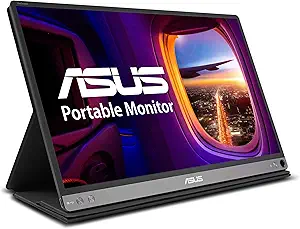
In the highly competitive display market, Asus and MSI stand out as two Taiwanese tech giants that have aggressively shaped modern PC gaming and creative workflows. Asus, an established market veteran, entered the display arena through its Republic of Gamers (ROG) and TUF Gaming lines, while concurrently catering to media professionals through its specialized ProArt series. Asus positions itself as an engineering pioneer, frequently serving as the launch platform for industry-first technologies such as world-first refresh rate records and ultra-premium Mini-LED backlighting arrays.
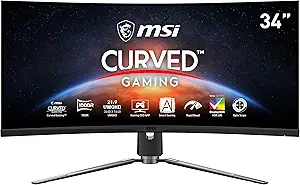
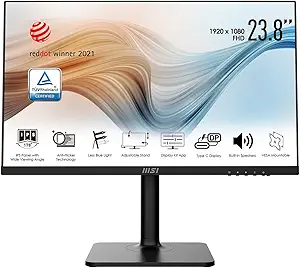
MSI (Micro-Star International) entered the standalone monitor segment later than Asus but made an immediate impact by focusing heavily on high-refresh-rate curved VA panels before rapidly pivoting toward cutting-edge QD-OLED (Quantum Dot OLED) and Rapid IPS technologies. MSI’s philosophy centers on disruptive value—delivering premium performance, aggressive aesthetic designs, and high-end feature sets at price brackets that undercut legacy monitor manufacturers. While MSI primarily focuses on esports and enthusiast gamers through its MEG, MPG, and MAG lineups, it has gradually expanded into professional spaces with its Creator and Modern series.
When choosing between Asus and MSI, consumers are essentially balancing pedigree against value-driven innovation. Asus relies on exhaustive R&D, specialized hardware calibration tools, and premium build executions. Conversely, MSI seeks to democratize advanced display technology, often being the first brand to lower the pricing barrier on high-spec gaming displays without stripping away core competitive features.
Key Differences & Technological Comparison
The primary battleground between Asus and MSI lies in panel implementation, image tuning, and peripheral firmware design. In the competitive esports sector, Asus heavily leverages its proprietary Extreme Low Motion Blur (ELMB) and ELMB-Sync technologies. ELMB-Sync is a rare, technically demanding feature that allows variable refresh rate (VRR) synchronization to operate simultaneously with backlight strobing, virtually eliminating motion blur without introducing screen tearing. While MSI utilizes traditional backlight strobing (Anti-Motion Blur) in its Rapid IPS panels, it rarely features simultaneous VRR-strobing at the same level of tuning as Asus.
In the OLED and QD-OLED space, both manufacturers have aggressively deployed panels sourced from Samsung Display and LG Display, but their thermal and panel-care approaches diverge significantly. Asus commonly incorporates large custom heatsinks and intelligent thermal monitoring to drive panels to higher peak brightness levels without reliant fan noise. MSI combats thermal degradation with its MSI OLED Care 2.0 suite, backed by robust graphene film layers and fanless passive designs. MSI's aggressive implementation of QD-OLED has earned high praise for offering uncompromised color purity, 360Hz refresh rates, and factory-calibrated Delta E < 2 accuracy at pricing that frequently undercuts comparable Asus ROG Swift units.
For creative professionals, Asus holds a distinct technological advantage through its ProArt ecosystem. ProArt displays offer hardware-level LUT (Look-Up Table) calibration, native support for multiple HDR formats (including Dolby Vision on select high-end SKUs), and extensive color space certifications (100% Adobe RGB, DCI-P3, Rec. 2020). MSI’s Creator and Modern displays offer competitive DCI-P3 coverage and clean designs, but they generally rely on software-level color profiling rather than internal hardware calibration, making Asus the preferred choice for enterprise-grade video colorists and pre-press designers.
Pros & Cons Comparison
Asus Monitors
- Pros:
- Industry-leading motion clarity via proprietary ELMB-Sync technology.
- Dedicated ProArt lineup provides true reference-grade color accuracy and hardware LUT calibration.
- Superior build quality, heavy-duty ergonomic stands, and premium thermal designs on high-end models.
- Class-leading on-screen display (OSD) controls powered by an intuitive physical joystick interface.
- Cons:
- Carries a noticeable price premium, particularly across the flagship ROG Swift series.
- Budget TUF Gaming models sometimes suffer from conservative peak brightness and stiff stands.
MSI Monitors
- Pros:
- Exceptional price-to-performance ratio across mid-range and enthusiast QD-OLED categories.
- Comprehensive OLED Care 2.0 software suites that reduce burn-in risks with 3-year burn-in warranties.
- Rich software-based OSD utilities allowing adjustments directly via Windows with mouse controls.
- Excellent adoption of modern connectivity, including full-bandwidth HDMI 2.1 and high-wattage USB-C PD.
- Cons:
- Professional (Creator) monitor range lacks the color management depth found in Asus ProArt.
- Aesthetic designs lean heavily into aggressive gamer branding that may not suit clean office environments.
- Quality control on ultra-budget VA gaming models can yield noticeable ghosting/black smearing.
Performance, Durability & Value Analysis
From a longevity and reliability standpoint, both Asus and MSI produce resilient hardware, though their points of failure and quality tolerances differ. Asus displays benefit from high-grade internal power delivery components and robust chassis design, particularly within the ProArt and ROG lines. Their thermal dissipation systems ensure that high-nit Mini-LED backlights and OLED substrates operate well within safe margins, preserving panel life. However, user reports indicate that lower-tier Asus TUF models can occasionally exhibit standard edge-lit panel lottery variance, such as backlight bleed. Asus covers most gaming and professional panels with a 3-year warranty, frequently backed by rapid replacement programs depending on the region.
MSI delivers exceptional value, particularly for gamers seeking bleeding-edge specifications without the legacy-brand surcharge. By focusing their efforts on the panel and performance metrics rather than ornate chassis manufacturing, MSI consistently produces monitors that match Asus in frame rate, input latency, and color vibrancy while shaving 10% to 25% off the retail cost. MSI has also hardened its reliability reputation by instituting explicit 3-year burn-in warranties on its QD-OLED series, matching industry best practices. While MSI's entry-level plastics can feel more utilitarian than Asus's premium enclosures, the internal display performance consistently punches above its price class.
Final Verdict: Which Brand Should You Choose?
Choosing between Asus and MSI comes down to your primary use-case, motion handling priorities, and budget tolerance:
Choose Asus if: You demand the ultimate tier of display engineering and are willing to pay for it. Asus is the clear winner for creative professionals requiring reference-grade hardware LUT calibration via the ProArt series. It is also the ideal choice for high-tier competitive esports players who prioritize simultaneous variable refresh rates and motion-blur reduction (ELMB-Sync), or enthusiasts wanting class-leading brightness and thermal designs in premium Mini-LED or ROG OLED formats.
Choose MSI if: You want top-tier gaming specs, high-speed refresh rates, and immaculate QD-OLED image quality at the best possible price. MSI is the ultimate value-to-performance champion for PC gamers, offering ultra-fast Rapid IPS panels for budget-conscious players and jaw-dropping QD-OLED displays that deliver flagship visual performance without the exorbitant flagship price tag.
Affordability
When analyzing the cost-to-performance ratio in the monitor market, MSI consistently captures the entry-level and mid-range segments by stripping away non-essential aesthetic flourishes in favor of raw display performance. Through its Optix and MAG series, MSI has carved out a reputation for exceptional price-to-spec value, frequently undercutting rival brands on high-refresh-rate Rapid IPS and curved VA panels. MSI achieves this aggressive pricing by prioritizing core gaming metrics—such as 144Hz to 240Hz refresh rates, low response times, and Wide Color Gamut coverage—while accepting practical trade-offs in areas like basic tilt-only stands, lightweight plastic chassis, and simplified On-Screen Display (OSD) physical interfaces. For budget-conscious consumers and esports enthusiasts seeking 1080p and 1440p displays, MSI routinely provides the lowest barrier to entry for modern visual technologies without compromising the integrity of the underlying panel hardware.
Asus approaches affordability through a more segmented strategy, leveraging distinct sub-brands that create a stark divergence in price and engineering. Under its TUF Gaming lineup, Asus offers competitively priced options that rival MSI, but these models tend to command a modest 5% to 15% price premium over equivalent MSI monitors. Asus justifies this margin with superior structural engineering, including robust, highly ergonomic stands featuring full pivot, swivel, and height adjustments, as well as proprietary firmware features like Extreme Low Motion Blur (ELMB) Sync. However, in the ultra-low budget office segment, Asus’s basic Eye Care series occasionally cuts panel performance too drastically, and in the enthusiast tier, its Republic of Gamers (ROG) line operates at luxury price points that sit entirely outside conventional affordability metrics, forcing budget-minded buyers to navigate Asus's catalog more selectively than MSI's universally accessible lineup.
The practical trade-off between the two brands ultimately hinges on whether a buyer values immediate out-of-the-box hardware ergonomics or pure silicon and panel capabilities per dollar spent. MSI represents the apex of raw affordability, allowing users to spend less money to secure high refresh rates and modern panel types, though buyers may need to budget for an aftermarket VESA mount to compensate for lackluster stock ergonomics. Asus, conversely, asks consumers to pay slightly more upfront within its budget TUF ecosystem, offsetting that premium with vastly superior physical build quality, comprehensive multi-year warranty support, and advanced pixel-overdrive tuning. For absolute cost minimization, MSI is the undisputed victor, while Asus delivers superior long-term functional value for shoppers willing to tolerate a slight cost premium.
Customer Support & Warranty
When evaluating the post-purchase experience for display technology, Asus offers a more structured and technically transparent warranty framework compared to MSI, though both brands face operational challenges in execution. Asus typically provides a robust three-year limited warranty across the majority of its mainstream, ProArt, and ROG gaming monitors, frequently supplementing standard coverage with distinct engineering-focused guarantees. Most notable is their Zero Bright Dot (ZBD) policy on premium models, which protects users against high-contrast sub-pixel manufacturing defects that traditional panel warranties often overlook. Furthermore, enterprise and creative professionals purchasing ProArt lines gain access to the Asus Advanced Replacement (AAR) service, significantly mitigating productivity downtime by cross-shipping replacement panels before defective units are returned. In contrast, MSI’s display warranty policy generally spans one to three years depending on product tier and region, but historically features more ambiguous definitions surrounding acceptable dead-pixel thresholds. MSI has closed this gap in high-end enthusiast spaces by introducing dedicated three-year burn-in warranties for their QD-OLED displays—matching industry trends set by high-tier OLED vendors—demonstrating strong technical confidence in their custom graphene-heatsink panel cooling designs.
From an operational standpoint, the practical trade-offs emerge in customer support efficiency and RMA processing reliability. Asus leverages an extensive global service footprint featuring comprehensive regional call centers, integrated diagnostic software through the Armoury Crate platform, and standardized web ticketing. However, consumer feedback frequently highlights friction during physical RMA handoffs, where communication gaps between tier-1 support and third-party repair hubs can lead to prolonged transit cycles or disputes over cosmetic panel wear versus manufacturing defects. MSI counters with a modernized, hardware-centric online portal that simplifies serial-number tracking, automated warranty registrations, and web-chat functionality. While MSI’s regional turnaround times have improved, their internal support tiering often lacks the granular display-engineering expertise found in Asus’s technical channels, making troubleshooting complex firmware updates, color-space mapping bugs, or DisplayPort DSC (Display Stream Compression) handshake issues more cumbersome for the end user. Ultimately, Asus maintains a distinct edge for color-critical professionals and demanding consumers due to explicit pixel policies and expedited replacement structures, while MSI offers competitive, no-frills coverage backed by specialized OLED protections for gaming enthusiasts.
Picture Quality
When evaluating picture quality between Asus and MSI, the competition centers heavily on panel selection, factory calibration, and image processing engines. Asus holds a distinct engineering advantage at the enthusiast and professional tiers, largely driven by its Republic of Gamers (ROG) and ProArt lineups. ProArt displays set an industry benchmark for color fidelity, boasting factory-calibrated Delta E < 1 or < 2 ratings, extensive hardware color look-up tables (LUTs), and broad DCI-P3 and Adobe RGB coverage tailored for color-critical workflows. In the gaming sphere, Asus leverages proprietary processing like Extreme Low Motion Blur Sync (ELMB-Sync), which uniquely allows simultaneous variable refresh rate and backlight strobing, producing exceptionally clear motion without sacrificing contrast or introducing image tearing. While their lower-tier TUF Gaming monitors occasionally cut corners with visible IPS glow or mediocre contrast on entry-level panels, Asus’s flagship mini-LED and OLED implementations deliver peerless peak brightness, localized dimming accuracy, and HDR tone-mapping precision.
MSI approaches picture quality with an aggressive focus on high-value performance, traditionally dominating in high-contrast VA gaming panels and rapidly expanding into cutting-edge Quantum Dot (QD) displays. Through lines like the Optix and newer MAG/MPG QD-OLED series, MSI utilizes Quantum Dot film integration to achieve remarkably saturated and vibrant color gamuts, often covering over 95% of the DCI-P3 space even in mid-range tiers. The inherent engineering strength of MSI’s VA panels provides deep native contrast ratios (frequently exceeding 3000:1) and dark-room black depth that similarly priced Asus IPS models struggle to match. However, MSI displays traditionally exhibit more visible black-level smearing in fast-motion scenes due to slower pixel response transitions on their non-OLED curved screens. Additionally, out-of-the-box color accuracy on MSI’s mainstream monitors leans toward vivid oversaturation rather than professional color neutrality, requiring user-side calibration to tame exaggerated primaries.
Ultimately, the practical trade-off between the two brands comes down to technical precision versus raw visual impact per dollar. Asus is the superior choice for users who demand uncompromising visual fidelity, motion clarity, and true-to-life color grading, bolstered by mature firmware and sophisticated backlight control. Conversely, MSI represents the pragmatic champion for gamers and general content consumers who prioritize deep native contrast, expansive color saturation, and the high-contrast pop of Quantum Dot technology at a noticeably more accessible price point. While Asus wins on calibration refinement and motion-rendering clarity, MSI remains fiercely competitive in raw panel vibrancy and deep-black immersion.
Build Quality & Durability
When evaluating engineering quality and structural integrity in the monitor market, Asus holds a well-earned reputation for superior construction, particularly through its premium Republic of Gamers (ROG) and ProArt lineups. Asus displays consistently feature high-grade, matte-finish polycarbonate housings reinforced by internal metal chassis that minimize flex and eliminate squeaks during positional adjustments. The brand’s mechanical engineering shines brightest in its heavy-duty, metal-cored ergonomic stands, which provide fluid height, tilt, swivel, and pivot adjustments with zero wobble. Furthermore, Asus places a strong technical emphasis on thermal management, often engineering custom heatsinks and sophisticated rear-ventilation systems—particularly in high-refresh-rate OLED and fast-IPS panels—that effectively mitigate heat buildup, an essential factor in panel longevity and the prevention of permanent image retention.
MSI has made rapid strides in closing the durability gap, shifting from the overtly plastic, budget-conscious designs of its early Optix generation to the more refined and robust build profiles seen in the modern MEG, MPG, and MAG series. MSI’s mid-to-high-tier monitors utilize solid steel bases and rigid aluminum arm components that offer firm desktop stability, though their entry-level chassis can still present slightly more plastic creak and bezel flex under stress compared to Asus’s equivalent TUF Gaming line. Technologically, MSI strikes back with innovative endurance features such as its proprietary "OLED Care" suite, which combines graphene film backplates for fanless, passive heat dissipation with robust firmware-level burn-in prevention algorithms, directly boosting the long-term operational lifespan of their high-end panels.
The practical trade-offs between the two brands largely center on price-to-durability ratios and ecosystem design. Asus demands a noticeable price premium for its best-in-class industrial engineering, meaning consumers pay extra for high-tolerance joinery, durable joystick controls, and industrial-grade aesthetic finishes that outlast heavy daily use. In contrast, MSI delivers an exceptional balance of structural resilience and affordability, often integrating metal contact points and panel-saving thermal innovations at a lower price point, albeit with minor compromises in overall chassis rigidity on their non-flagship models. Ultimately, while both brands exhibit high long-term durability, Asus remains the gold standard for pure physical craftsmanship and mechanical tolerance, whereas MSI offers a compelling, technologically safeguarded alternative that prioritizes internal component longevity at a more accessible tier.