




Acer vs Sceptre: Overview & Brand Philosophy
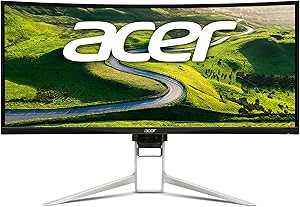
When shopping for a computer monitor, consumers inevitably cross paths with Acer and Sceptre, two brands that have carved out commanding positions in the value-to-performance segment. However, their market positioning and manufacturing philosophies diverge significantly. Acer is a multinational hardware giant with an expansive global footprint and a storied history in consumer electronics. The brand operates across every tier of the visual display market, from sub-$100 desktop units to ultra-premium, color-accurate professional displays (ConceptD) and bleeding-edge esports screens (Predator). Acer prioritizes comprehensive engineering, research-driven panel calibration, and integrated ecosystem features, appealing to gamers, enterprise workspaces, and creative professionals alike.
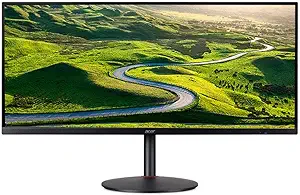
In contrast, Sceptre is a California-based company that adopts a focused, hyper-competitive pricing model. Rather than competing at the ultra-high end against elite flagships, Sceptre's primary objective is to make modern display specifications accessible to budget-conscious buyers. Sceptre does not invest heavily in proprietary display software or niche professional tiers; instead, it sources readily available display panels (predominantly high-refresh VA panels) and wraps them in minimalist enclosures to deliver raw specifications—such as 144Hz+ refresh rates, curved panels, and 4K resolutions—at price points that consistently undercut nearly every major competitor. For consumers, the choice between these two brands often boils down to a fundamental trade-off: brand pedigree, refined ergonomic engineering, and broad technological variety versus maximum specification per dollar spent.
Key Differences & Technological Comparison
Understanding the technological gap between Acer and Sceptre requires looking beneath headline specifications at panel quality, ergonomics, software integration, and connectivity.
- Panel Technology and Sourcing: Acer deploys a comprehensive portfolio of Fast IPS, VA, and increasingly OLED panels. Their gaming monitors (particularly the Nitro and Predator series) often leverage modern Fast-IPS technology that delivers rapid response times with minimal inverse ghosting or motion blur, alongside wide viewing angles. Sceptre leans heavily into Vertical Alignment (VA) panels, particularly for their curved displays. While Sceptre's VA panels offer superior native contrast ratios and deep blacks, they are prone to visible black smearing in fast-paced competitive gaming compared to Acer’s tuned IPS models.
- Color Accuracy and Factory Calibration: Acer provides superior out-of-the-box color accuracy across mid-to-high tiers, with select monitors offering factory calibration reports covering sRGB and DCI-P3 color gamuts. Sceptre monitors are functional for everyday multimedia, office tasks, and casual gaming, but often exhibit oversaturated color profiles or cooler white points out of the box that require manual user calibration to look natural.
- Build Quality and Ergonomics: This is one of the starkest differentiators. Acer monitors, especially those priced above entry-level, frequently feature fully adjustable stands offering height adjustment, tilt, swivel, and 90-degree pivot. Sceptre substantially lowers production costs by pairing their monitors with barebones, tilt-only stands that are lightweight and have a smaller desk footprint, often requiring buyers to invest in a third-party VESA mount for proper ergonomic alignment.
- On-Screen Display (OSD) and Software: Acer provides robust OSD controls, commonly paired with directional joysticks and companion desktop software (such as Acer Display Widget) that allows users to adjust monitor settings directly via Windows. Sceptre relies almost exclusively on stiff, rear- or bottom-mounted mechanical buttons with utilitarian, basic menu interfaces that can feel cumbersome to navigate.
- Port Selection and Extras: Acer often includes advanced I/O features such as integrated USB hubs, USB Type-C with Power Delivery, and modernized HDMI 2.1/DisplayPort standards on higher-end SKUs. Sceptre focuses on essential display connectivity—typically providing multiple HDMI and DisplayPort inputs—alongside built-in, low-power speakers that produce basic audio for system alerts, though lacking fidelity for media consumption.
Pros & Cons Comparison
Acer Monitors
- Pros:
- Diverse portfolio spanning budget-friendly to high-end professional and esports tiers.
- Superior motion clarity with Fast IPS implementations and minimal ghosting.
- Better out-of-the-box color accuracy and extensive picture-tuning profiles.
- Fully adjustable ergonomic stands standard on mid-range and premium models.
- Intuitive OSD navigation via joysticks and dedicated desktop software.
- Cons:
- Noticeably higher price tags than Sceptre for equivalent baseline refresh rates and resolutions.
- Entry-level models (basic non-Nitro lines) can still feature cheap, wobbly plastic stands.
Sceptre Monitors
- Pros:
- Exceptional price-to-specification ratio, routinely undercutting the market.
- High native contrast ratios and deep black levels courtesy of ubiquitous VA panels.
- Widespread adoption of curved screen form factors at budget price points.
- Standard VESA mount compatibility across virtually all models to offset weak stands.
- Multiple video inputs provided even on entry-level units.
- Cons:
- Stands are almost universally limited to tilt-only adjustments.
- Dark-level smearing and slower pixel response times are common in fast-motion gaming.
- Inconsistent factory color balance requires manual tweaking for accuracy.
- Clunky OSD controls driven by rigid physical buttons.
Performance, Durability & Value Analysis
From a pure performance perspective, Acer consistently outperforms Sceptre when metrics like motion clarity, input latency, and color fidelity are tested on dedicated hardware. While Sceptre's marketing highlights high refresh rates (such as 165Hz or 240Hz), real-world pixel response times on their VA panels often lag behind the refresh window. This manifests as noticeable motion blur or trailing behind high-contrast objects. Acer, through mature overdrive tuning in its Nitro and Predator lineups, manages pixel transition speeds much more effectively, resulting in crisper moving images that give competitive gamers a tangible advantage.
In terms of durability and long-term value, Acer holds a structural edge due to higher build tolerances, superior thermal dissipation inside the chassis, and stricter quality control over panel uniformity (reducing instances of backlight bleed and dead pixels). However, Sceptre’s value proposition remains formidable. For consumers who do not engage in twitch esports or color-critical design work, paying a 40% to 60% premium for an Acer may yield diminishing returns. Sceptre delivers functional, reliable screens that fulfill basic office, streaming, and casual gaming requirements for the lowest possible upfront investment, provided you treat the included stand as temporary or rely on a monitor arm.
Final Verdict: Which Brand Should You Choose?
Your choice between Acer and Sceptre should be dictated entirely by your performance thresholds, workspace ergonomic requirements, and budget constraints:
Choose Acer if: You are an esports enthusiast, competitive gamer, or creative professional. If you value fast pixel response times without motion smear, accurate colors straight out of the box, and a robust stand that adjusts to your posture, Acer is well worth the added investment. Lines like the Acer Nitro and Predator represent safe, well-engineered choices that offer a visibly superior daily experience for power users.
Choose Sceptre if: Your primary objective is maximizing screen size, resolution, or refresh rate while minimizing spending. Sceptre is the undisputed champion for budget-constrained buyers, students, home-office workers who need multi-monitor setups on a shoestring budget, and casual gamers who prefer immersive high-contrast curved displays over competitive-grade motion handling. If you plan to mount your display on an aftermarket arm and don't mind tuning the picture settings manually, Sceptre provides unbeatable raw value.
Affordability
When evaluating affordability in the monitor space, Sceptre operates as a hyper-budget disruptor, fundamentally engineering its displays around the lowest possible barrier to entry. Sceptre achieves its aggressive pricing by leveraging high-contrast, readily available Vertical Alignment (VA) panels, standard refresh rate controllers, and utilitarian plastic chassis that eschew premium materials. The brand excels at delivering headline-grabbing specifications—such as 75Hz to 165Hz refresh rates, curved profiles, and 1080p to 1440p resolutions—at price points that frequently undercut the entire market. However, the engineering trade-offs of Sceptre's hyper-focus on affordability are evident in the supporting hardware: stands typically feature rigid tilt-only adjustments, on-screen display (OSD) interfaces can feel archaic, built-in speakers provide tinny audio, and color accuracy out of the box often requires manual calibration to correct oversaturation or gamma drift.
Acer approaches affordability through a broader, economies-of-scale strategy, offering tiered budget options through its ubiquitous Nitro, SB, and CB series. While Acer’s absolute entry-level models sit slightly higher in price than equivalent Sceptre units, Acer delivers superior value retention and engineering refinement per dollar spent. Acer allocates a greater portion of its manufacturing budget toward quality control, minimizing backlight bleed and dead pixel occurrences. Furthermore, Acer democratizes premium panel technologies faster, offering inexpensive In-Plane Switching (IPS) panels that provide vastly superior viewing angles and color consistency compared to the budget VA panels favored by Sceptre. Acer also tends to incorporate more sophisticated display firmware, including customizable gaming profiles, superior pixel overdrive tuning to mitigate ghosting, and functional AMD FreeSync or G-Sync compatible integration that performs reliably across the refresh window.
The practical decision between the two hinges on whether a consumer prioritizes absolute cost-minimization or holistic cost-to-performance value. Sceptre is the definitive winner for buyers on a razor-thin budget who need specific high-performance metrics—like high refresh rates for competitive esports or expansive screen real estate for basic home office productivity—and are willing to accept hollow build quality and non-adjustable stands. Acer, conversely, is the superior option for consumers who can stretch their budget by a modest margin to secure tangible engineering upgrades: ergonomic adjustments, durable chassis construction, superior IPS color fidelity, and more reliable post-purchase warranty support. In the affordability equation, Sceptre optimizes the purchase price, whereas Acer optimizes the long-term user experience within the budget tier.
Customer Support & Warranty
When evaluating customer support infrastructure and warranty protections, Acer benefits significantly from its status as a top-tier, multinational hardware manufacturer. Acer’s standard monitor warranty typically spans three years, encompassing parts and labor, which directly reflects a higher baseline of engineering confidence and long-term durability. In terms of technical policy, Acer generally adheres to strict dead pixel policies defined by ISO 13406-2 Class II standards, ensuring clear, predictable thresholds for replacements based on bright or dark sub-pixel anomalies. Furthermore, Acer’s global reach enables an omnichannel customer support network—providing localized phone assistance, community troubleshooting forums, automated online ticketing, and an extensive network of regional service depots. This established framework reduces turnaround times for RMAs (Return Merchandise Authorizations) and minimizes international shipping friction, though navigating their multi-tiered interactive voice response (IVR) systems can occasionally frustrate users seeking rapid, specialized tier-two technical assistance.
In contrast, Sceptre operates primarily as a value-oriented brand, and this budget-conscious market positioning heavily shapes its post-purchase ecosystem. Sceptre monitors typically carry a limited one-year warranty, which is considerably shorter than the industry standard championed by brands like Acer. While this shortened coverage window facilitates rock-bottom initial pricing, it introduces significant long-term risk for consumers, particularly given that modern LCD and high-refresh VA/IPS panels can develop backlighting defects or panel degradation well beyond the twelve-month mark. Sceptre’s customer service is primarily localized to North America, offering direct email and phone lines that frequently connect users to domestic representatives without the complex routing of a massive enterprise. However, Sceptre’s technical support capabilities are fundamentally more transactional, and their dead pixel allowances and panel defect tolerances are less systematically documented and generally more restrictive.
The trade-off between the two brands ultimately centers on risk mitigation versus immediate cost savings. Acer delivers comprehensive, enterprise-level peace of mind with three times the warranty duration and a deeply integrated global service apparatus, making it the superior technical choice for consumers and professionals making heavy-use investments. Conversely, Sceptre sacrifices warranty longevity and formal support depth to maximize component value per dollar on day one. While Sceptre's direct support can resolve simple consumer queries effectively, buyers assume a distinct liability regarding unaddressed panel degradation, proprietary scalar failures, and potential shipping overhead once their brief one-year grace period expires.
Picture Quality
When evaluating picture quality, Acer holds a definitive engineering advantage over Sceptre, primarily due to its extensive portfolio spanning from budget-friendly workhorses to elite, color-accurate displays in its Predator, Nitro, and ConceptD lineups. Acer invests heavily in cutting-edge panel technology, frequently deploying high-grade Fast IPS, Mini-LED, and OLED panels that deliver exceptional dynamic range, factory-calibrated color accuracy (often covering 99% of the DCI-P3 and Adobe RGB spectrums with low Delta E values), and superior luminance uniformity. In contrast, Sceptre is structurally positioned as an ultra-budget brand that maximizes standard consumer specifications per dollar. While Sceptre's heavy reliance on high-contrast Vertical Alignment (VA) panels delivers surprisingly deep black levels and solid static contrast ratios—often exceeding 3000:1—their engineering lacks the sophisticated panel binning, advanced backlight dimming, and precision color tuning found in Acer's mid-to-high tier offerings.
The technical strengths and practical trade-offs between the two brands become starkly apparent in motion clarity, color fidelity, and viewing angles. Acer monitors generally feature superior overdrive implementation and wide viewing angles thanks to their IPS dominance, mitigating motion blur and inverse ghosting while maintaining consistent color and contrast even off-axis. Their high-end models offer true HDR capabilities with VESA DisplayHDR 600 or 1000 certifications, achieving peak brightness levels that make HDR content genuinely pop. Sceptre displays, while exceptionally competitive in baseline brightness (typically 250 to 350 nits) and sRGB coverage for general productivity and casual gaming, struggle significantly with pixel response times. Sceptre's affordable VA matrices are prone to noticeable dark-level smearing in fast-paced content, exhibit noticeable gamma shift at peripheral viewing angles, and often rely on basic software HDR emulation that lacks meaningful multi-zone local dimming, resulting in washed-out highlights rather than genuine contrast expansion.
Ultimately, the choice in picture quality hinges on targeted use cases versus budget constraints. Sceptre delivers commendable, cost-effective visual performance that is more than adequate for everyday office tasks, casual media consumption, and budget gaming where deep contrast in a dimly lit room is preferred over surgical color precision. However, for content creators requiring dependable chromatic fidelity, competitive gamers demanding artifact-free motion handling, or cinephiles seeking authentic HDR presentation, Acer is the superior choice. Acer’s higher manufacturing tolerances, sophisticated display processing engines, and premium panel integration guarantee a far more refined, versatile, and high-fidelity visual experience across varying lighting environments and demanding workloads.
Build Quality & Durability
When assessing engineering standards and structural integrity, Acer consistently outpaces Sceptre by leveraging a more mature manufacturing ecosystem and higher-grade materials. Acer's monitor portfolio, stretching from its budget-conscious SB and R series up to the high-performance Nitro and Predator lineups, demonstrates rigorous quality control. The chassis designs utilize dense, textured plastics that resist flexing, while higher-tier models incorporate reinforced metal sub-frames and robust, counterbalanced aluminum stands. In contrast, Sceptre operates primarily as a value-first manufacturer, engineering monitors with noticeable cost-reduction compromises. Sceptre units often rely on thinner, glossier plastics prone to creaking and surface scratches, paired with lightweight, stamped-metal or hollow plastic stands that exhibit noticeable wobble and offer minimal articulation beyond rudimentary tilt adjustments.
The technical trade-offs between the two brands become even more pronounced when examining internal component durability and thermal management. Acer equips its displays with superior internal power delivery architectures, resilient Backlight LED (W-LED) arrays, and well-ventilated chassis that dissipate heat away from the timing controller (T-CON) board and power supply unit (PSU). This design focus significantly mitigates the risk of long-term failure modes like capacitor degradation, edge-lit backlight bleeding, and IPS glow worsening over time. Sceptre displays frequently utilize aggressive cost-saving implementations, including integrated circuit boards with less robust thermal dissipation and external proprietary power bricks that can be failure points. While Sceptre sources decent panels—often VA-type sourced from reputable panel fabricators—the surrounding drive electronics and solder quality do not undergo the same stringent stress-testing found in Acer's facilities, leading to a higher frequency of dead pixels or component burn-out over extended multi-year use.
From an ownership and longevity standpoint, Acer represents a significantly safer investment for demanding environments, offering better overall fit, finish, and extended operational lifespans. Its enterprise and gaming chassis are built to withstand routine adjustments, third-party monitor arm tension via standardized VESA mounts, and continuous operation without structural warping. Sceptre, while providing unmatched upfront display specifications per dollar, demands compromises in mechanical endurance; its VESA mount implementations sometimes lack internal reinforcement, making them susceptible to stripping, and the mechanical buttons feel spongy and cheap. Ultimately, while Sceptre is entirely adequate for static, light-duty home office tasks on a strict budget, Acer delivers the superior engineering tolerances and component-level resilience required for prolonged, reliable durability.