Yamaha vs Samsung: Overview & Brand Philosophy
When curating an immersive home theater experience, the choice between Yamaha and Samsung represents a classic divergence in consumer technology: dedicated, heritage-grade audio engineering versus modern, integrated ecosystem dominance. Yamaha has been a cornerstone of acoustic performance for well over a century, translating its musical instrument craftsmanship into high-fidelity Audio/Video Receivers (AVRs) and multi-channel speaker configurations. Yamaha’s overarching philosophy prioritizes acoustic precision, signal purity, and customizable spatial sound fields, appealing directly to discerning audiophiles and dedicated home cinema purists who view home theater as an evolving, modular investment.
Conversely, Samsung approaches the home theater landscape from the perspective of an omnipresent consumer electronics titan. Renowned primarily for its market-leading display technologies, Samsung designs its audio products—chiefly premium soundbars and wireless surround systems—to bridge the gap between high performance and everyday lifestyle convenience. Following its strategic acquisition of Harman International, Samsung infused top-tier acoustic engineering from brands like JBL and AKG into sleek, contemporary form factors. Their philosophy centers on seamless interoperability, rapid wireless setup, and algorithmic spatial audio that integrates natively with modern television displays.
Ultimately, this comparison highlights two fundamentally different pathways to acoustic immersion. Yamaha caters to consumers looking to build or expand discrete, passive or active home theater arrays with comprehensive input/output flexibility and granular equalization control. Samsung targets the modern consumer who demands maximum cinematic impact with a minimal footprint, utilizing computational audio, psychoacoustics, and automated room calibration to deliver a powerful experience straight out of the box.
Key Differences & Technological Comparison
The primary technological distinction lies in hardware architecture and signal delivery. Yamaha’s core strength resides in its discrete AVR platforms (such as the Aventage and RX-V series), which house substantial high-slew-rate power amplifiers, dedicated digital-to-analog converters (DACs), and proprietary Cinema DSP HD3 processing. This digital sound processing simulates the acoustic signatures of famous concert halls and theaters worldwide. Yamaha also employs its proprietary YPAO (Yamaha Parametric Room Acoustic Optimizer) calibration technology, which analyzes room acoustics down to early reflections and angular measurements, granting the user manual parametric EQ control over every individual channel.
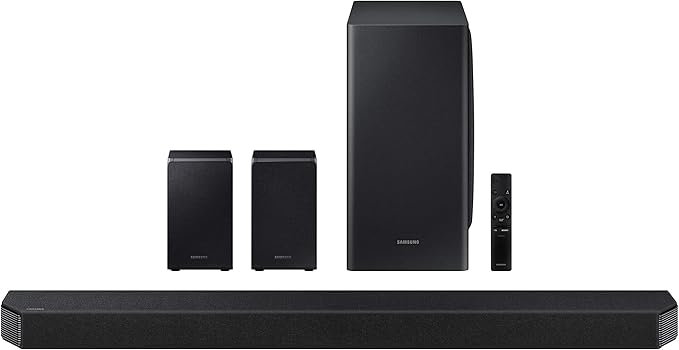
Samsung approaches sound delivery predominantly through active multi-channel soundbar flagships, such as the Q-Series (e.g., HW-Q990 series), which feature discrete up-firing, side-firing, and rear surround modules operating via low-latency wireless transmission. Rather than relying on massive analog components, Samsung leans heavily on digital signal processing (DSP) and machine learning. Technologies like Q-Symphony orchestrate sound simultaneously across both the TV speakers and the soundbar system to elevate the soundstage, while SpaceFit Sound Pro utilizes continuous algorithmic tuning to adapt to room geometry and fabric density on a cycle-by-cycle basis.
Connectivity also showcases a divergent design ethos. Yamaha AVRs serve as full-fledged multimedia command centers, boasting multiple discrete HDMI 2.1 ports capable of uncompressed 4K/120Hz and 8K/60Hz passthrough, complete analog-to-digital video conversion, dedicated phono stages for vinyl, and Multi-Zone audio distribution managed via Yamaha’s MusicCast platform. Samsung’s physical connectivity is far more consolidated, usually offering dual HDMI inputs with advanced eARC (Enhanced Audio Return Channel) capabilities and relying heavily on wireless protocols, including direct wireless Dolby Atmos transmission via Wi-Fi from compatible Samsung televisions.
Pros & Cons Comparison
Yamaha Home Theaters
- Pro: Superb Acoustic Fidelity: Discrete analog amplification and premium DAC stages produce an authentic, distortion-free soundstage with exceptional dynamic headroom.
- Pro: Modular Expandability: Enables users to mix and match passive speakers, subwoofers, and heights, providing long-term upgrade flexibility over decades.
- Pro: Advanced Calibration Control: YPAO provides granular, professional-tier control over equalization curves, speaker distances, and crossover points.
- Pro: Exhaustive Connectivity: An abundance of HDMI 2.1, digital optical, coaxial, and analog terminals allows seamless integration with complex home AV setups.
- Con: Complex Installation: Requires dedicated physical speaker wiring, careful cable management, and extensive initial setup menus.
- Con: Large Physical Footprint: AVRs and separate speaker enclosures require significant physical real estate and proper ventilation.
Samsung Home Theaters
- Pro: Streamlined Aesthetic & Integration: Low-profile soundbars and wireless surround modules integrate cleanly into modern living rooms without running speaker wire across floors.
- Pro: Cutting-Edge Spatial Formats: Out-of-the-box support for true 11.1.4-channel setups incorporating native Dolby Atmos and DTS:X decoding via computational beamforming.
- Pro: Ecosystem Synergy: Unlocks exclusive features like Q-Symphony and Wireless Dolby Atmos when paired with compatible Samsung Neo QLED or OLED televisions.
- Pro: Effortless Usability: Automated room calibration and straightforward eARC connections make installation essentially plug-and-play for mainstream users.
- Con: Non-Modular Lifecycle: Closed ecosystem means components cannot be upgraded individually; a failure or obsolescence requires complete system replacement.
- Con: Midrange Plasticity: Ultra-compact drivers can struggle with upper-bass and lower-midrange transitions compared to dedicated wooden cabinet speakers.
Performance, Durability & Value Analysis
From a performance perspective, Yamaha maintains an edge in pure dynamics, sound separation, and acoustic transparency. Because Yamaha systems typically utilize passive speaker drivers with substantial cabinet volume, they effortlessly reproduce the micro-dynamics of delicate orchestral scores alongside the visceral, wall-shaking transients of action sequences without engaging aggressive DSP limiting. In terms of durability, traditional component-based systems hold a distinct advantage: a well-built Yamaha AV receiver often lasts 10 to 15 years, while passive speakers can last indefinitely. Should a component fail or a new video codec emerge, only a single module needs to be replaced, rendering the total cost of ownership exceptionally low over a 15-to-20-year span.
Samsung, by contrast, offers extraordinary out-of-the-box price-to-performance value within the first three to five years of ownership. A flagship Samsung multi-channel soundbar package delivers an all-inclusive Dolby Atmos immersive field—including subwoofers and wireless rears—at a price point that would scarcely cover a mid-tier AVR and a pair of quality front-stage passive speakers from a specialist audio brand. However, Samsung's reliance on integrated digital electronics, wireless transceivers, and internal active micro-amplifiers reduces long-term field repairability. Software updates and integrated Wi-Fi boards introduce failure vectors that make these systems more susceptible to obsolescence on a five-to-seven-year consumer electronics replacement cycle.
Final Verdict: Which Brand Should You Choose?
The decision between Yamaha and Samsung hinges entirely on your room architecture, aesthetic tolerance, and personal audio priorities:
Choose Yamaha if: You are dedicated to building a reference-level home cinema room or have a multi-purpose media space where uncompromised audio quality is paramount. If you enjoy fine-tuning acoustic settings, value physical component upgrades, run diverse media inputs (such as high-end 4K Blu-ray players, gaming consoles, and vinyl turntables), or prefer traditional wooden-cabinet speaker performance that will outlast multiple TV generations, Yamaha is the definitive choice.
Choose Samsung if: You prioritize a sleek, minimalist aesthetic without sacrificing spatial immersion. If you live in an apartment, condo, or modern living space where running in-wall or floorboard speaker cables is impractical, Samsung's wireless flagship surround soundbars deliver immediate, cinematic Dolby Atmos envelopment with minimal physical friction. Moreover, if your primary display is already a current-generation Samsung TV, the hardware integration and unified remote operation deliver an unbeatable lifestyle home theater experience.
Features
When evaluating the feature ecosystems of Yamaha and Samsung in the home theater domain, consumers are presented with a fundamental divergence in design philosophy: dedicated audio engineering versus smart ecosystem integration. Yamaha, deeply rooted in the traditional audio-visual receiver (AVR) landscape, leads with technical audio customizability and precision signal processing. Its flagship features revolve around proprietary acoustics, such as the Cinema DSP HD3 engine, which digitally recreates the ambient soundfields of renowned concert halls and movie theaters, and the sophisticated YPAO (Yamaha Parametric room Acoustic Optimizer) calibration tool. Furthermore, Yamaha's MusicCast architecture offers an exceptionally stable multi-room audio protocol capable of handling high-resolution playback (up to 384kHz/32-bit and DSD formats) alongside broad third-party support like AirPlay 2 and bidirectional Bluetooth. In contrast, Samsung focuses its technical strengths on cutting-edge lifestyle audio, dominating the soundbar sphere with market-leading physical and virtual Dolby Atmos/DTS:X deployments (often achieving 11.1.4-channel arrays without standalone receivers) and bespoke panel-matching technologies.
Samsung’s modern feature set is deliberately engineered for low-friction synergy within its broader hardware universe. Features like Q-Symphony dynamically orchestrate the simultaneous output of Samsung TV speakers alongside the soundbar drivers, vastly expanding the vertical soundstage without requiring a complex AV rack setup. Samsung also emphasizes automated, lifestyle-centric features such as SpaceFit Sound Pro, which combines ambient mic analysis with TV-side processing to equalize room acoustics on the fly, alongside hands-free voice control (Bixby, Alexa), Tap Sound via NFC, and wireless Dolby Atmos transmission over Wi-Fi, which completely eliminates the HDMI connection from the TV. However, while Samsung provides a plug-and-play marvel rich in convenience, it operates as a mostly closed, appliance-style ecosystem with minimal manual EQ depth, fixed amplification paths, and limited multi-source routing capabilities compared to Yamaha’s comprehensive interface options.
Ultimately, the practical trade-offs between the two brands hinge on how much control and versatility a user demands from their entertainment space. Yamaha delivers a feature package tailored to purists and custom installers who prioritize granular crossover adjustments, expansive HDMI 2.1 pass-through routing for advanced gaming consoles (supporting 4K/120Hz and 8K/60Hz uncompressed), and multi-zone output (Zone 2/3) across disparate rooms. Samsung sacrifices this modularity in favor of sheer integration efficiency, offering features that maximize modern living room aesthetics and deliver immense multi-channel surround output from compact, wireless form factors. Yamaha is the superior choice for users wanting deep acoustic customization and future-proof component routing, whereas Samsung is unmatched in delivering accessible, TV-centric smart features and seamless spatial audio straight out of the box.
Performance
When evaluating raw acoustic performance, Yamaha and Samsung represent two fundamentally distinct engineering philosophies within the home theater space. Yamaha leans heavily into its storied heritage of professional audio and traditional component engineering. Operating primarily through dedicated AV receivers (such as the Aventage series) paired with modular speaker configurations, Yamaha prioritizes natural tonality, dynamic headroom, and pinpoint channel separation. Their proprietary YPAO (Yamaha Parametric room Acoustic Optimizer) calibration software meticulously analyzes room geometry to eliminate acoustic dead zones and Phase interference. Furthermore, Yamaha's high-slew-rate amplifiers deliver exceptionally low total harmonic distortion (THD), translating to uncompressed, pristine musicality and articulate dialogue even at extreme volume levels where lesser systems introduce clipping.
Conversely, Samsung approaches home theater performance through cutting-edge digital signal processing (DSP), integrated hardware ecosystems, and spatial computational audio. Dominating the premium soundbar market with its flagship Q-Series systems, Samsung leverages advanced acoustic beamforming, side-firing drivers, and up-firing Dolby Atmos arrays to create an expansive, multidimensional soundstage without requiring complex in-wall wiring. Technologies like SpaceFit Sound Pro dynamically recalibrate the audio profile based on real-time room feedback, while Q-Symphony harmonizes the soundbar with compatible Samsung television speakers to raise the vertical soundstage. While Samsung delivers astonishingly immersive, punchy, and cinematic bass via wireless subwoofers tuned for high-impact movie effects, it inherently lacks the analog warmth, micro-detail resolution, and sustained high-output stability found in Yamaha’s discrete discrete-transistor architectures.
Ultimately, the trade-off in performance centers on acoustic purity versus optimized convenience. Audiophiles, serious cinephiles, and users with dedicated, acoustically treated media rooms will find Yamaha’s expansive dynamic range, pristine stereo imaging, and customizable crossover points vastly superior for high-fidelity source material. On the other hand, mainstream consumers seeking blistering, room-filling cinematic impact with zero setup friction will benefit from Samsung’s aggressive, DSP-driven performance. Samsung masterfully psychoacoustically simulates an authentic 11.1.4-channel surround experience within compact form factors, making it an engineering marvel for modern living spaces, even if it cannot match the raw electrical current and organic acoustic staging that define Yamaha’s high-end performance envelope.
Design
When evaluating design in the home theater domain, Yamaha and Samsung adhere to fundamentally contrasting engineering philosophies that target distinctly different consumer priorities. Yamaha champions a traditional, acoustic-first industrial design language deeply rooted in audiophile heritage. Its AV receivers and discrete speaker ensembles feature substantial, rigid chassis engineered for structural integrity and resonance suppression. Yamaha’s design ethos centers on heat dissipation, shielded internal partitioning, and tactile analog interfaces—distinguished by brushed aluminum faceplates, weighted mechanical dials, and comprehensive rear I/O connectivity. In contrast, Samsung prioritizes modern minimalism and architectural integration. Rather than showcasing components, Samsung designs its home theater ecosystems—predominantly premium soundbars and low-profile satellite systems—to visually recede into contemporary living spaces. Utilizing sleek polycarbonates, acoustically transparent textiles, and ultra-slim enclosures that seamlessly align with modern display bezels, Samsung's industrial approach focuses on visual unobtrusiveness and high lifestyle compatibility.
The technical trade-offs between the two approaches become especially evident when balancing spatial integration against functional versatility. Samsung leads the market in ergonomic, wireless-forward technical design; features such as ultra-low-profile chassis, upward- and side-firing driver arrays tailored for reflective Dolby Atmos, and wireless inter-speaker communication virtually eliminate cable clutter and complex room layouts. However, Samsung’s sealed, compact forms constrain internal thermal management, limiting long-term driver excursion capabilities and eliminating the possibility of component-level hardware upgrades. Yamaha’s design prioritizes functional modularity and high-grade acoustic mass. By employing anti-resonance technology—such as the dampening fifth foot found on its Aventage receivers—and independent power transformers, Yamaha achieves vastly superior physical isolation from acoustic feedback. The physical consequence of this engineering is a significantly larger footprint, demanding dedicated AV rack space, calculated clearance for thermal ventilation, and the management of extensive analog and digital wire runs.
Ultimately, the practical choice between Yamaha and Samsung hinges on the trade-off between physical aesthetics and acoustic engineering. Samsung delivers an exceptionally polished consumer design engineered for quick deployment, modern aesthetics, and frictionless synergy with flat-panel televisions. Yamaha offers a time-tested, professional design architecture intended for custom installations and dedicated media rooms where component visibility is embraced in pursuit of optimal acoustic dynamics, physical durability, and extensive physical switchgear control.