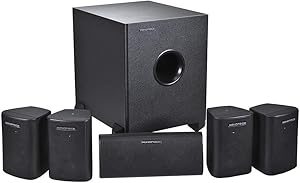
Yamaha vs Monoprice: Overview
Comparing Yamaha and Monoprice helps you determine which brand is best suited for your needs in Home Theaters. Both brands offer strong choices depending on your budget and key feature requirements.
Key Features & Comparison
Evaluate factors such as build quality, warranty, customer satisfaction, and total value before making your final purchase choice between Yamaha and Monoprice.
Features
From a feature and connectivity standpoint, Yamaha operates at the absolute cutting edge of AV receiver architecture and smart home interoperability. The Japanese manufacturer equips its Aventage and RX-V series AVRs with native support for the latest HDMI 2.1 protocols, robust 4K/120Hz and 8K/60Hz video passthrough, and an exhaustive suite of proprietary processing modes, including Cinema DSP HD3 and Surround:AI, which dynamically optimize soundfield dynamics in real time. Additionally, Yamaha’s MusicCast multi-room ecosystem provides seamless high-resolution network streaming across platforms like Tidal, Spotify, and AirPlay 2, while integrated YPAO (Yamaha Parametric Room Acoustic Optimizer) calibration ensures accurate multi-point phase, frequency, and distance correction.
Monoprice, particularly through its premium Monolith division, approaches features with an uncompromising focus on acoustic fidelity and raw processing capability rather than ambient lifestyle conveniences. While Monoprice AV processors offer high-end audiophile features such as balanced XLR pre-outs, Dirac Live calibration (often regarded as superior to consumer-tier proprietary solutions), and full 16-channel processing for extensive Dolby Atmos and DTS:X layouts, they typically omit polished companion apps, proprietary multi-room ecosystems, and entry-level smart automation perks. Monoprice relies on standardized, professional-grade processing interfaces, meaning users trade consumer conveniences like automated streaming ecosystems for deep, granular calibration and reference-level signal routing.
Performance
In terms of acoustic performance, Yamaha demonstrates a refined, spacious, and highly articulate sonic signature. Yamaha’s power amplification is engineered with high-slew-rate topology, resulting in pristine high-frequency transient responses, exceptional channel separation, and crystal-clear dialogue intelligibility even through complex movie mixes. In multi-channel cinematic environments, Yamaha’s proprietary processing creates an extraordinarily expansive three-dimensional sound bubble that can artificially expand smaller listening rooms, though its entry-to-mid-range subwoofers and packaged speakers can occasionally lack the low-frequency authority and slam demanded by modern, high-SPL action blockbusters.
Monoprice, conversely, unleashes sheer visceral energy and physical dynamics, making it an acoustic juggernaut in dedicated theater rooms. Monolith multi-channel power amplifiers utilize massive toroidal transformers and isolated discrete channels to deliver immense current reserves with vanishingly low distortion, easily driving low-sensitivity, low-impedance loudspeakers. Furthermore, Monoprice’s THX Ultra-certified subwoofers consistently set benchmark performance measurements for linear output, sub-20Hz extension, and total absence of port chuffing. Where Yamaha achieves an airy, highly processed, and enveloping soundstage, Monoprice delivers reference-level impact, unrelenting dynamic headroom, and uncompromising sonic neutrality.
Design
Yamaha’s physical design language reflects modern Japanese industrial precision and contemporary living space integration. Modern Yamaha receivers feature sleek, minimalist gloss-black front fascias anchored by a centrally placed, tactile master volume knob and clean, high-visibility high-resolution displays. Internally, Yamaha showcases meticulous chassis reinforcement, including the signature Anti-Resonance Technology (A.R.T.) Wedge—a fifth foot positioned beneath the chassis base to dampen mechanical vibrations from the transformer and heat sinks. Their matching speaker lines feature elegant wood veneers, rounded baffle edges, and furniture-grade finishes designed to blend effortlessly into upscale home decors.
Monoprice takes a decidedly utilitarian, function-over-form approach to industrial design that aligns closely with commercial cinema rack equipment. Monolith amplifiers and processors are built like heavy-duty industrial vaults, characterized by thick, matte-black brushed aluminum faceplates, exposed heavy heat sinks, and massive steel chassis that prioritize passive thermal dissipation over aesthetic subtlety. Monoprice speakers and subwoofers utilize dense HDF enclosures finished in no-nonsense satin or vinyl wraps, featuring robust internal bracing and magnetic grilles. While Monoprice hardware lacks the sculpted, modern refinement of Yamaha’s exterior architecture, its structural mass and deliberate over-engineering project an aura of durable, professional-grade durability.