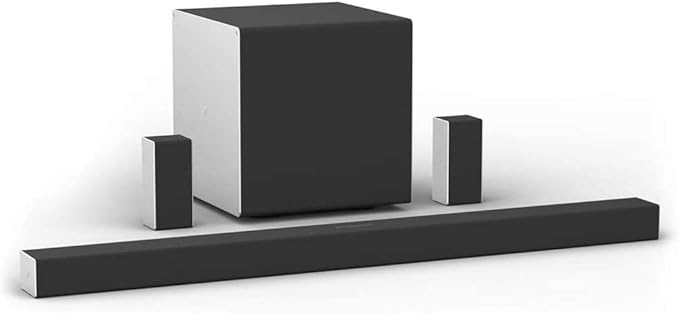
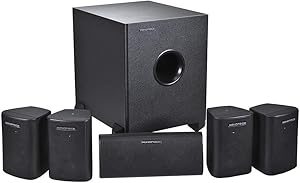
VIZIO vs Monoprice: Overview
Comparing VIZIO and Monoprice helps you determine which brand is best suited for your needs in Home Theaters. Both brands offer strong choices depending on your budget and key feature requirements.
Key Features & Comparison
Evaluate factors such as build quality, warranty, customer satisfaction, and total value before making your final purchase choice between VIZIO and Monoprice.
Features
In terms of user-centric features, VIZIO excels at modern consumer electronics ergonomics and digital connectivity. Modern VIZIO sound systems frequently integrate HDMI eARC support, automated voice assistant integrations via dedicated inputs, Bluetooth streaming, and built-in DTS Virtual:X or dedicated Dolby Atmos height channels on upper-tier models like the Elevate series. VIZIO's firmware is optimized for smart TV interaction, often allowing CEC control so a single remote manages power and volume seamlessly. The primary trade-off is fixed feature sets; once you purchase a VIZIO 5.1.2 or 5.1.4 system, the channel configurations, active crossovers, and amplification profiles cannot be fundamentally modified or expanded.
Monoprice, particularly via its Monolith portfolio, takes a radically different engineering approach that favors hardware capabilities over lifestyle software tricks. Monoprice passive speaker lines feature sophisticated passive crossover networks, high-grade binding posts, and planar or ribbon tweeters alongside heavy-duty woofers, leaving source decoding and streaming to external AV processors. However, in their self-contained digital products, Monoprice offers robust DSP options, specialized room tuning switches, and comprehensive parametric EQ settings that allow sophisticated calibration unmatched by VIZIO's streamlined presets. While Monoprice lacks the effortless plug-and-play smart ecosystem of VIZIO, it affords enthusiasts boundless customization, individual component upgrades, and broad standard compatibility.
Performance
Performance benchmarks highlight fundamentally different acoustic profiles between the two brands. VIZIO designs its audio processing to extract maximum perceptual loudness, dynamic punch, and dialogue clarity from relatively compact enclosures. Using active DSP equalization, VIZIO systems emphasize mid-bass impact and articulate center-channel vocal presence, which makes movie dialogue intelligible even at low listening levels. On systems like the VIZIO M-Series and Elevate, spatial processing creates an expansive soundstage that convincingly mimics a cinema room. However, under high dynamic loads, the ultra-compact drivers and lightweight ported subwoofers can encounter harmonic distortion, compression, and mid-range cabinet resonance.
Monoprice, particularly its Monolith series, delivers acoustic performance grounded in classic audiophile physics. With substantially larger acoustic cabinets, inert high-density fiberboard construction, and massive magnetic motor structures, Monoprice speakers and subwoofers exhibit far flatter frequency responses, lower total harmonic distortion, and superior dynamic headroom. A Monolith THX-certified subwoofer, for instance, can produce linear, subterranean bass down to 16Hz without port turbulence, a feat physically impossible for VIZIO's consumer-grade soundbar subwoofers. For uncompressed dynamic peaks, transient speed, and reference-level playback, Monoprice operates in a distinct performance tier that approaches bespoke high-end audio gear.
Design
From an aesthetic and industrial design standpoint, VIZIO focuses on living room integration, low visual impact, and consumer elegance. Its soundbars feature slim profiles, low-profile physical heights designed to clear television bezels, and tasteful wrap-around fabric grilles with rounded corners. Innovative designs such as the rotating height speakers on the VIZIO Elevate demonstrate an appetite for futuristic, functional consumer styling. Because VIZIO systems are built primarily with molded ABS plastics and lightweight composite materials, they are easy to wall-mount and visually disappear within modern decor, emphasizing a contemporary, unobtrusive aesthetic.
Monoprice designs prioritize acoustic functionality, thermal dissipation, and structural rigidity over slender forms. Monolith loudspeakers and subwoofers are unapologetically large, heavy, and boxy, often finished in utilitarian black ash vinyl or dense matte finishes designed to suppress internal standing waves and mechanical resonance rather than win interior decorating awards. Monoprice standalone amplifiers feature heavy steel chassis, oversized heatsinks, and thick brushed aluminum faceplates built for equipment racks rather than media consoles. While VIZIO designs for contemporary minimalism, Monoprice designs for durability, thermal stability, and strict adherence to acoustic principles.