SVS vs Nakamichi: Overview
Comparing SVS and Nakamichi helps you determine which brand is best suited for your needs in Home Theaters. Both brands offer strong choices depending on your budget and key feature requirements.
Key Features & Comparison
Evaluate factors such as build quality, warranty, customer satisfaction, and total value before making your final purchase choice between SVS and Nakamichi.
Features
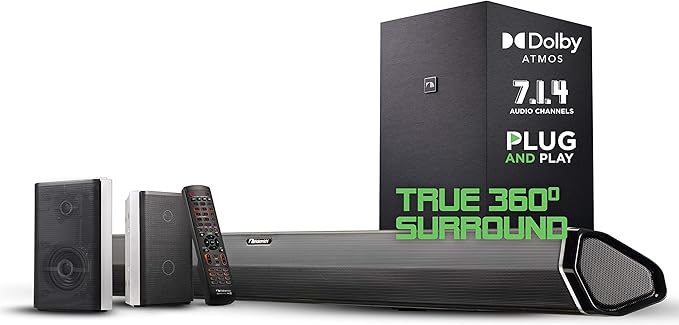
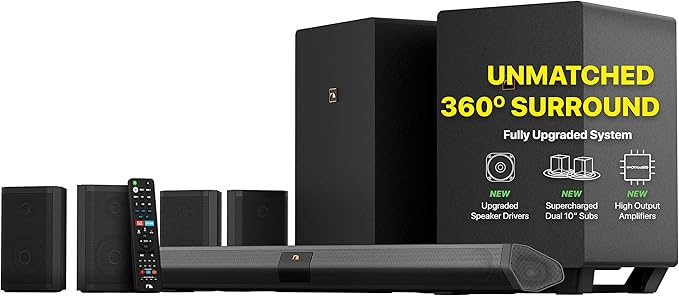
The feature landscape of both brands reflects their architectural divergences, with Nakamichi excelling in native processing and SVS prioritizing acoustic versatility. Nakamichi systems, especially the Dragon and Shockwafe Ultra eARC iterations, are technological tour-de-forces loaded with native Dolby Atmos, DTS:X Pro, and extensive HDMI 2.1 pass-through capabilities supporting 4K/120Hz and 8K HDR gaming. They feature wireless transmitter modules for satellite speakers and subwoofers, custom DSP spatial mapping algorithms, and advanced on-screen interfaces that enable rapid switching between tailored surround modes, making them exceptionally versatile multimedia hubs right out of the box.
SVS approaches features from an electro-acoustic and calibration perspective rather than onboard video-switching. Because SVS passive speakers rely entirely on the decoding, processing, and room-correction capabilities of the chosen AV receiver, the brand directs its feature innovation into its active subwoofers. Through the proprietary SVS smartphone app, users gain bi-directional Bluetooth control over three-band parametric EQ, low-pass filters, phase adjustments, and custom listening presets. While Nakamichi manages signal processing, decoding, and wireless transmission across all channels natively, SVS provides surgical, analog-level acoustic customization that gives users unparalleled control over low-frequency integration.
Performance
Acoustic performance is where the discrete superiority of SVS meets the computational muscle of Nakamichi. SVS sets the industry standard for dynamic headroom, low-frequency extension, and mechanical linearity. Their subwoofers effortlessly plunge below 20Hz with vanishingly low distortion, delivering physical, chest-thumping impact while maintaining micro-detail. SVS bookshelf, tower, and center-channel speakers utilize rigid driver materials and meticulously engineered crossover networks that present a wide, coherent soundstage, pristine vocal clarity, and neutral, uncolored tonal accuracy that easily handles both explosive cinematic tracks and delicate, two-channel stereo music playback.
Nakamichi counters not with pure driver displacement, but with an aggressive multi-directional sound field achieved through brute-force channel density. By incorporating dual or quad subwoofers and bipole/dipole satellite arrays, Nakamichi’s systems achieve exceptional surround envelopment that effectively masks room acoustic deficiencies and eliminates bass nulls. While Nakamichi's high-excursion soundbar drivers can introduce slight midrange compression at peak reference volumes compared to the effortless headroom of SVS cabinet speakers, their high-end Dragon platform closes this gap dramatically with planar tweeters and bipolar drivers, offering staggering, room-filling dynamics that rival many mid-tier discrete setups.
Design
From a design perspective, SVS emphasizes timeless, acoustic-first industrial engineering. Their speaker enclosures are built using thick medium-density fiberboard (MDF) with internal bracing designed to eliminate cabinet resonance and driver coloration. Aesthetically, SVS leans into classical hi-fi styling, offering luxurious real wood veneers and deep piano gloss black or white finishes with radiused baffles to minimize edge diffraction. These are substantial, furniture-grade speakers that make an overt visual statement in a room, requiring dedicated floor space, stands, or heavy-duty wall mounts along with concealed speaker wire runs.
Nakamichi adopts a sleek, tactical, and aggressively modern design language tailored for modern living rooms and media spaces. Their soundbars, satellite pods, and subwoofers utilize brushed industrial textures, perforated metal grilles, and angular silhouettes that sit unobtrusively beneath ultra-thin displays or behind modern seating. The physical footprint of Nakamichi products is far more compact, and because their surround and subwoofer links are largely wireless, the installation footprint remains remarkably clean. While SVS creates substantial visual centerpieces focused on internal volume and resonance suppression, Nakamichi delivers maximum industrial efficiency and minimal clutter.
Compare current retail pricing, active promotions, and verified stock availability directly from authorized stores: