Sony vs VIZIO: Overview
Comparing Sony and VIZIO helps you determine which brand is best suited for your needs in Home Theaters. Both brands offer strong choices depending on your budget and key feature requirements.
Key Features & Comparison
Evaluate factors such as build quality, warranty, customer satisfaction, and total value before making your final purchase choice between Sony and VIZIO.
Features
Sony showcases its engineering muscle through sophisticated acoustic algorithms and bespoke technologies that cater to demanding audio setups. Many high-tier Sony soundbars and receivers utilize 360 Spatial Sound Mapping, Acoustic Center Sync (which integrates the television panel as the center channel), and Sound Field Optimization to map physical room boundaries via internal microphones. Furthermore, Sony leads in connectivity standards, routinely offering dual HDMI 2.1 pass-through ports capable of 4K at 120Hz and 8K video routing, as well as full compatibility with hi-res audio codecs like LDAC and DSD. These feature sets ensure Sony gear integrates seamlessly with modern gaming consoles like the PlayStation 5 and high-end media players.
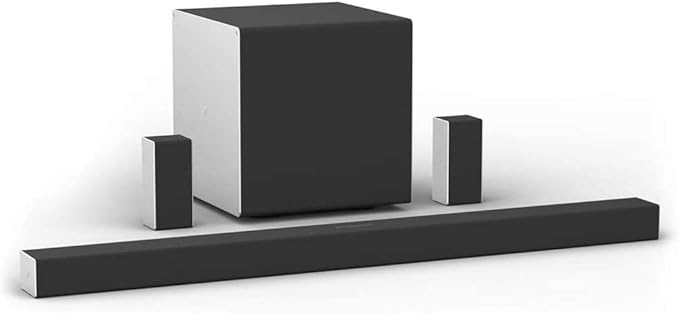
VIZIO answers with intuitive, practical feature sets designed for straightforward consumer operation, though with less emphasis on custom calibration. The brand made waves with its motorized rotating height speakers on the flagship Elevate system, which mechanically articulate upward when Dolby Atmos or DTS:X signals are detected. VIZIO also prioritizes plug-and-play simplicity, routing surround speakers directly into the wireless subwoofer to reduce cable clutter across the room. However, VIZIO home theaters typically cut corners on secondary connectivity, often omitting full HDMI 2.1 passthrough and relying instead on eARC, while offering simpler onboard EQ presets rather than granular parametric room correction.
Performance
From an acoustic performance standpoint, Sony sets a high benchmark with nuanced sound reproduction, expansive dynamic range, and exceptional vocal clarity. Sony's proprietary X-Balanced speaker units and beam tweeters deliver an articulate soundstage that separates intricate high frequencies from booming cinematic impacts without distortion. In home theater configurations, Sony systems excel at phantom channel rendering, producing realistic height and lateral sound placement that envelops the listener organically. Musicality is another clear Sony strength, as their hardware preserves transient details and instrument separation far better than typical consumer-grade sound systems.
VIZIO delivers a hard-hitting, cinematic audio profile that focuses on punchy bass response and wide channel separation. Thanks to the inclusion of discrete satellite speakers and substantial subwoofers even at mid-range price points, VIZIO systems offer true physical surround sound that easily outperforms virtual soundbars in the same bracket. The low-end tuning tends to be aggressive, which works wonders for action blockbusters and gaming. However, VIZIO units lack the micro-detail and tonal balance of Sony; high frequencies can occasionally sound harsh at elevated volumes, and the midrange can get slightly muddy during dialogue-heavy scenes when competing against heavy bass tracks.
Design
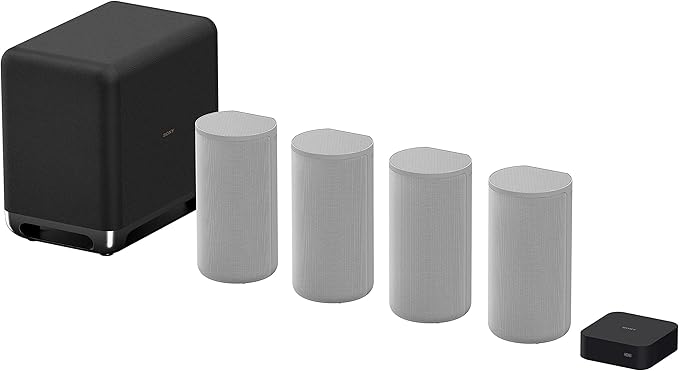
Sony's industrial design language embodies understated elegance, premium material choices, and minimalist Japanese aesthetics. Its soundbars and AV components feature rounded geometries, acoustically transparent fabric grilles, and premium metallic or textured matte finishes designed to complement high-end living spaces. Furthermore, systems like the modular HT-A9 challenge traditional home theater aesthetics entirely by utilizing four standalone, cylindrical wireless enclosures that blend into interior decor. Sony's construction feels dense, deliberate, and engineered to eliminate cabinet resonance, reflecting the price tag of a top-tier manufacturer.
VIZIO adopts a sleeker, modern, but noticeably more utilitarian design approach. While products like the VIZIO Elevate present a striking visual identity with anodized aluminum accents and rotating speaker assemblies, most of their standard lineup utilizes cost-effective materials like lightweight plastics and tight fabric wraps that attract dust over time. The industrial footprint of VIZIO soundbars is generally compact and slim, allowing them to nestle cleanly under low-profile televisions. While structurally sound and aesthetically pleasing from a distance, VIZIO systems do not convey the same architectural luxury or physical heft found across Sony's catalog.
Compare current retail pricing, active promotions, and verified stock availability directly from authorized stores: