Sony vs Samsung: Overview
Comparing Sony and Samsung helps you determine which brand is best suited for your needs in Home Theaters. Both brands offer strong choices depending on your budget and key feature requirements.
Key Features & Comparison
Evaluate factors such as build quality, warranty, customer satisfaction, and total value before making your final purchase choice between Sony and Samsung.
Features
In terms of feature sets, both brands aggressively push the boundaries of spatial audio, but they execute their proprietary ecosystems differently. Samsung relies heavily on its proprietary Q-Symphony technology, which allows the drivers of a compatible Samsung Neo QLED or OLED television to fire simultaneously with its soundbar systems, creating a taller and more cohesive front soundstage. Additionally, Samsung incorporates SpaceFit Sound Pro, an automated calibration routine that dynamically optimizes equalization and subwoofer response to the physical dimensions of the room. Its integration of wireless Dolby Atmos across multiple product tiers is an industry standout, eliminating cable clutter while preserving high-definition object-based surround sound streams over Wi-Fi.
Sony counters with its proprietary 360 Spatial Sound Mapping technology, a sophisticated algorithmic system that synthesizes phantom speakers between physical units to create a dome of immersive sound that adapts even to asymmetrical speaker placements. Sony's feature suite is deeply integrated with its BRAVIA ecosystem via Acoustic Center Sync, which turns the television screen into the dedicated center channel for pinpoint dialogue localization. Furthermore, Sony provides superior legacy and high-resolution support, including LDAC Bluetooth streaming, DSEE Ultimate upscaling, and dedicated HDMI 2.1 pass-through capabilities supporting 4K at 120Hz and 8K with VRR, making Sony's premium units noticeably more capable hubs for next-generation gaming consoles and reference media players.
Performance
Acoustic performance reveals the core philosophical divide between the two manufacturers, particularly in frequency response and tonal balance. Sony prioritizes a neutral, studio-reference sound profile engineered to replicate the director's original vision without artificial coloration. Its midrange clarity is exceptional, rendering dialogue, ambient environmental cues, and delicate orchestral scores with pristine articulation and zero harshness. Bass reproduction in Sony's standalone subwoofers and flagship systems is controlled, tight, and articulate, favoring musicality and transient speed over raw, room-shaking SPL, which ensures that low-end effects never muddy the critical dialogue frequencies.
Samsung, by contrast, engineers its home theater systems for maximum visceral impact and dynamic excitement. Out of the box, Samsung soundbars and speaker packages deliver a classic V-shaped sound signature characterized by sparkling treble and deep, authoritative low-end impact. This makes Samsung exceptionally compelling for blockbuster action films, modern gaming, and bass-heavy music, where explosive transients and physical rumble are paramount. While Samsung's automated room correction helps manage room modes, critical listeners may occasionally note a slight metallic tinge in upper frequencies or a slight masking of lower-mid frequencies during complex, chaotic soundscapes compared to Sony’s more refined digital acoustic filtering.
Design
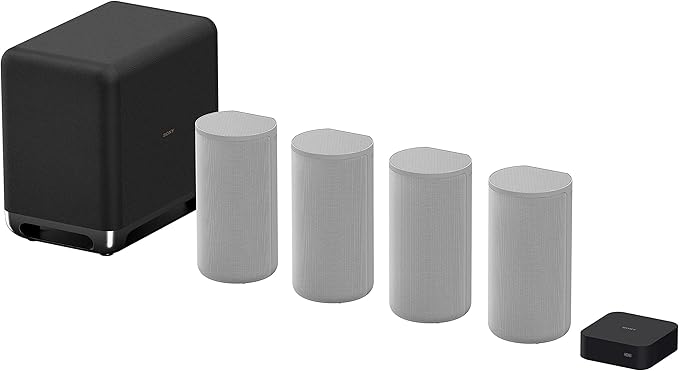
From an industrial design standpoint, Sony favors an understated, premium aesthetic characterized by architectural lines and high-grade materials. Sony products often feature rounded edges, tactile fabric wraps, and textured matte finishes designed to absorb light reflections within a darkened home cinema environment. Flagship models like the HT-A9 break away from conventional soundbar geometry entirely, utilizing cylindrical, monolithic wireless pods that blend effortlessly into modern minimalist decor. Every port, vent, and acoustic waveguide on a Sony system reflects thoughtful, vibration-dampening engineering intended to suppress unwanted cabinet resonance and maximize structural rigidity.
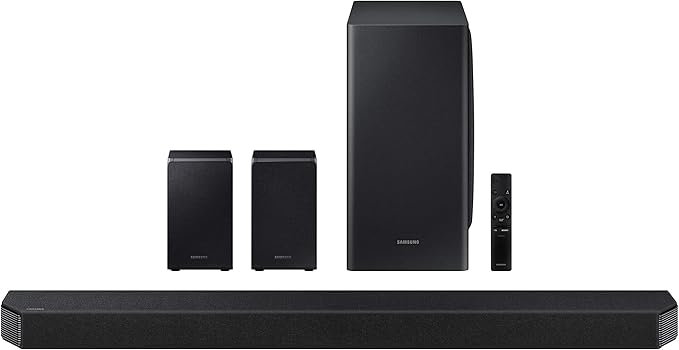
Samsung adopts a more aggressive, contemporary consumer electronics aesthetic defined by sharp geometric angles, metallic acoustic grilles, and low-profile enclosures. Designed to sit flush beneath ultra-thin modern televisions without obstructing screen bezels or IR sensors, Samsung’s soundbars and satellite speakers project a futuristic, high-tech presence. The metal mesh grilles used across much of Samsung's flagship line offer durable, easily cleanable surfaces that resist pet damage and dust accumulation far better than traditional acoustic fabric. While visually striking and practical for multi-use living rooms, Samsung’s styling is undeniably tech-centric, contrasting with Sony's more furniture-like integration.