Sony vs Nakamichi: Overview
Comparing Sony and Nakamichi helps you determine which brand is best suited for your needs in Home Theaters. Both brands offer strong choices depending on your budget and key feature requirements.
Key Features & Comparison
Evaluate factors such as build quality, warranty, customer satisfaction, and total value before making your final purchase choice between Sony and Nakamichi.
Features
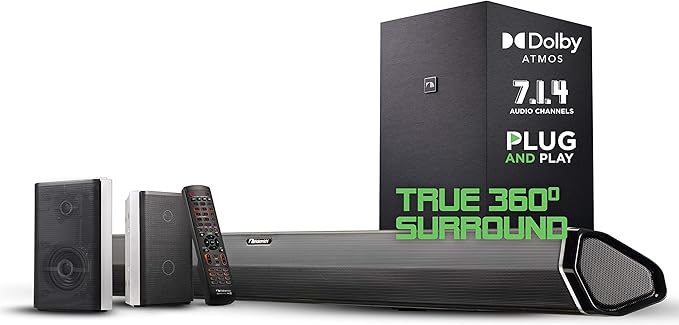
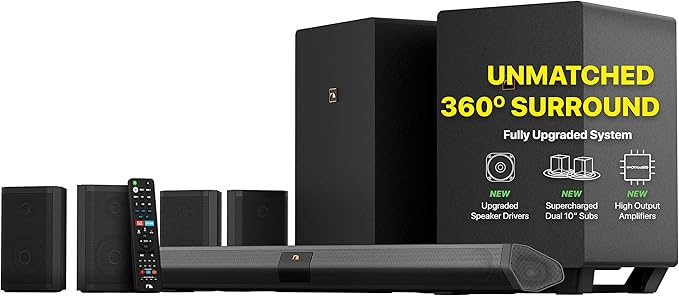
In terms of feature sets, Nakamichi takes an approach centered on extensive physical channel routing and high-bandwidth processing. Nakamichi's high-end systems are legendary for supporting massive multi-channel configurations—up to 21 channels in the Dragon system—backed by dual or quad subwoofers and four dedicated modular surround units. On the connectivity front, Nakamichi integrates cutting-edge HDMI 2.1 pass-through with full support for 4K 120Hz, Variable Refresh Rate (VRR), and Auto Low Latency Mode (ALLM), catering directly to high-end gamers and videophiles. Their systems fully decode comprehensive spatial audio formats, including Dolby Atmos, DTS:X Pro, and DTS:X, while offering deep granular calibration controls directly through backlit remote interfaces that do not force users into proprietary smartphone apps.
Sony counters with an expansive suite of smart lifestyle capabilities and proprietary acoustic technologies that emphasize automation and cross-device synergy. Sony’s 360 Spatial Sound Mapping uses built-in microphones to actively measure the listening environment and synthesize dozens of phantom speakers from a minimal set of physical units. Connectivity is similarly modern with eARC and HDMI 2.1 switching, but Sony extends beyond standard inputs by offering deep integration with the Sony ecosystem, including Acoustic Center Sync—which turns a compatible Bravia TV screen into the center channel speaker—and wireless subwoofers and rears that pair effortlessly. Furthermore, Sony features comprehensive wireless streaming protocols out of the box, such as Apple AirPlay 2, Spotify Connect, Google Cast, and native LDAC high-resolution Bluetooth audio, outclassing Nakamichi in smart home and multi-room convenience.
Performance
Acoustic performance is where the divergent philosophies of both manufacturers become most pronounced, with Nakamichi prioritizing dynamic headroom, visceral impact, and wide dynamic range. By utilizing multiple physical subwoofers placed in opposing corners, Nakamichi systems virtually eliminate bass standing waves and acoustic dead zones, producing uniform, tactile low-end that reaches into deep infrasonic territory. The mid-range and treble are punchy and highly articulate, driven by dedicated silk-dome tweeters and high-output drivers designed to sustain high sound pressure levels (SPL) without distortion. In large rooms or dedicated theater spaces, Nakamichi delivers an authentic multiplex sensation, delivering explosive transients and clear directional cues that accurately translate the aggressive sound mixes of modern blockbusters.
Sony's performance profile, by contrast, is characterized by psychoacoustic precision, surgical imaging, and tonal balance. Rather than relying on brute force, Sony's custom acoustic architectures and X-Balanced speaker units emphasize low distortion and pristine vocal clarity, ensuring that complex dialogue remains intelligible even during chaotic sound sequences. Their spatial mapping algorithms generate an eerily coherent, bubble-like dome of sound that compensates effectively for asymmetrical room layouts, bouncing reflections off walls and ceilings to create a surprisingly wide soundstage from fewer physical enclosures. While Sony’s subwoofers may not deliver the room-shaking tactile shock of Nakamichi’s dual or quad configurations, their low-end response is tight, musical, and meticulously integrated, making Sony systems exceptionally versatile for both cinema and critical music listening.
Design
From an industrial design standpoint, Nakamichi embraces a bold, functional, and unapologetically hardware-centric aesthetic. The soundbars, subwoofers, and surround speakers feature rugged, industrial enclosures finished in matte textures, brushed metals, and angular grilles designed to accommodate large internal driver chambers and active cooling solutions. Nakamichi’s hardware makes no pretense of disappearing into the background; units like the Dragon soundbar are imposing, measuring over 58 inches wide and featuring upward-firing drivers tilted at specific physical angles to maximize dispersion. While this design is ideal for dedicated home theater rooms and wide media consoles, it demands substantial physical space and can dominate minimalist or compact living areas.
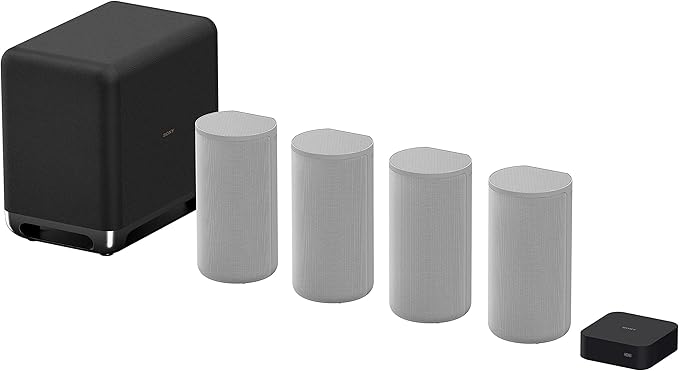
Sony approaches design through an elegant, Scandinavian-inspired, architectural lens that prioritizes aesthetic harmony within modern interiors. Products like the HT-A9 and Bravia Theatre quad use softly contoured, cylindrical, or ultra-slim profiles wrapped in premium acoustically transparent fabrics and neutral tones like light gray and charcoal. Sony's components are engineered to blend seamlessly into residential environments, utilizing discreet wireless transmitters to eliminate visible cable runs across the room. Furthermore, their soundbars feature low profiles designed to sit cleanly beneath standard television bezels without blocking screen estate or IR sensors. For consumers whose priority is high-end audio performance without sacrificing contemporary interior design standards, Sony holds a distinct advantage in form and finish.