Sony vs Monoprice: Overview & Brand Philosophy
When engineering a modern home theater, consumers frequently find themselves weighing the prestige of established legacy brands against the disruptive value of direct-to-consumer alternatives. Sony stands as one of the quintessential titans of the audiovisual industry, boasting a decades-long heritage of end-to-end entertainment production. From professional film cameras and Hollywood mastering studios to consumer-grade AVRs, soundbars, and premium laser projectors, Sony approaches home theater design with an ecosystem philosophy. Their goal is holistic synergy, reproducing cinematic audio and imagery exactly as creators intended through sophisticated digital signal processing and seamless integration across consumer electronics.
Conversely, Monoprice entered the AV market with a radically different ethos: stripping away retail markups, flashy marketing campaigns, and brand-name premiums to deliver direct-to-consumer audiophile hardware at cutthroat prices. Through sub-brands like Monolith by Monoprice, the company has transformed from a distributor of budget cables into an unexpected powerhouse in high-end audio engineering. Monoprice focuses aggressively on physical acoustics, over-engineered analog componentry, high-current amplification, and THX-certified acoustic transparency, appealing directly to purists and custom home theater builders looking to maximize their dollar-per-decibel performance.
Key Differences & Technological Comparison
The primary divergence between Sony and Monoprice lies in their engineering priorities: software-driven digital integration versus raw, component-level acoustics.
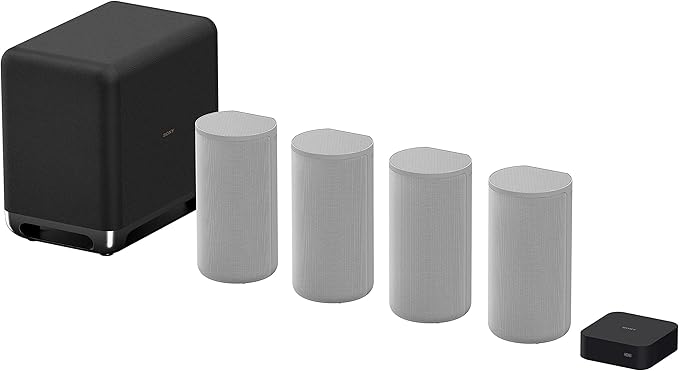
Sony dominates the software and spatial audio arena with technologies such as 360 Spatial Sound Mapping (360 SSM) and Digital Cinema Auto Calibration (D.C.A.C. IX). By using complex proprietary algorithms, Sony products—such as their elevated ES line of AV receivers or the modular HT-A9 speaker system—can synthesize phantom speakers in listening spaces with irregular dimensions. Furthermore, Sony offers unparalleled ecosystem integration with their BRAVIA displays through features like Acoustic Center Sync, which uses the television itself as the center channel. Sony's hardware caters to users who value advanced digital room correction, clean lifestyle aesthetics, HDMI 2.1 implementation, and simple multi-room connectivity.
Monoprice, particularly under the Monolith moniker, rejects proprietary digital lock-in and instead embraces traditional, heavy-iron acoustic engineering. Rather than relying on digital trickery to make small enclosures sound expansive, Monoprice builds massive, acoustically dead HDF cabinets loaded with premium materials like carbon fiber cones and planar ribbon tweeters. Monoprice home theater amplification features multi-channel, Class A/B designs equipped with dual toroidal transformers and fully isolated signal paths, delivering clean, uncolored wattage. While Monolith processors often license established platforms such as Dirac Live, the brand prioritizes reference-level power, low distortion, and absolute acoustic neutrality over consumer-friendly software gimmicks.
Pros & Cons Comparison
Sony: Advantages
- Industry-leading spatial audio processing (360 Spatial Sound Mapping).
- Deep ecosystem integration with Sony BRAVIA TVs and PlayStation 5 consoles.
- Cutting-edge video processing, HDR handling, and robust HDMI 2.1 support across AVRs.
- Sleek, modern physical designs that fit seamlessly into contemporary living rooms.
- Vast authorized service networks and global customer support availability.
Sony: Drawbacks
- Higher retail pricing driven by brand premium and marketing overhead.
- Mid-range standalone speakers often prioritize visual footprint over inert cabinet mass.
- Advanced audio features frequently require an all-Sony equipment chain to function optimally.
Monoprice (Monolith): Advantages
- Unrivaled price-to-performance ratio, delivering near-commercial performance at direct-to-consumer costs.
- Heavyweight, THX-certified subwoofers and speakers built with high-density, inert materials.
- Audiophile-grade, multi-channel linear amplifiers with discrete, high-current power supplies.
- Clean, neutral acoustic tuning that avoids proprietary sound coloration.
Monoprice (Monolith): Drawbacks
- Bulky, industrial aesthetics that can overpower standard living room environments.
- Firmware updates and software user interfaces are often utilitarian and less refined.
- Customer support and warranty turnarounds rely largely on online RMA ticket systems rather than physical dealers.
Performance, Durability & Value Analysis
From an acoustic and physical durability perspective, Monoprice (Monolith) punches significantly above its weight class. Monoprice subwoofers and amplifiers regularly weigh double their Sony equivalents due to the inclusion of oversized heat sinks, heavy magnet assemblies, and dense wood composite enclosures. In continuous high-output scenarios, Monolith amplifiers demonstrate exceptional thermal efficiency and deliver stable low-impedance power to 4-ohm loads without thermal throttling. In terms of sheer acoustic impact per dollar—measured in clean low-end extension, sound pressure levels (SPL), and dynamic headroom—Monoprice frequently outclasses comparable Sony products that carry retail distribution premiums.
However, durability in the digital era involves software maintenance, video handshakes, and connectivity as much as speaker voice coils. Sony outpaces Monoprice in firmware stability, operational longevity, and customer quality assurance. Sony's specialized ES (Elevated Standard) receiver line provides custom-installer grade build quality backed by extensive 5-year warranties, bulletproof HDMI matrix switching, and ongoing updates that resolve complex eARC and variable refresh rate (VRR) issues. While Monoprice delivers uncompromised raw performance for the money, Sony provides a frictionless, refined user experience that avoids the software quirks occasionally observed in direct-to-consumer digital processors.
Final Verdict: Which Brand Should You Choose?
Selecting between Sony and Monoprice ultimately comes down to your installation environment, system complexity, and audio philosophy.
Choose Sony if: You are outfitting a primary living room or multi-purpose media space where design aesthetics, ease of use, and HDMI switching are paramount. Sony is the ideal choice if you already own a Sony BRAVIA television, require advanced wireless surround alternatives, or want automated, class-leading spatial audio calibration without needing an engineering degree to dial in the settings.
Choose Monoprice if: You are constructing a dedicated, light-controlled home theater room and want true reference-level, cinema-grade performance without paying boutique showroom markups. If your priorities are bone-rattling subwoofers, high-current discrete amplification, and THX-certified acoustic transparency—and you do not mind utilitarian hardware enclosures—Monoprice provides the best value in the modern home theater market.
Features
When evaluating the feature ecosystems of Sony and Monoprice in the home theater category, consumers are confronted with two fundamentally different engineering philosophies: cutting-edge proprietary processing versus purist, utilitarian value. Sony excels through sophisticated digital innovation, integrating advanced acoustic calibration and immersive spatial audio technologies into its ecosystem. Flagship AV receivers and soundbar packages from Sony frequently feature 360 Spatial Sound Mapping, Digital Cinema Auto Calibration (D.C.A.C. IX), and seamless Bravia Acoustic Center Sync, which integrates the television as a dedicated center channel. Furthermore, Sony offers robust wireless multi-room ecosystems via Apple AirPlay 2, Google Cast, and Spotify Connect, alongside forward-looking connectivity specs such as full-bandwidth HDMI 2.1 supporting 4K at 120Hz, Variable Refresh Rate (VRR), and Auto Low Latency Mode (ALLM)—making them prime contenders for media centers doubling as next-gen gaming hubs.
Conversely, Monoprice directs its engineering resources away from digital user-interface polish and proprietary ecosystem synergies, focusing instead on high-end acoustic and mechanical specifications. Through sub-brands like Monolith, Monoprice delivers audiophile-grade hardware features that punch well above their price point, including THX-certified architectural designs, ultra-rigid HDF enclosures, and planar magnetic drivers. Where Monoprice truly disrupts the feature landscape is in its standalone components, such as multi-channel power amplifiers featuring balanced XLR inputs, toroidal transformers, and high-performance subwoofers with massive excursion capabilities and parametric EQ integration. While Monoprice AV processors often include elite room correction tools like Dirac Live, they deliberately forgo the consumer-friendly, lifestyle-centric features of Sony, lacking polished companion apps, plug-and-play streaming convenience, and wireless surrounding-speaker modularity.
The practical trade-offs regarding features hinge on whether a user values automated modern versatility or raw, customizable acoustic performance. Sony provides an exceptionally cohesive, user-friendly package loaded with automated room tuning, modern HDMI video switching, and smart home platform integration, making it ideal for the living room enthusiast who wants effortless, high-tier cinema performance without complex calibration. Monoprice is tailored for the discerning hobbyist or dedicated home cinema builder who prefers to eschew smart interfaces and proprietary surround processing in favor of brute-force thermal efficiency, dedicated multi-channel amplification headroom, and component modularity. Ultimately, Sony offers a feature-complete modern smart entertainment hub, whereas Monoprice delivers unadulterated acoustic muscle that requires third-party sources to match Sony's sheer digital utility.
Performance
When evaluating performance in the home theater category, Sony and Monoprice represent two fundamentally different engineering philosophies: advanced digital signal processing versus robust, brute-force acoustic hardware. Sony excels in the realm of psychoacoustic spatial mapping, proprietary digital amplification, and smart room calibration. Flagship ecosystems—such as their elevated ES-series AV receivers paired with 360 Spatial Sound Mapping, or modular systems like the HT-A9—utilize complex algorithmic processing to synthesize phantom speakers, dynamically optimizing the soundstage for imperfect room layouts. Sony's high-frequency handling is exceptionally articulate, offering pristine dialogue clarity and precise object-tracking for Dolby Atmos and DTS:X content, though some of their consumer-grade standalone subwoofer solutions can occasionally lack the low-end physical impact required to pressurize larger entertainment spaces.
Conversely, Monoprice attacks the performance metric from an audiophile-grade, direct-to-consumer hardware perspective, most notably through its acclaimed Monolith sub-brand. Monoprice bypasses excessive proprietary digital trickery in favor of heavy-duty, THX-certified components, including inert HDF enclosures, massive toroidal transformers, high-excursion woofers, and sophisticated multi-way planar ribbon crossovers. The resulting performance is characterized by an ultra-linear frequency response, exceptional dynamic headroom, and negligible total harmonic distortion even at reference playback levels. Particularly in the low-frequency department, Monoprice's Monolith subwoofers dramatically outperform equivalent Sony offerings by delivering sustained, tactile, subterranean bass well below the 20Hz threshold with minimal port turbulence or compression.
The practical trade-off between the two brands centers on acoustic execution versus user environment adaptability. Sony offers superior out-of-the-box acoustic integration, where state-of-the-art D.C.A.C. (Digital Cinema Auto Calibration) IX and active HDMI 2.1 eARC passthrough seamlessly optimize sound fields in living spaces with challenging reflections and asymmetric layouts. Monoprice provides superior raw acoustic potential and traditional speaker dynamics, delivering cinema-grade immersion and transient slam, but it demands meticulous physical placement, high-current external amplification, and manual acoustic treatment to realize its full potential. For consumers seeking effortless, highly calibrated 3D surround processing, Sony takes the lead, while purists prioritizing visceral dynamic range and subterranean bass impact will find Monoprice the superior performer.
Design
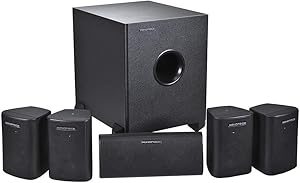
When evaluating the design philosophy of home theater systems, Sony and Monoprice approach engineering and industrial aesthetics from fundamentally divergent standpoints. Sony heavily prioritizes lifestyle integration, sleek aesthetics, and sophisticated industrial engineering. Across both their high-end AVR lines like the ES series and modular wireless architectures like the HT-A9 and premium soundbars, Sony utilizes rounded contours, acoustically transparent fabric grilles, and premium brushed-matte finishes designed to blend effortlessly into modern living spaces. The physical engineering is complemented by advanced spatial design features, such as 360 Spatial Sound Mapping, and intelligent calibration mics that compensate for asymmetric room geometry, giving their hardware immense practical versatility. In contrast, Monoprice leans into a utilitarian, performance-first aesthetic rooted in traditional audiophile standards. Through their Monolith and passive home theater speaker tiers, Monoprice favors monolithic, boxy silhouettes built from high-density fiberboard (HDF), heavy internal bracing, and thick magnetic fabric grilles. Rather than designing for seamless visual invisibility, Monoprice designs for acoustic mass and structural rigidity, minimizing cabinet resonance and maximizing thermal dissipation for high-current internal amplification.
The feature sets and technical strengths regarding physical design reveal distinct trade-offs in consumer practicality and placement flexibility. Sony’s physical footprints are generally optimized for spatial economy and plug-and-play installation; wireless connectivity protocols minimize cable clutter, and their integrated display interfaces and low-profile center channels accommodate tight media consoles without blocking TV bezels. However, the trade-off for Sony’s sleek form factor is serviceability and passive expansion: many of their integrated consumer-tier packages rely on proprietary connections, enclosed arrays, or active amplification that limit future component upgrades. Monoprice, conversely, champions universal compatibility, deploying robust binding posts, discrete driver mounting, and heavy-duty, isolated electronics enclosures capable of handling massive toroids and large voice coils. The practical compromise with Monoprice lies in its sheer physical intrusiveness; Monolith subwoofers and tower channels are notoriously massive, heavy, and visually industrial, requiring dedicated listening rooms or substantial floor space where acoustic precision is favored over modern home decor harmony.
Compare current retail pricing, active promotions, and verified stock availability directly from authorized stores: