Sony vs Klipsch: Overview
Comparing Sony and Klipsch helps you determine which brand is best suited for your needs in Home Theaters. Both brands offer strong choices depending on your budget and key feature requirements.
Key Features & Comparison
Evaluate factors such as build quality, warranty, customer satisfaction, and total value before making your final purchase choice between Sony and Klipsch.
Features
Sony’s feature ecosystem is heavily defined by cutting-edge digital architecture and intelligent proprietary processing. Many of their modern surround platforms leverage 360 Spatial Sound Mapping, a technology that synthesizes phantom speakers across the listening plane to deliver an immersive Dolby Atmos and DTS:X envelope even from compromised speaker layouts. Furthermore, Sony home theater systems and receivers frequently integrate seamlessly with BRAVIA televisions via Acoustic Center Sync, turning the television screen itself into the dedicated center channel. Add in comprehensive wireless streaming capabilities like Google Cast, Apple AirPlay 2, high-resolution LDAC Bluetooth, and intuitive automated microphone calibration (Digital Cinema Auto Calibration), and Sony presents an exceptionally modern, feature-dense package.
Klipsch approaches features from a more purist hardware and acoustic utility standpoint, though their active lineups like the Reference Premiere powered monitors and cinema soundbars have narrowed the gap. While Klipsch soundbars do offer standard decoding for Dolby Atmos and HDMI-eARC connectivity, their primary feature innovations lie in electro-acoustic hardware. You will find features like dedicated Tractrix horns, proprietary Linear Travel Suspension (LTS) titanium tweeters, and heavy-duty, bi-wireable binding posts across their passive collections. While they do not provide the complex software-driven spatial synthesis algorithms that Sony deploys, Klipsch focuses on physical acoustic features, such as integrated up-firing Atmos modules in their floorstanding enclosures and high-output wireless subwoofers engineered for zero phase distortion.
Performance
In terms of acoustic performance, Sony distinguishes itself through tonal balance, subtle imaging, and sophisticated computational correction. Sony systems generally offer a smooth, non-fatiguing sound signature with pristine vocal clarity and well-controlled low frequencies. Because their DSP can actively compensate for spatial anomalies, Sony is exceptional at placing discrete environmental cues accurately within a hemispherical soundstage, making modern spatial audio tracks feel expansive and naturally localized. However, in larger dedicated theater rooms, compact Sony systems can encounter headroom limitations, sometimes flattening micro-dynamics when pushed to reference volume levels.
Klipsch sits at the polar opposite end of the dynamic spectrum, delivering a thunderous, tactile, and highly energetic performance profile. Thanks to their signature horn-loaded drivers, Klipsch speakers boast exceptionally high sensitivity ratings, meaning they can achieve deafening cinema-grade SPL levels with minimal amplifier power and vanishingly low distortion. Midrange attacks, gunshots, and orchestral swells possess an immediacy and tactile impact that Sony’s consumer-grade packages rarely replicate. The trade-off is that Klipsch’s hyper-revealing, bright high-end response can occasionally veer into harshness or listener fatigue in acoustically untreated rooms with highly reflective surfaces like hardwood or bare drywall.
Design
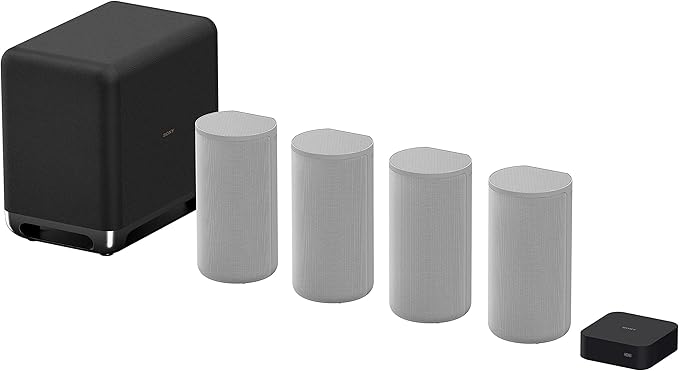
Sony’s design language is understated, sleek, and distinctly modern, engineered to disappear visually into contemporary living rooms. Their soundbars, satellite surrounds, and modular subwoofers utilize rounded profiles, premium textile grilles, and neutral charcoal or slate finishes that harmonize with ultra-thin OLED displays and minimalist furniture. Sony’s AV components are equally tidy, featuring uncluttered front panels and low-profile form factors. This lifestyle-centric aesthetic minimizes visual clutter and cable mess, appealing directly to consumers who want advanced spatial audio without having their living area dominated by traditional, monolithic speaker enclosures.
Klipsch embraces a bold, unapologetic industrial aesthetic that makes no attempt to hide its high-performance nature. Characterized by striking spun-copper Cerametallic woofers, exposed horn flares, and robust, wood-grain vinyl or real wood veneer cabinets, Klipsch speakers are designed to stand out as statement furniture. While their magnetic grilles allow for a more subdued look, most enthusiasts run them uncovered to showcase the iconic copper-and-black contrast. Build construction leans toward heavy, internally braced MDF designed to quell unwanted cabinet resonances. The footprint is undeniably larger and more visually imposing than Sony's offerings, making Klipsch ideally suited for dedicated media rooms or environments where the equipment is meant to be seen and celebrated.
Compare current retail pricing, active promotions, and verified stock availability directly from authorized stores: