Sony vs Energy: Overview
Comparing Sony and Energy helps you determine which brand is best suited for your needs in Home Theaters. Both brands offer strong choices depending on your budget and key feature requirements.
Key Features & Comparison
Evaluate factors such as build quality, warranty, customer satisfaction, and total value before making your final purchase choice between Sony and Energy.
Features
Sony is a benchmark brand when it comes to cutting-edge technological features and digital connectivity. Modern Sony home theater solutions frequently incorporate HDMI 2.1 pass-through with support for 4K/120Hz and 8K video, VRR, ALLM, and high-fidelity decoding of Dolby Atmos and DTS:X. Their systems are deeply tied into modern smart home protocols, offering native integration with Apple AirPlay 2, Google Chromecast, Spotify Connect, and Sony's own 360 Spatial Sound Mapping technology. Furthermore, Sony provides sophisticated automated room calibration systems, such as Digital Cinema Auto Calibration (D.C.A.C.), which optimize phase alignment and delay across diverse listening environments.
In contrast, Energy's product line generally dispenses with digital processing, wireless protocols, and video switching, focusing entirely on passive component engineering. Where Sony innovates through software algorithms and digital signal processing (DSP), Energy innovates mechanically. Key technical features across Energy systems include their patented Convergent Source Module (CSM) technology, which places the tweeter between mid-bass drivers to reduce off-axis lobing, and Ribbed Elliptical Surround technology, which minimizes driver distortion while maximizing linear excursion. Energy provides fewer modern creature comforts, relying instead on the user to pair their speakers with high-quality third-party AV receivers.
Performance
From an acoustic performance standpoint, Sony delivers a highly dynamic, spatially immersive soundstage engineered to maximize digital surround formats. By utilizing multi-microphone calibration and psychoacoustic DSP, Sony systems can generate convincing phantom speakers that simulate high-elevation and wide-surround audio channels, even in acoustically challenging rooms. While Sony's midrange-to-treble presentation is exceptionally clear and tailored for crisp cinematic dialogue, some of their integrated compact satellite systems and wireless subwoofers prioritize mid-bass punch over ultra-low sub-bass extension, occasionally struggling with complex acoustic musical passages at high volume thresholds.
Energy separates itself with traditional acoustic rigor, delivering a flat, uncolored frequency response rooted in decades of NRC psychoacoustic research. The integration of stiff, lightweight composite woofers and hyper-damped tweeters allows Energy systems—such as their renowned Take Classic series or RC floorstanders—to handle wide dynamic swings without thermal compression or high-volume breakup. Energy systems consistently outshine Sony in musical fidelity, offering superior stereo imaging, expansive dispersion, and natural vocal timbre. However, because Energy speakers are predominantly passive, their ultimate acoustic output remains dependent on the quality and wattage of the external amplifier driving them.
Design
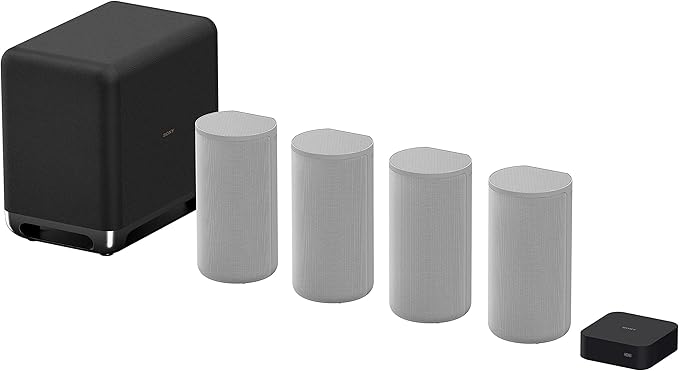
Sony’s industrial design is characterized by sleek, minimalist aesthetics that harmoniously blend with contemporary living spaces and modern flat-panel displays. Their soundbars, subwoofers, and architectural satellite speakers utilize slim silhouettes, matte black textures, brushed metals, and premium acoustic fabrics. Sony often incorporates low-profile chassis engineering to ensure components fit easily onto media consoles without obstructing television sightlines or IR sensors. Furthermore, the inclusion of wireless connectivity across subwoofers and rear satellite channels eliminates the visual clutter of speaker wire, creating a clean, modern aesthetic.
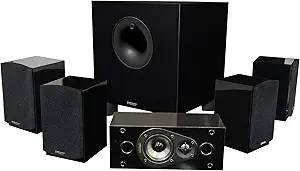
Energy emphasizes robust, time-tested speaker cabinetry constructed from dense, braced Medium Density Fiberboard (MDF) to eliminate internal resonance. Rather than the ultra-slim profiles favored by Sony, Energy speakers feature classic rectangular enclosures, often finished with high-gloss piano black lacquer or wood veneers that appeal to traditional audio enthusiasts. While Energy's substantial binding posts, removable fabric grilles, and sculpted front baffles exude durable craftsmanship, they require physical speaker cabling and substantial floor or shelf space. This design approach prioritizes internal acoustic volume over visual minimalism, appealing to users who prefer functional acoustic mass over compact convenience.