Samsung vs VIZIO: Overview
Comparing Samsung and VIZIO helps you determine which brand is best suited for your needs in Home Theaters. Both brands offer strong choices depending on your budget and key feature requirements.
Key Features & Comparison
Evaluate factors such as build quality, warranty, customer satisfaction, and total value before making your final purchase choice between Samsung and VIZIO.
Features
Samsung leads significantly in advanced, proprietary features and smart home interoperability. A primary selling point for the brand is Q-Symphony, a proprietary technology that synchronizes the soundbar with compatible Samsung TVs to utilize the television's internal speakers alongside the soundbar for a taller, more coherent front soundstage. High-end Samsung units also incorporate SpaceFit Sound Pro, which uses built-in acoustic sensors to calibrate audio output based on the specific room dimensions and reflective surfaces. Furthermore, Samsung boasts comprehensive wireless connectivity, including native support for Apple AirPlay 2, Spotify Connect, and integrated Amazon Alexa or Google Assistant, alongside industry-leading wireless Dolby Atmos transmission on select television pairings.
VIZIO approaches functionality with a focus on core acoustic decoding and plug-and-play simplicity. Most modern VIZIO home theater systems come fully equipped to decode major formats, including Dolby Atmos and DTS:X, often utilizing DTS Virtual:X processing on entry-level models to simulate height cues. While VIZIO systems lack the high-end room calibration microphones and expansive smart assistant integration found in Samsung's lineup, they excel in utilitarian features like auto-switching HDMI eARC, dedicated voice assistant auxiliary inputs, and backlit remotes with integrated display screens. VIZIO prioritizes stable, low-latency HDMI passthrough and user-friendly Bluetooth streaming, delivering the essential features required for immersive home cinema without the overhead of complex network setups.
Performance
In terms of acoustic performance, Samsung sets a high benchmark with remarkable detail retrieval, dynamic range, and expansive spatial imaging. Thanks to physical up-firing and side-firing drivers engineered by Samsung's Audio Lab, their Atmos-enabled soundbars deliver genuine verticality and precise object tracking across the ceiling and perimeter of the room. Dialogue clarity is exceptionally strong, maintained by dedicated center channels and intelligent Active Voice Amplifier (AVA) algorithms that elevate vocal frequencies over sudden ambient noise. The subwoofers provided with Samsung's upper-tier systems generate tight, musical, and low-distortion bass that transitions smoothly into the mid-range drivers without sounding muddy or overpowering.
VIZIO delivers a punchy, cinema-forward sound signature that prioritizes raw impact and high volume thresholds, which is particularly impressive given its competitive price point. Its discrete rear satellite speakers ensure authentic surround positioning, offering superior side-and-rear immersion compared to standalone or virtualized bars from rival brands. However, VIZIO systems typically exhibit a more aggressively tuned V-shaped sound profile, where booming low-end bass and sharp trebles can occasionally overshadow subtle midrange nuances and dialogue fidelity during complex action sequences. While VIZIO lacks the surgical acoustic precision and wide sweet spot of Samsung's flagship configurations, it punches well above its weight class in sheer dynamic power and physical room envelopment.
Design
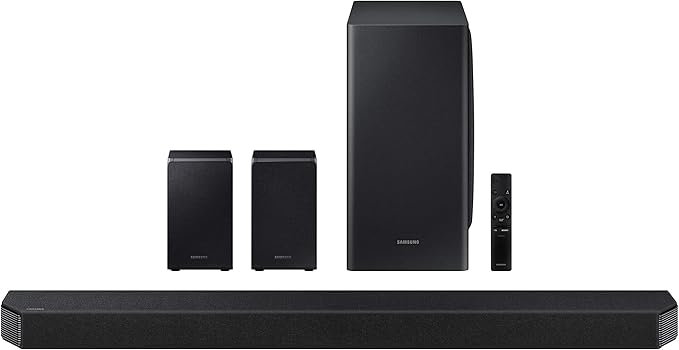
Samsung embraces an elevated, minimalist aesthetic designed to harmonize with contemporary luxury television displays and modern architectural interiors. Its soundbars feature slim profiles, low chassis heights designed to clear low-clearance TV stands, and premium textile wraps or micro-perforated metallic grilles. The physical integration of satellite speakers and subwoofers reflects a deliberate focus on industrial elegance, often featuring geometric angles and matte finishes that resist fingerprints. Furthermore, Samsung's wireless design ethos minimizes cable clutter, with rear channels and subwoofers requiring only localized AC power connections, maintaining a clean, unobtrusive look throughout the living room.
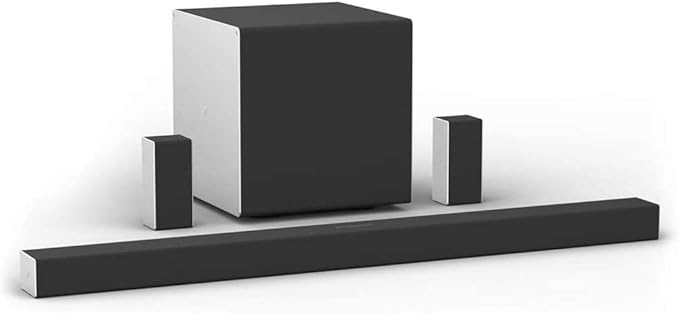
VIZIO employs an understated, functional industrial design characterized by clean lines, rounded corners, and durable fabric wrappings that blend into darker entertainment centers. While visually appealing and modern, VIZIO uses more cost-effective plastics and lightweight chassis materials compared to Samsung's rigid structural enclosures. A crucial physical difference lies in satellite routing: many VIZIO 5.1 systems utilize a wireless subwoofer that acts as the receiver for the rear surround units, requiring physical speaker wires to run from the subwoofer to each satellite. While this design minimizes wireless sync drops, it requires users to carefully route wires behind seating, contrasting with the more seamless, independent wireless enclosures favored by Samsung.