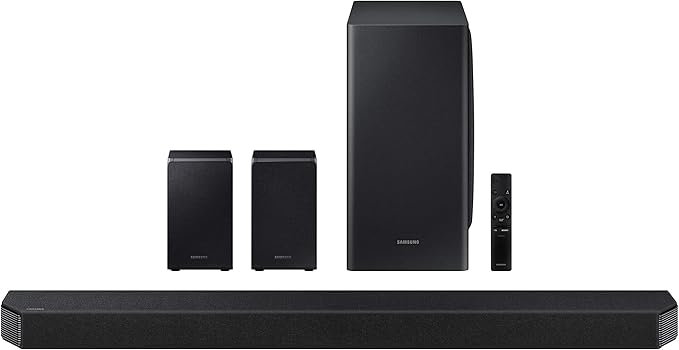
Samsung vs Polk Audio: Overview
Comparing Samsung and Polk Audio helps you determine which brand is best suited for your needs in Home Theaters. Both brands offer strong choices depending on your budget and key feature requirements.
Key Features & Comparison
Evaluate factors such as build quality, warranty, customer satisfaction, and total value before making your final purchase choice between Samsung and Polk Audio.
Features
In terms of digital features and modern smart integrations, Samsung maintains a decisive technological lead. Many of Samsung’s flagship home theater setups support true wireless Dolby Atmos and DTS:X transmission, reducing HDMI cable runs to the TV. Features like Q-Symphony dynamically synchronize the soundbar's drivers with a compatible Samsung TV’s native speakers to lift the soundstage, while SpaceFit Sound Pro utilizes continuous environmental sensing to tune acoustic output to the room's geometry. Furthermore, Samsung provides extensive streaming capabilities out of the box, including integrated Apple AirPlay 2, Chromecast, Spotify Connect, and voice assistant support through Amazon Alexa and Bixby.
Polk Audio focuses its feature development on raw driver mechanics, acoustic dampening, and high-efficiency transducer technologies. In Polk’s soundbar offerings, such as the MagniFi series, features focus on proprietary DSP such as VoiceAdjust technology, which isolates and clarifies speech frequencies without elevating ambient sound effects. In their component loudspeaker lineups, features take the form of acoustic innovations like Power Port bass venting, Dynamic Balance driver optimization, and Pinnacle Ring Radiator tweeters. While Polk’s component gear inherently lacks direct smart connectivity—relying instead on the features of your chosen external AV receiver—it avoids the planned obsolescence that often plagues digital, chip-driven systems.
Performance
From a performance standpoint, Samsung excels at computational psychoacoustics and immersive spatial audio within compact footprints. Utilizing strategically angled beamforming tweeters and dedicated wireless rear surround modules with side- and up-firing drivers, Samsung delivers an expansive three-dimensional sound bubble that envelops the listener. Highs are crisp, dialogue remains locked to the center channel, and the bundled wireless subwoofers generate immediate, punchy mid-bass suitable for modern blockbusters and streaming content. However, when pushed to reference volume levels, Samsung systems can exhibit digital compression, and the small driver cones inherently lack the low-midrange warmth needed for full-bodied acoustic music reproduction.
Polk Audio delivers an entirely different echelon of acoustic authority, marked by organic tonality, broader dynamic headroom, and deep, resonant power. Thanks to larger cabinet volumes and specialized driver materials, Polk setups reproduce transients with greater natural precision and less synthetic coloration. Bass response is significantly more linear and tactile, particularly when paired with a dedicated Polk HTS subwoofer or driven by robust discrete amplification. For cinematic soundtracks and critical two-channel music listening alike, Polk produces a deep, physically palpable soundstage where individual instruments and vocal nuances breathe without relying heavily on artificial digital sharpening.
Design
Samsung’s visual and industrial design reflects sleek, minimalist modernism tailored for contemporary living rooms. Their soundbars, satellite speakers, and subwoofers feature low-profile silhouettes, clean geometric angles, and premium acoustic fabric or fine metal mesh grilles. Everything is designed to sit discreetly beneath thin-bezel flat-panel screens or mount flush against drywall without dominating the room’s visual aesthetic. The emphasis on wireless subwoofers and wireless rear modules significantly minimizes cable clutter, preserving a clean, minimalist interior design while facilitating quick, non-invasive installation.
Polk Audio leans into classic, robust audio architecture that celebrates substantial physical presence. Polk's floorstanding towers, bookshelf monitors, and large center channels utilize dense, internally braced MDF cabinets finished in wood-grain vinyl, real wood veneers, or matte baffles that demand dedicated floor and shelf space. Even Polk’s soundbars feature broader, more utilitarian footprints with curved acoustic grilles and substantial structural mass. While this substantial form factor presents more challenges for space-constrained environments and necessitates careful cable management, the heavy enclosure designs directly minimize internal resonances and cabinet colorations, turning visual mass into an acoustic advantage.
Compare current retail pricing, active promotions, and verified stock availability directly from authorized stores:
Compare current retail pricing, active promotions, and verified stock availability directly from authorized stores: