Samsung vs Nakamichi: Overview
Comparing Samsung and Nakamichi helps you determine which brand is best suited for your needs in Home Theaters. Both brands offer strong choices depending on your budget and key feature requirements.
Key Features & Comparison
Evaluate factors such as build quality, warranty, customer satisfaction, and total value before making your final purchase choice between Samsung and Nakamichi.
Features
Samsung’s feature set is heavily oriented toward proprietary smart ecosystem benefits, automated acoustics, and refined software integration. A standout advantage for Samsung owners is Q-Symphony, which synchronizes the soundbar with compatible Samsung TVs to utilize television speakers concurrently for enhanced height and vocal clarity. Additionally, Samsung excels in acoustic calibration through SpaceFit Sound Pro, which uses built-in microphones to continuously analyze and compensate for room geometry in real time. Wireless Dolby Atmos, built-in voice assistants, AirPlay 2, and Tap Sound round out an exceptionally user-friendly, lifestyle-centric feature suite.
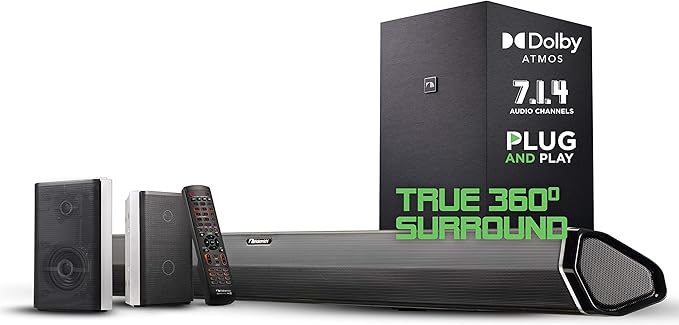
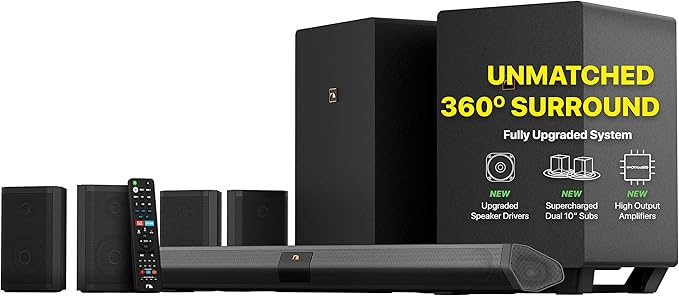
Nakamichi bypasses consumer lifestyle integrations in favor of high-performance architectural and playback features designed strictly for enthusiast immersion. The brand stands out by supporting dual wireless subwoofers and four modular satellite speakers that can be deployed in dipole or bipole configurations to simulate true commercial cinema dispersion. Flagship models like the Nakamichi Dragon introduce industry-leading specifications, such as dedicated full-range AMT (Air Motion Transformer) tweeters, up to 3000 watts of peak power, and native decoding for rare formats like DTS:X Pro alongside Dolby Atmos. Nakamichi focuses on extensive manual EQ adjustments and versatile physical setups rather than automated smart home voice assistants.
Performance
From a performance perspective, Samsung focuses on acoustic neutrality, refined tonal balance, and sophisticated psychoacoustic surround virtualization. Tuned in part by Samsung’s California Audio Lab, their flagship soundbars produce pristine dialogue articulation, linear mid-range reproduction, and an expansive, three-dimensional soundstage via dedicated up-firing and side-firing drivers. For music listening and everyday television viewing, Samsung presents a cohesive, studio-balanced presentation that manages high frequencies cleanly without inducing listener fatigue, though its single subwoofer configurations can lack the bottom-octave impact desired in larger dedicated home cinema spaces.
Nakamichi delivers an undeniably visceral and dynamic sonic performance tailored specifically for action-heavy cinematic content. By deploying dual-subwoofer arrays—and quad-subwoofers in the Dragon system—Nakamichi effectively eliminates acoustic room modes and bass nulls, providing balanced, bone-rattling low-frequency extension down into sub-audible territory. The use of discrete modular satellites ensures that surround and rear panning effects possess physical presence rather than relying solely on acoustic reflections. While Nakamichi's high frequencies can occasionally lean aggressive and forward out of the box, its raw dynamic headroom and spatial envelopment vastly outperform Samsung in large, dedicated media rooms.
Design
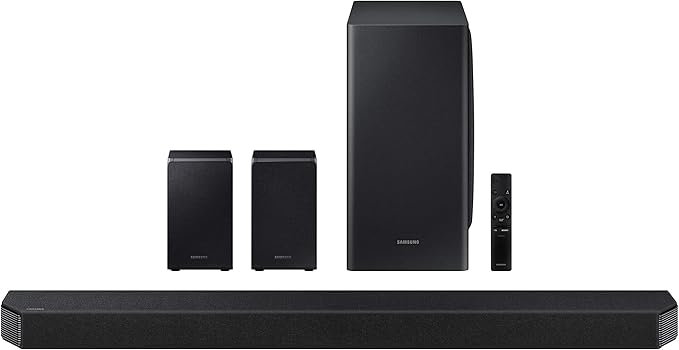
In terms of industrial design, Samsung adheres to a minimalist, sleek aesthetic that effortlessly complements contemporary interior decor. The main soundbar enclosures boast low-profile silhouettes, clean chamfered edges, and subtle premium acoustic fabric or fine metallic mesh grilles designed to sit unobtrusively below ultra-thin modern televisions. Even the accompanying satellite speakers and subwoofers feature compact footprints, making them easy to conceal within residential living spaces where visual clutter must be kept to an absolute minimum.
Nakamichi embraces an uncompromising, industrial, and purpose-driven aesthetic that commands visual attention. Its soundbars and massive subwoofers are noticeably bulkier, heavier, and more utilitarian, prioritizing internal acoustic chamber volume and thermal dissipation over living-room stealth. The flagship Dragon system, for instance, spans nearly five feet across and weighs over 30 pounds on the bar alone, featuring brushed stainless steel accents, exposed speaker drivers, and integrated digital status displays. While Samsung crafts elegant lifestyle appliances, Nakamichi builds imposing, performance-first audio hardware meant to be showcased rather than hidden.
Compare current retail pricing, active promotions, and verified stock availability directly from authorized stores:
Compare current retail pricing, active promotions, and verified stock availability directly from authorized stores: