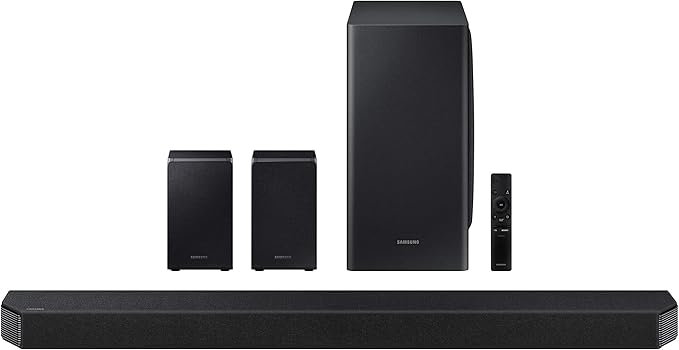
Samsung vs Klipsch: Overview
Comparing Samsung and Klipsch helps you determine which brand is best suited for your needs in Home Theaters. Both brands offer strong choices depending on your budget and key feature requirements.
Key Features & Comparison
Evaluate factors such as build quality, warranty, customer satisfaction, and total value before making your final purchase choice between Samsung and Klipsch.
Features
Samsung’s feature ecosystem is heavily defined by software intelligence, proprietary connectivity, and smart home synergy. Modern Samsung systems frequently feature wireless Dolby Atmos transmission, eliminating HDMI cords between compatible Samsung displays and the soundbar system. Proprietary technologies like Q-Symphony dynamically orchestrate the soundbar’s drivers alongside the television’s built-in speakers to create a taller, more coherent soundstage. Furthermore, features like SpaceFit Sound Pro perform automated acoustic calibration by continuously analyzing room reflections via onboard microphones, dynamically tailoring equalization, dialog clarity, and bass response to the specific geometry of the listening environment with zero user intervention.
Klipsch approaches features with an emphasis on hardware capability, acoustic optimization, and modular versatility. While their Cinema soundbars offer modern conveniences such as HDMI-eARC, Bluetooth, and dialog enhancement modes, Klipsch's primary strength lies in its modular passive and powered speaker systems. These setups offer features prized by traditional audio purists, including bi-amping terminals, custom-tuned high-frequency horns, heavy-duty binding posts, and compatibility with any AV receiver processing Dolby Atmos, DTS:X, or Auro-3D. While Klipsch provides fewer automated software tricks out of the box than Samsung, it offers vastly superior customization, input flexibility, and cross-brand interoperability that will not become obsolete due to software updates.
Performance
Performance metrics reveal a distinct divergence between computational surround processing and physical acoustic displacement. Samsung’s flagship soundbar systems leverage acoustic beamforming, angled up-firing drivers, and advanced psychoacoustic processing to bounce sound off walls and ceilings. This creates an impressively cohesive, spherical surround sound bubble with razor-sharp object tracking across dynamic Dolby Atmos soundtracks. However, physical limitations remain: because soundbars utilize relatively small drivers within shallow enclosures, the mid-range can occasionally sound thin, and extreme high volumes may introduce noticeable compression or digital distortion as the internal DSP attempts to protect the compact drivers.
Klipsch, conversely, is world-renowned for its high-efficiency Tractrix horn technology and spun-copper Cerametallic woofers, resulting in reference-grade acoustic dynamics and low distortion. The horn-loaded design controls directivity, beaming mid and high frequencies directly to the listener with laser precision and astonishing vocal clarity without depending on wall reflections. Driven by substantial physical cabinets and robust, dedicated subwoofers, Klipsch systems deliver thunderous, visceral low-end authority and limitless dynamic headroom. For reproducing the explosive peaks and micro-details of cinematic soundtracks at true reference volume, Klipsch's acoustic physics comfortably outperform Samsung's digital sound processing.
Design
Aesthetically, Samsung champions minimalist, contemporary industrial design tailored to blend harmoniously into modern living spaces. Their soundbars and wireless surround speakers feature low-profile silhouettes, clean geometric lines, and acoustic fabric wraps or precision-perforated metallic grilles. The physical footprint is engineered to rest discreetly under ultra-thin televisions or mount flush against drywall without dominating room decor. This sleek, unobtrusive design language minimizes visual clutter, conceals internal cabling, and speaks directly to users who prioritize a clean, uncluttered interior design above massive acoustic cabinets.
Klipsch embraces an aggressive, heritage-focused aesthetic that proudly puts acoustic hardware on display. Instantly recognizable by their signature spun-copper drivers set against textured wood-grain vinyl or real wood veneer cabinets, Klipsch speakers make a bold visual statement. The sheer physical scale of their floorstanding towers, deep subwoofers, and substantial center channels demands dedicated floor space, making them the visual focal point of any media room. While magnetic grilles are provided for those who prefer a subtler look, the build quality and industrial style of Klipsch are tailored specifically for dedicated home cinema spaces where authentic audio hardware is celebrated rather than hidden.