Onkyo vs Samsung: Overview
Comparing Onkyo and Samsung helps you determine which brand is best suited for your needs in Home Theaters. Both brands offer strong choices depending on your budget and key feature requirements.
Key Features & Comparison
Evaluate factors such as build quality, warranty, customer satisfaction, and total value before making your final purchase choice between Onkyo and Samsung.
Features
Onkyo's feature set is geared heavily toward signal integrity, multi-zone playback, and advanced acoustic calibration. Most mid-to-high-tier Onkyo receivers include integrated Dirac Live room correction, which is widely considered the gold standard for phase alignment, impulse response correction, and bass management in non-standard listening environments. Furthermore, Onkyo components feature extensive I/O options, including full-bandwidth HDMI 2.1 ports supporting 4K/120Hz and 8K/60Hz passthrough, bi-directional Bluetooth, discrete phono stages for turntables, and support for independent multi-room audio zones. They also integrate open-standard streaming platforms such as AirPlay 2, Chromecast built-in, Works with Sonos, and DTS Play-Fi, providing immense flexibility across heterogeneous hardware setups.
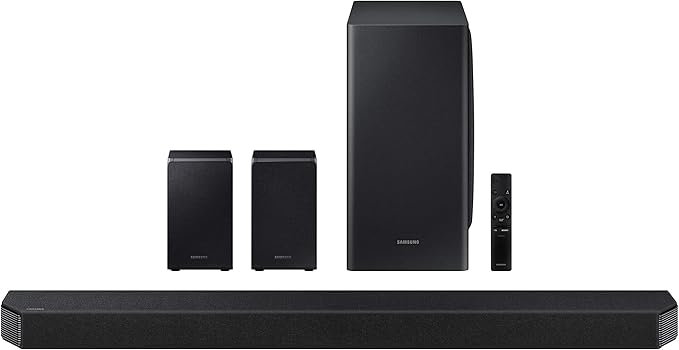
Samsung, by contrast, innovates through computational audio and proprietary ecosystem enhancements that link tightly with their visual displays. Flagship Samsung soundbar packages (such as the Q-Series) boast features like Q-Symphony, which synchronizes soundbar drivers with compatible Samsung TV speakers to expand the vertical soundstage. SpaceFit Sound Pro provides automated room calibration using integrated microphones to scan environment boundaries dynamically. Additionally, Samsung excels in wireless convenience, offering wireless Dolby Atmos transmission via Wi-Fi, Tap Sound, and built-in voice assistants like Amazon Alexa. While Onkyo provides granular control over crossover frequencies, channel trims, and external amplification, Samsung delivers streamlined, algorithmic audio processing that optimizes sound dynamically without requiring manual technical intervention.
Performance
Acoustic performance presents a distinct contrast in dynamic range, channel separation, and transient response. Onkyo’s high-current amplification architecture delivers robust power reserves capable of driving demanding, low-impedance passive floorstanding and bookshelf speakers with minimal total harmonic distortion (THD). This yields expansive dynamic headroom, articulate transient impact, and effortless sound reproduction during intense cinematic sequences. The soundstage produced by an Onkyo-driven discrete speaker array is vast, deep, and precisely localized, offering true physical channel separation that computational psychoacoustics cannot fully replicate. Music playback through an Onkyo system also benefits from superior stereo imaging, low noise floor, and faithful analog reproduction.
Samsung counters by maximizing performance within compact enclosures through cutting-edge digital signal processing (DSP) and acoustic beamforming. Flagship Samsung systems, such as the HW-Q990 series, utilize high-channel-count configurations (up to 11.1.4 channels) using acoustic lens arrays and up-firing/side-firing drivers to bounce sound off walls and ceilings. The result is an extraordinarily immersive dome of spatial sound that belies the system's compact footprint. Dialogue clarity is exceptionally sharp thanks to dedicated center channels and Active Voice Amplifier technology. However, while Samsung provides punchy bass and remarkable spatial envelope for movies, it cannot match the raw acoustic weight, ultra-low frequency extension, or musical transparency of an Onkyo system paired with dedicated subwoofers and high-end passive speakers.
Design
From an aesthetic and industrial design standpoint, Onkyo adheres to the purposeful, utilitarian language of traditional AV equipment. Their receivers are substantial, boxy black or silver metal chassis fitted with large aluminum volume knobs, tactile source selectors, front-panel input arrays, and detailed visual display panels. While this form factor is ideal for standard AV racks and ventilated media cabinets, it can be visually intrusive in minimalist living spaces. Setting up an Onkyo system also requires routing physical speaker wire throughout the room to individual channels, demanding deliberate cable management solutions or professional in-wall installation to maintain a clean aesthetic.
Samsung embraces modern lifestyle design, creating sleek, unobtrusive components that blend seamlessly with contemporary living room decor. Their soundbars and wireless surround modules feature low-profile silhouettes, premium metallic mesh grilles, and understated finishes that fit neatly under flat-panel televisions without blocking screen borders or IR sensors. The elimination of long physical speaker runs from the main unit to the rear surrounds and subwoofer significantly reduces visual clutter. For homeowners who prioritize interior design harmony, clean surfaces, and zero-footprint audio integration, Samsung offers a far more visually cohesive and living-room-friendly form factor than Onkyo's traditional rack-oriented components.
Compare current retail pricing, active promotions, and verified stock availability directly from authorized stores: