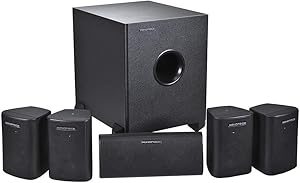
Onkyo vs Monoprice: Overview
Comparing Onkyo and Monoprice helps you determine which brand is best suited for your needs in Home Theaters. Both brands offer strong choices depending on your budget and key feature requirements.
Key Features & Comparison
Evaluate factors such as build quality, warranty, customer satisfaction, and total value before making your final purchase choice between Onkyo and Monoprice.
Features
Onkyo holds a decisive advantage in digital processing features, network connectivity, and smart home integration. Modern Onkyo AVRs are technological powerhouses, often featuring full-bandwidth HDMI 2.1 support capable of 4K/120Hz and 8K/60Hz passthrough, catering directly to current-generation gamers and visual purists. Their digital toolset frequently includes native integration with Dirac Live—a premier room correction suite—alongside proprietary AccuEQ, comprehensive streaming capabilities (AirPlay 2, Chromecast, DTS Play-Fi, Roon Ready), and specialized smart integrations such as 'Works with Sonos' certification and multi-zone HDMI distribution.
Monoprice, particularly through its Monolith lineup, focuses its feature set on traditional audiophile engineering rather than sprawling software ecosystems. Monoprice processing gear, like their multi-channel preamplifiers, does feature Dirac Live and balanced XLR terminations, but their broader catalog emphasizes hardware-centric specifications. Monoprice loudspeakers and subwoofers prioritize THX Ultra and Select certifications, premium neodymium magnet structures, vented voice coils, and heavy-gauge crossover networks. While Monoprice lacks the proprietary streaming apps and seamless lifestyle software features found on Onkyo units, it compensates with tangible physical features like heavy toroidal transformers, fully balanced discrete circuitry, and robust binding posts designed for modular, long-term deployments.
Performance
In terms of acoustic performance, Onkyo delivers a dynamic, articulate, and highly immersive listening experience. Historically celebrated for its High Current Power Supply (H.C.P.S.) and Dynamic Audio Amplification (DAA), Onkyo AVRs excel at driving transient peaks, maintaining low-frequency cohesion, and keeping dialogue exceptionally crisp during chaotic film sequences. When paired with advanced Dirac Live calibration, Onkyo hardware achieves surgical imaging, establishing seamless transitions across Dolby Atmos and DTS:X height layers while effectively taming problematic room-induced acoustic anomalies in small to medium-large residential environments.
Monoprice counters with performance metrics that frequently rival boutique commercial equipment, particularly through its Monolith power amplifiers and subwoofers. Monoprice’s external multi-channel amplifiers utilize isolated power supplies and discrete output transistors that offer exceptionally low total harmonic distortion (THD), an ultra-quiet noise floor, and true continuous wattage that does not sag under difficult 4-ohm loads. Furthermore, Monolith subwoofers are renowned for subterranean low-frequency extension, massive excursion, and sheer acoustic pressure levels (SPL) that outperform almost everything in their price class. Onkyo provides the nuanced processing precision and lively sonic profile, while Monoprice excels at raw, uncompressed dynamic headroom and uncompromising low-end impact.
Design
The industrial design of Onkyo equipment reflects modern consumer electronics aesthetics with an emphasis on functional elegance and information visibility. Onkyo components typically boast brushed aluminum or clean matte-black front fascias, accented by high-contrast fluorescent or OLED digital displays that clearly indicate active codecs, input configurations, and channel allocations. The layout of their physical chassis emphasizes ergonomic usability, featuring a prominent volume encoder, dedicated listening mode buttons, and accessible front-panel auxiliary ports, though extensive rear-panel inputs can become dense and visually intimidating to novice system calibrators.
Monoprice adopts an unapologetically utilitarian, industrial design language that prioritizes thermal management, structural rigidity, and longevity over delicate styling. Monolith amplifiers and speakers are built like industrial tanks, often constructed with heavy-gauge steel chassis, oversized heatsinks, thick MDF cabinets with internal matrix bracing, and understated satin or piano-black finishes. This form-follows-function aesthetic results in exceptionally heavy components that require sturdy rack placement and proper ventilation. While an Onkyo receiver is designed to sit gracefully in a visible living room console, Monoprice equipment frequently feels most at home concealed in a dedicated equipment rack or anchored deep in a custom, blackout theater room.