Onkyo vs Energy: Overview
Comparing Onkyo and Energy helps you determine which brand is best suited for your needs in Home Theaters. Both brands offer strong choices depending on your budget and key feature requirements.
Key Features & Comparison
Evaluate factors such as build quality, warranty, customer satisfaction, and total value before making your final purchase choice between Onkyo and Energy.
Features
Onkyo is an undisputed powerhouse regarding modern feature implementation, embedding state-of-the-art technological standards across its ecosystem. Onkyo systems and receivers boast cutting-edge HDMI 2.1 specifications supporting 8K/60Hz and 4K/120Hz pass-through, alongside native decoding for 3D spatial formats including Dolby Atmos and DTS:X. Advanced room calibration software—such as proprietary AccuEQ or licensed Dirac Live—enables Onkyo electronics to dynamically correct for room anomalies, standing waves, and boundary interference. Furthermore, extensive networking protocols, encompassing Apple AirPlay 2, Chromecast built-in, DTS Play-Fi, and Works with Sonos integration, cement Onkyo as a versatile digital hub designed for the modern connected home.
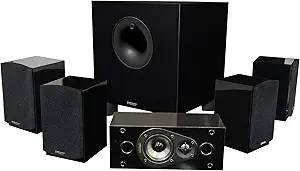
Conversely, Energy approaches the concept of features from a purist acoustic perspective, focusing on physical transducer engineering rather than silicon and firmware. Key technical features across Energy speaker systems include their patented Convergent Source Module (CSM) technology, which places the tweeter and midrange drivers in close proximity to act as a single point source, and Ribbed Elliptical Surround technology that minimizes distortion while maximizing cone excursion. Because Energy systems are typically passive speaker packages, they do not offer video processing, streaming capabilities, or integrated amplification. The value in an Energy feature set lies entirely in high-efficiency crossover networks, hyperbolic aluminum dome tweeters, and heavy-duty five-way binding posts engineered for acoustic precision rather than digital multi-tasking.
Performance
In terms of acoustic performance and sonic character, Onkyo delivers an authoritative, high-current delivery that emphasizes dynamic impact, aggressive transients, and cinema-grade scale. When powering a surround track, Onkyo’s amplification architecture handles wide dynamic shifts with ease, rendering explosive low-frequency effects and sudden orchestral peaks without clipping or perceived strain. However, in lower-tier packaged satellite speakers bundled with Onkyo entry-level systems, the acoustic presentation can lean slightly clinical or forward in the upper midrange, occasionally exhibiting cabinet resonances that muddy the transition between the subwoofer crossover point and the satellite drivers.
Energy, meanwhile, excels precisely where compact packaged speakers often struggle: seamless frequency coherence and broad, linear dispersion. Utilizing their Convergent Source Module, Energy speakers achieve an expansive sweet spot with exceptional off-axis response, making dialogue intelligibility through the center channel remarkably crisp and natural. High frequencies produced by Energy's aluminum dome tweeters sound airy and detailed without tipping into harshness, while the ribbed elliptical surrounds on their micro-woofers provide surprisingly articulate mid-bass punch. While Onkyo takes the crown for raw power amplification and digital signal management, Energy provides superior natural tonal warmth, micro-detail retrieval, and imaging depth across the physical listening space.
Design
Aesthetically, Onkyo embraces a utilitarian, industrial footprint characteristic of high-performance Japanese audio gear. Their AVRs and integrated consoles are defined by brushed metal or high-grade matte composite faceplates, functional rotary dials, discrete input selector arrays, and informative VFD or high-resolution LED displays. The satellite and bookshelf enclosures included in Onkyo’s complete home theater bundles are similarly functional, prioritizing structural reinforcement and compact dimensions to easily sit on media consoles, though they can sometimes appear somewhat boxy and conventional within modern minimalist interiors.
Energy speakers lean into a more contemporary, lifestyle-oriented design ethos marked by sleek contours and premium finishes. Signature products like the Energy Take Classic utilize compact, curved MDF cabinets that serve both an aesthetic and acoustic purpose, successfully reducing internal standing waves and edge diffraction. Coated in deep high-gloss piano black lacquers, Energy components integrate discreetly into modern decor, presenting a high-end furniture-grade feel that belies their accessible price points. Both brands incorporate standard threaded mounting points and keyhole slots for wall bracket installation, but Energy's sculpted baffles and refined gloss exteriors offer a more cohesive, high-end visual appeal within living room environments.