Nakamichi vs Enclave: Overview
Comparing Nakamichi and Enclave helps you determine which brand is best suited for your needs in Home Theaters. Both brands offer strong choices depending on your budget and key feature requirements.
Key Features & Comparison
Evaluate factors such as build quality, warranty, customer satisfaction, and total value before making your final purchase choice between Nakamichi and Enclave.
Features
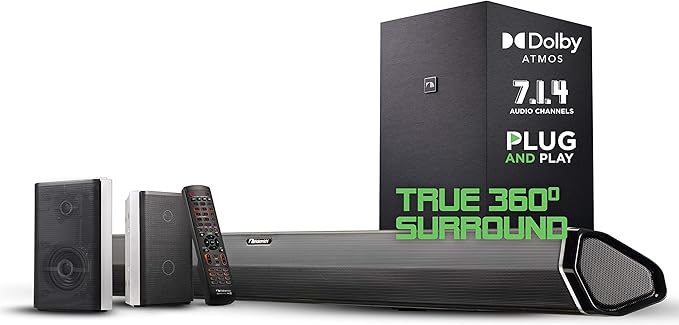
Nakamichi distinguishes itself through extensive audio processing capabilities and a hyper-dense driver topology. Key to the Nakamichi experience is support for high-end audio decoding, including Dolby Atmos, Dolby Vision pass-through, and DTS:X, orchestrated by its proprietary SSE Max (Spatial Surround Elevation) processing architecture. Nakamichi systems frequently feature eARC integration, multiple HDMI 2.1 inputs with high-bandwidth 4K HDR passthrough, and expansive onboard EQ presets designed to calibrate room interaction. A standout functional advantage is their dual-subwoofer configurations, which allow users to run two independent low-frequency enclosures to mitigate standing acoustic waves and room nulls, an engineering feature rarely found outside of custom component installations.
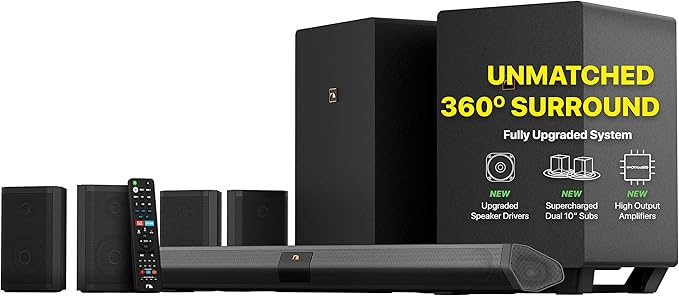
Enclave Audio shifts the engineering focus toward open wireless protocol integration and simplified software orchestration. Operating without an AVR or a master soundbar, Enclave relies on the CineHub—a centralized wireless transmitter equipped with HDMI eARC, optical, and auxiliary connections that streams uncompressed 24-bit/96kHz audio to discrete powered speakers. While Enclave historically lacked upward-firing Dolby Atmos modules in its standard setups, it compensates with class-leading low latency (under 5ms) and perfect intra-speaker synchronization that resists interference from household Wi-Fi networks. Setup and calibration are largely managed through a mobile app that offers fine-grained gain control and distance adjustments for each individual satellite, presenting a streamlined, modern software experience compared to Nakamichi's hardware-centric remote interface.
Performance
In acoustic performance, Nakamichi is characterized by explosive dynamic headroom, chest-thumping bass, and an overwhelmingly dense surround envelope. The incorporation of two powered subwoofers gives Nakamichi a distinct advantage in low-end authority, routinely reaching subsonic frequencies with minimal port turbulence or cabinet distortion. The multi-speaker surround arrays create a continuous hemisphere of sound, particularly on Dolby Atmos and DTS:X mixes where directional panning is frequent. However, because the front left, center, and right channels are housed within a single soundbar chassis, the absolute front soundstage width can sound slightly compressed compared to physically separated cabinet speakers, relying heavily on side-firing transducers to bounce sound off boundary walls.
Enclave Audio counters with superior channel separation, pristine mid-range intelligibility, and a genuinely expansive front soundstage. Because the left, right, and center speakers can be positioned independently at optimal acoustic angles, the stereo imaging and directional placement of dialogue and subtle ambient effects are exceptionally accurate. Enclave delivers a remarkably neutral, audiophile-adjacent sound signature that excels with complex musical scores, dialogue-heavy dramas, and acoustic material. The trade-off is realized in raw output and low-end depth; Enclave’s subwoofers deliver clean, tight, and musical bass, but they do not match the seismic, high-SPL floor-shaking slam generated by Nakamichi's high-wattage dual-subwoofer configurations.
Design
The industrial design of Nakamichi products is aggressively utilitarian and built for performance-first consumers. The soundbars and subwoofers feature angular, industrial geometries with metallic grilles, matte black finishes, and functional LED readouts designed to communicate complex codec and channel status immediately. While the subwoofers communicate wirelessly with the soundbar, the rear satellite speakers must be tethered via standard speaker wire directly to the subwoofers. This hybrid approach significantly reduces long cable runs across the room, but it still requires creative wire concealment between the subwoofers and surround modules, giving the system a slightly more complex physical footprint during deployment.
Enclave Audio pursues a cleaner, more contemporary aesthetic that integrates seamlessly into modern living room decor. Each satellite speaker features a compact, rounded enclosure wrapped in premium acoustic fabric, allowing individual units to blend effortlessly into bookshelves, media consoles, or speaker stands. The primary aesthetic triumph of Enclave is the complete absence of interconnecting speaker wires; because every cabinet houses its own internal amplifier and wireless receiver, each unit only requires a standard AC power cord. This true wireless architecture affords greater placement versatility and visual minimalism, making Enclave the preferred choice for design-conscious homeowners who reject exposed wiring.
Compare current retail pricing, active promotions, and verified stock availability directly from authorized stores:
Compare current retail pricing, active promotions, and verified stock availability directly from authorized stores: