Monoprice vs Nakamichi: Overview
Comparing Monoprice and Nakamichi helps you determine which brand is best suited for your needs in Home Theaters. Both brands offer strong choices depending on your budget and key feature requirements.
Key Features & Comparison
Evaluate factors such as build quality, warranty, customer satisfaction, and total value before making your final purchase choice between Monoprice and Nakamichi.
Features
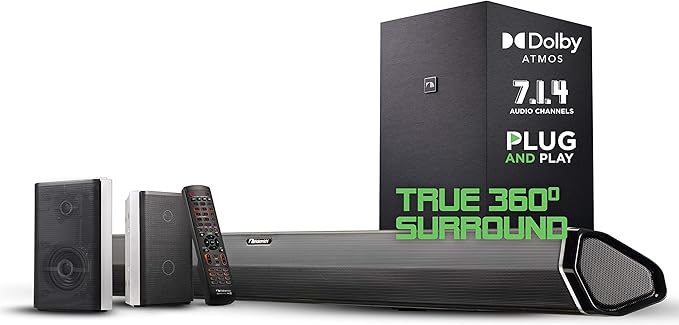
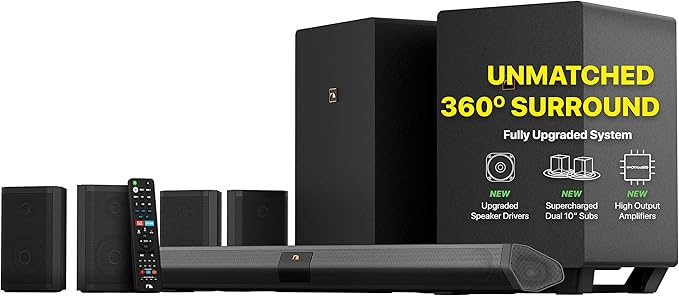
Feature-wise, Nakamichi leads the charge in integrated spatial computing and state-of-the-art surround sound processing within a consumer-ready footprint. Nakamichi systems natively support cutting-edge audio formats such as Dolby Atmos, DTS:X Pro, and Dolby Vision passthrough over high-bandwidth HDMI 2.1 eARC connections. The crown jewel of Nakamichi's feature set is its dual or quad wireless subwoofer architecture and multi-directional modular surrounds, which incorporate specialized spatial DSP algorithms to bounce and direct micro-details throughout the listening space. Furthermore, Nakamichi units often include comprehensive on-screen displays, intuitive mobile app control, and onboard room calibration systems designed to balance multiple subwoofers effortlessly, a task that traditionally requires advanced audio calibration software.
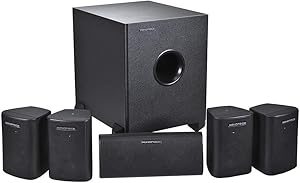
Conversely, Monoprice treats features through a modular lens, focusing on raw acoustic engineering and industrial-grade electrical specifications rather than all-in-one software suites. Monoprice's Monolith speaker lineups boast premium hardware features like planar magnetic tweeters, long-fiber pulp cones, and THX Ultra and Select certifications that guarantee reference-level output with minimal distortion. Because Monoprice primarily produces passive loudspeakers, standalone power amps, and subwoofers, users rely on external AV processors or receivers for modern digital features like HDMI switching, streaming, and advanced room correction like Dirac Live. The trade-off is clear: Nakamichi delivers a self-contained, feature-dense ecosystem straight out of the box, whereas Monoprice supplies reference-grade acoustic building blocks that demand complementary source hardware to fully realize their technical capabilities.
Performance
In terms of acoustic performance, Monoprice—particularly its Monolith subwoofers and tower speakers—offers nearly peerless raw dynamic capability and linear transparency at its price point. Engineered with massive magnets, rigid enclosures, and heavy internal bracing, Monoprice gear handles massive dynamic transients without compression or cabinet resonance. Its subwoofers are celebrated for subterranean frequency response, frequently digging cleanly below 16Hz with bone-crushing SPL levels. The sound signature is fundamentally neutral and uncolored, rendering musical textures and film soundtracks with pinpoint accuracy, pristine vocal intelligibility, and exceptional soundstage depth that easily fills larger, acoustically treated home theaters.
Nakamichi delivers an undeniably visceral, highly spatial, and cinematic performance that punches far above the typical soundbar form factor. By utilizing dual or quad subwoofers, Nakamichi eliminates bass localization and room nulls, creating a remarkably even, chest-thumping low-end response across multiple seating positions. Its multi-channel satellite speakers and upward-firing drivers produce an all-enveloping sound bubble, creating convincing height and surround channels that draw the viewer deep into the cinematic action. However, because its driver enclosures are more compact than Monoprice's full-sized passive cabinets, Nakamichi compensates with aggressive digital signal processing, which, while breathtaking for high-octane blockbusters, can occasionally sound slightly more processed and less organically resolving during critical stereo music listening than a dedicated Monoprice setup.
Design
From an aesthetic and industrial design standpoint, Monoprice adopts a utilitarian, no-nonsense approach rooted in traditional acoustic physics. Monoprice Monolith components are unapologetically substantial: passive speakers and subwoofers feature heavy MDF construction, satin black or vinyl finishes, thick internal bracing, and magnetically attached fabric grilles. The visual language favors function over modern elegance, with massive cabinets designed to optimize internal air volume and heat dissipation rather than blend seamlessly into contemporary decor. While this robust construction ensures exceptional structural rigidity and longevity, it inevitably requires substantial floor space, dedicated speaker stands, and thoughtful placement within the listening environment.
Nakamichi, by comparison, prioritizes sophisticated, space-conscious lifestyle integration without sacrificing acoustic aggression. Products like the Shockwafe and Dragon feature sleek, sculpted lines, matte metallic accents, and low-profile soundbar enclosures designed to sit discreetly below modern ultra-thin televisions. Their satellite speakers and subwoofers are crafted with relatively compact footprints, employing industrial geometric angles that look thoroughly modern in a contemporary living space. While Nakamichi's flagship units still carry significant weight due to dense driver arrays and stainless steel accents, the overall design philosophy is engineered to eliminate clutter, using wireless link technology between the main unit and subwoofers to keep visual cable runs to an absolute minimum.
Compare current retail pricing, active promotions, and verified stock availability directly from authorized stores: