Logitech vs Energy: Overview & Brand Philosophy
When curating a home audio environment, the market presents two distinctly divergent engineering approaches: integrated multimedia utility and dedicated acoustic fidelity. Logitech, a global powerhouse in personal computing peripherals, approaches the home theater category from an angle of accessible, all-in-one desktop and entertainment audio. Built largely on plug-and-play convenience, active amplification, and digital signal decoding, Logitech's audio gear caters to users seeking immediate surround sound functionality without the steep learning curve of traditional audiophile setups.
Conversely, Energy boasts a proud heritage steeped in classic Canadian acoustic research. Originating under the umbrella of Audio Products International (API) and later acquired by Klipsch (Voxx International), Energy was refined through the pioneering psychoacoustic studies conducted at Canada's National Research Council (NRC). Energy's philosophy centers on the physical science of speaker design—prioritizing wide dispersion, flat frequency response, and minimal resonance via premium driver materials and passive speaker engineering meant to pair with dedicated Audio/Video Receivers (AVRs).
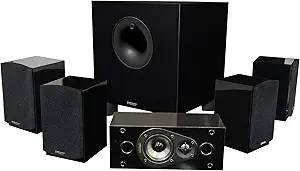
This comparison pits an innovative computer hardware titan against a traditional loudspeaker artisan. While Logitech aims to democratize multi-channel surround sound through self-powered, user-friendly packages like the ubiquitous Z906, Energy focuses on component-grade acoustic reproduction, best exemplified by their acclaimed Take Classic and modern micro-satellite systems designed for discerning cinema purists.
Key Differences & Technological Comparison
The foundational distinction between Logitech and Energy lies in their architectural paradigms. Logitech produces active (powered) 5.1 systems where the multi-channel amplifier and digital signal processing (DSP) are integrated directly into the subwoofer enclosure. Inputs are managed via built-in optical, coaxial, and 3.5mm analog connections, decoding legacy formats like Dolby Digital and DTS without requiring third-party hardware. In contrast, Energy produces passive component systems accompanied by an independent powered subwoofer. To run an Energy system, consumers must integrate a separate AV Receiver, enabling support for modern, lossless codecs such as Dolby TrueHD, DTS-HD Master Audio, and even Dolby Atmos depending on the chosen receiver.
Acoustic design and driver technologies diverge dramatically between the two manufacturers:
- High-Frequency Engineering: Energy utilizes proprietary Convergent Source Module (CSM) architecture and hyperbolic aluminum dome tweeters. This delivers exceptionally wide horizontal dispersion and low coloration, preserving vocal intelligibility across an entire room. Logitech relies on full-range aluminum phase-plug drivers in its satellites, meaning a single driver handles both midrange and high frequencies, which can lead to high-frequency roll-off and less refined separation during complex musical passages.
- Enclosure Dynamics: Energy satellite speakers are constructed from dense, acoustic-grade MDF (medium-density fiberboard) or resonance-damped ABS with internal bracing to eliminate unwanted cabinet coloration. Logitech satellites utilize lighter molded plastics designed for lightweight desk or bracket mounting, which can occasionally exhibit minor cabinet vibration at maximum output levels.
- Subwoofer Implementation: Logitech’s subwoofers are tuned primarily for impact, employing high-excursion drivers paired with side-firing ports to maximize chest-thumping bass for gaming and action cinema. Energy subwoofers utilize patented technologies such as the Ribbed Elliptical Surround, which lowers distortion while maintaining tight, musical, and accurate low-end response, excelling in controlled bass decay.
Pros & Cons Comparison
Logitech Home Theater Systems
- Pro: All-In-One Value: Complete plug-and-play setups that include amplification, multi-channel decoding, and speaker wire in a single box.
- Pro: THX Certification: Flagship models like the Z906 carry THX multimedia certification, ensuring rigorous reference-level volume and low distortion thresholds out of the box.
- Pro: Small Footprint: Highly compact satellites and integrated control consoles fit easily into bedrooms, offices, and small entertainment nooks.
- Con: Limited Upgrade Path: Proprietary cabling, integrated amplification, and lack of HDMI connectivity mean you cannot incrementally upgrade components.
- Con: Single-Driver Limitations: Lack of dedicated tweeters limits the dynamic nuance, micro-detail, and spatial imaging of musical recordings.
Energy Home Theater Systems
- Pro: Superior Acoustic Accuracy: Two-way satellite designs featuring aluminum tweeters deliver exceptional soundstaging, vocal clarity, and frequency linearity.
- Pro: AVR Flexibility: Driven by external receivers, allowing modern HDMI eARC support, 4K/8K HDR video pass-through, and modern lossless spatial audio.
- Pro: Audiophile-Grade Enclosures: Premium cabinet damping and engineered driver surrounds minimize audio distortion at critical listening volumes.
- Con: Higher Initial Cost: The requirement of an external A/V receiver significantly elevates the overall financial investment.
- Con: Complex Installation: Requires manual speaker calibration, receiver setup, independent wire runs, and room acoustic optimization.
Performance, Durability & Value Analysis
From a raw acoustic perspective, Energy outperforms Logitech by a significant margin. The integration of true two-way crossovers, stiff metal dome tweeters, and poly-titanium woofers ensures that Energy systems resolve complex layers of dynamic cinema audio and high-resolution music with pristine fidelity. Dialogue through an Energy center channel is distinctly separated from underlying score dynamics, whereas Logitech’s single-driver satellites can experience midrange congestion when explosions and spoken dialogue occur simultaneously. However, Logitech holds a firm advantage in immediate visceral excitement; its subwoofers generate formidable low-end pressure relative to their footprint, appealing heavily to casual viewers and gamers who prioritize raw punch over transient precision.
Regarding long-term value and durability, the comparison favors Energy’s modular paradigm. Because Energy speakers are passive transducers, they possess virtually zero point-of-failure electronics inside the satellite cabinets—giving them the capability to operate flawlessly for decades. If an amplification standard shifts, one simply replaces the AV receiver. Logitech provides astounding initial price-to-performance value, offering a full surround array for less than the cost of a baseline receiver alone. Nonetheless, its longevity is tied to internal plate-amplifier circuitry, proprietary console boards, and legacy connection ports (such as S/PDIF optical), which limit forward compatibility in an evolving HDMI-centric ecosystem.
Final Verdict: Which Brand Should You Choose?
Choosing between Logitech and Energy comes down to whether your priority is seamless plug-and-play convenience or authentic, modular acoustic performance.
Choose Logitech if: You are outfitting an apartment, personal gaming den, or secondary media room on a defined budget. If you want true 5.1 surround sound with booming bass straight out of the box—without deciphering receiver manuals, buying discrete speaker cables, or spending over a standard multimedia budget—Logitech's legacy solutions like the Z906 remain the gold standard in self-contained home audio.
Choose Energy if: You are curating a dedicated living room home theater or dedicated cinema space and care deeply about musicality, pristine vocal dialogue, and dynamic range. If you already own (or plan to purchase) an AV Receiver and value a future-proof audio investment that delivers legitimate hi-fi performance, Energy is the undisputed choice for audio purists and serious cinephiles alike.
Features
When evaluating the feature sets of Logitech and Energy in the home theater domain, the comparison essentially contrasts integrated multimedia utility against pure audiophile engineering. Logitech excels in delivering all-in-one, highly functional consumer packages, epitomized by benchmark systems like the Z906. Their feature architecture is designed for plug-and-play simplicity and immediate versatility, boasting integrated multi-channel amplification, native onboard decoding for digital formats such as Dolby Digital and DTS, and a comprehensive array of inputs (optical, coaxial, and six-channel direct) built straight into the subwoofer module. Logitech also prioritizes modern user convenience by offering dedicated desktop control consoles, wireless remotes, and official THX certification out of the box, ensuring that non-audiophile users can achieve a calibrated, theater-like surround sound environment for gaming rigs, PCs, and standard living room setups without requiring an external audio-video receiver (AVR).
Conversely, Energy (a heritage brand under the Klipsch audio umbrella, renowned for systems like the Take Classic 5.1) approaches features through an acoustic, component-based methodology. Energy’s systems rarely incorporate internal digital decoders or multi-input source switching; instead, their feature set is dedicated to acoustic engineering and transducer performance. Key technical strengths include proprietary Convergent Source Module (CSM) technology, ribbed elliptical surround woofer suspensions, and hyper-rigid aluminum dome tweeters engineered to reduce distortion and broaden spatial dispersion. Rather than offering integrated connectivity, Energy features heavy-duty, gold-plated five-way binding posts, keyhole mounting slots, and adjustable subwoofers with continuously variable low-pass filters and phase switches. This architecture purposefully offloads processing and amplification features to an external AVR, allowing users far greater latitude for high-resolution audio decoding, room correction software, and individual channel power scaling.
The practical trade-offs between these two brands ultimately hinge on how a user defines functional value. Logitech offers unmatched convenience, packaging decoding, amplification, and multi-device source toggling into a self-contained, budget-friendly ecosystem, though it lacks an upgrade path and presents compressed acoustic limitations when pushed in larger spaces. Energy sacrifices standalone out-of-the-box functionality by requiring an external receiver, translating to a higher total cost of ownership and complex installation. However, it rewards listeners with superior dynamic range, refined crossover handling, and modular longevity that simply cannot be matched by all-in-one computer-centric speaker systems. Consumers prioritizing a turnkey, multi-input setup for desktop or medium media rooms will favor Logitech’s feature-packed ecosystem, whereas enthusiasts seeking modular scalability and high-fidelity sonic precision will find Energy’s component-grade features significantly more capable.
Performance
When evaluating raw acoustic performance, Logitech and Energy cater to fundamentally different philosophies within the home theater ecosystem. Logitech designs its systems—most notably the flagship Z906—around high-impact digital processing, robust volume output, and aggressive low-end punch. Boasting THX certification and active equalization, Logitech systems rely heavily on high-excursion, side-firing or front-firing subwoofers engineered to maximize tactile bass impact for action cinema and gaming. However, because Logitech typically utilizes compact, full-range satellite drivers lacking dedicated tweeters, the frequency response reveals noticeable gaps in the mid-range. While explosions and high-frequency effects cut through sharply, dialogue and complex musical textures can sound somewhat congested, reflecting a feature set tailored more toward computer multimedia and nearfield engagement than expansive acoustic fidelity.
Conversely, Energy approaches home theater performance from a traditional audiophile perspective, prioritizing acoustic linearity, wide dispersion, and low harmonic distortion. Models like the Energy Take Classic 5.1 employ sophisticated engineering practices, including Convergent Source Module (CSM) technology and hyperbolic aluminum dome tweeters paired with poly-titanium woofers. This two-way satellite design completely outclasses Logitech in high-frequency air, vocal transparency, and mid-range continuity. Energy’s acoustic dispersion is markedly wider and more natural, allowing the audio image to seamlessly envelope a medium-to-large living room rather than a localized desk space. While Energy’s subwoofers deliver tighter, more musical, and articulate low frequencies, they may lack the sheer, boomy SPL (sound pressure level) output that Logitech’s heavily ported subwoofers supply out of the box.
Ultimately, the performance trade-off between the two brands hinges on amplification architecture and dynamic range. Logitech is an all-in-one powered solution with integrated multi-channel amplifiers and onboard Dolby Digital/DTS decoding, offering plug-and-play convenience with predictable, limit-driven performance that rarely distorts until pushed to its absolute threshold. Energy systems are passive speaker packages that rely on an external Audio/Video Receiver (AVR). This external dependency is Energy's greatest technical strength, as pairing these high-grade drivers with quality discrete amplification unlocks superior dynamic headroom, pinpoint channel separation, and scalable acoustic performance that Logitech simply cannot match. For pure cinematic nuance, balanced acoustics, and pristine audio separation, Energy is the superior performer, whereas Logitech remains a formidable contender for users demanding turnkey, high-SPL visceral impact.
Design
When evaluating the design philosophy of home theater systems, Logitech and Energy approach the market from fundamentally different engineering traditions: Logitech leans heavily into digital-first, desktop-adjacent functionality, while Energy (a Klipsch-owned legacy audio brand) embraces traditional acoustic architecture. Logitech's systems, most notably exemplified by the long-standing Z906, feature a utilitarian, compact aesthetic dominated by high-impact molded ABS plastic and metal mesh grilles. The primary engineering strength of Logitech's design lies in integrated ergonomics and modular placement; the satellites are small enough to mount unobtrusively on walls or rest on computer desks, and the system relies on a central, hardwired control console paired with a dedicated subwoofer that houses the amplification hardware. In contrast, Energy—celebrated for its Take Classic series—employs high-density engineered wood (MDF) cabinets finished in premium high-gloss piano black. This structural divergence is not merely cosmetic; Energy’s use of acoustically inert MDF rather than resonance-prone plastic demonstrates a design engineered primarily for true high-fidelity harmonic resonance and structural rigidity.
From an acoustic design and component engineering perspective, Energy outpaces Logitech by utilizing sophisticated driver technology adapted from traditional audiophile speakers. Energy integrates proprietary Convergent Source Module (CSM) architecture, pairing hyperbolic aluminum dome tweeters with poly-titanium woofers. This multi-driver design optimizes horizontal dispersion and reduces cabinet diffraction, allowing the soundstage to fill larger living rooms naturally. Logitech relies primarily on single, full-range drivers per satellite—such as the aluminum-phase-plug drivers found in its THX-certified packages. While Logitech’s design achieves robust mid-range punch and impressive SPL (sound pressure level) output without distortion, it trades off the high-frequency extension and dynamic micro-detail that dedicated tweeters provide. Furthermore, Energy’s subwoofers feature front-firing ports with ribbed elliptical surround technology, which minimizes distortion during heavy excursion, whereas Logitech utilizes side-firing, heavily ported enclosures optimized primarily for raw, high-impact bass response rather than musical precision.
The practical trade-offs between the two brands center on versatility versus integration. Logitech’s all-in-one approach is an exceptional feat of consumer-friendly design, packing multi-input switching (optical, coaxial, RCA, six-channel direct) and internal digital decoding directly into the system, bypassing the need for a bulky audio/video receiver (AVR). However, this proprietary, self-contained architecture is rigid; if the control console or amplifier within the subwoofer fails, the entire system is frequently rendered obsolete. Energy systems are designed strictly as passive speaker packages that mandate the use of a separate AV receiver. While this requires a larger footprint, more complex cable management, and an additional financial investment, it provides unmatched upgradeability, true component isolation, and superior thermal management. Ultimately, Logitech offers an ingeniously compact, plug-and-play design best suited for multimedia and modern, space-conscious setups, whereas Energy delivers a traditional, acoustically superior design engineered to seamlessly anchor a dedicated, high-performance home theater.
Compare current retail pricing, active promotions, and verified stock availability directly from authorized stores: