Klipsch vs Bose: Overview & Brand Philosophy
When engineering a dedicated home theater experience, few names command as much immediate brand recognition as Klipsch and Bose. However, these two audio heavyweights approach acoustic reproduction from fundamentally opposing philosophies. Founded in 1946 by audio pioneer Paul W. Klipsch, the American brand Klipsch built its legacy on high-efficiency horn-loaded drivers, raw physical impact, and unfiltered dynamic range. Klipsch views the home theater as an uncompromised reproduction of the physical cinema environment—prioritizing high sensitivity, expansive volume levels, and precise high-frequency dispersion that captures every explosion and orchestral sweep with visceral realism.
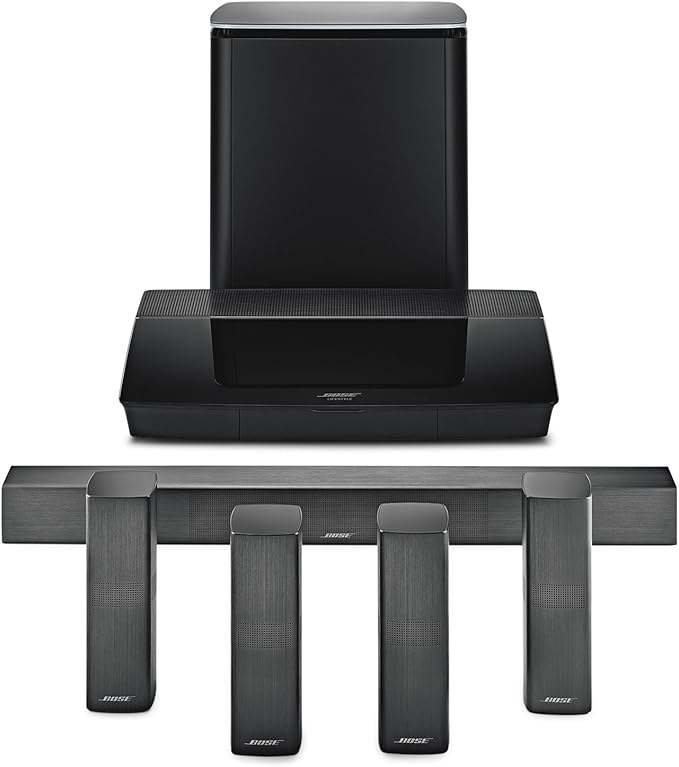
Conversely, Bose, founded in 1964 by Dr. Amar Bose, emerged from a deep obsession with psychoacoustics—the study of how the human brain perceives sound. Bose pioneered the concept of lifestyle audio, demonstrating that compact, aesthetically unobtrusive systems could produce disproportionately large acoustic stages. Instead of demanding expansive floor real estate for massive speaker cabinets, Bose relies heavily on proprietary digital signal processing (DSP), phase-manipulated transducers, and reflected sound paths. For Bose, the ideal home cinema is sleek, frictionless to integrate, and acoustically optimized for spaces where traditional architectural speakers would disrupt interior design aesthetics.
Key Differences & Technological Comparison
The core technological divide between Klipsch and Bose centers on mechanical acoustic design versus electronic signal manipulation.
Acoustic Architecture and Transducers: Klipsch relies heavily on its proprietary Tractrix® Horn technology mated to titanium or aluminum compression drivers, paired with spun-copper Cerametallic™ or TCP woofers. Horn loading physically increases acoustic output efficiency while minimizing driver excursion, producing exceptional dynamics with minimal amplifier wattage. In contrast, Bose utilizes proprietary compact drivers, articulating arrays, and long, folded acoustic wavepipes (such as in their Acoustic Waveguide technology) to generate low frequencies from physically diminutive enclosures, heavily aided by continuous dynamic equalization algorithms.
Ecosystem and System Versatility: Klipsch operates primarily in the modular audio domain. Whether opting for the entry-level Reference series or the high-end Reference Premiere line, Klipsch builds passive speakers requiring external AV receivers (AVRs), enabling custom configurations from 5.1 surrounds up to expansive 11.2.4 Dolby Atmos systems with dedicated height channels. Bose largely specializes in active, all-in-one lifestyle setups, such as the Smart Ultra Soundbar, paired wirelessly with Bass Modules and compact Surround Speakers. While Bose delivers rapid plug-and-play setup via proprietary connections, it lacks the raw customization, channel expansion, and component-upgradability inherent to traditional Klipsch setups.
Acoustic Calibration: Bose systems lean heavily on proprietary automated software, most notably the ADAPTiQ calibration system, which measures room dimensions and reflective surfaces via a specialized headset to re-EQ output. Klipsch passive speakers offload room correction to the user's chosen receiver (such as Audyssey, Dirac Live, or YPAO), giving enthusiasts direct manual control over crossover points, room curves, and individual channel gains.
Pros & Cons Comparison
Klipsch
- Pros:
- Exceptional sensitivity and dynamic headroom, requiring very little amplifier power to achieve theater-level volumes.
- Highly modular ecosystem allowing step-by-step upgrades, component swapping, and true multi-channel Dolby Atmos configurations.
- Superior physical presence and mid-bass punch thanks to large cabinet volumes and rigid copper woofers.
- Striking, bold aesthetic with visible copper cones and durable MDF wood-grain cabinets.
- Cons:
- The signature bright, horn-loaded high end can cause listening fatigue in bright, reflective rooms without acoustic treatment.
- Large physical footprint requires significant floor and shelf space, along with dedicated external amplification and speaker wire runs.
Bose
- Pros:
- Ultra-compact, sleek footprint that integrates seamlessly into modern living room decor.
- Industry-leading ease of use, with simple app control, HDMI eARC integration, and wireless satellite pairing.
- Remarkable clarity on dialogue thanks to proprietary digital voice enhancement modes.
- Excellent psychoacoustic processing that creates an expansive, wide soundstage from a single soundbar.
- Cons:
- Closed proprietary ecosystem that prevents users from mixing and matching third-party subwoofers or speakers.
- Heavy reliance on DSP compression can lead to an unnatural, processed sound profile during high-volume cinematic peaks.
- High price-to-performance ratio relative to the actual hardware driver sizes provided.
Performance, Durability & Value Analysis
From an audiophile perspective, Klipsch decisively wins the performance metric in raw fidelity, acoustic separation, and transient response. A properly configured Klipsch Reference Premiere system produces transient impacts that you can feel in your chest, driven by genuine driver surface area rather than DSP-boosted miniaturized components. However, Bose holds an undeniable advantage in everyday convenience and vocal articulation at low-to-medium volumes. In untreated rooms with hardwood floors and expansive glass windows, Bose's ADAPTiQ system consistently produces a well-tamed, balanced dialogue track, whereas a non-equalized Klipsch horn setup can occasionally sound harsh or overly sibilant.
In terms of durability and long-term value retention, Klipsch is the superior investment. Traditional passive speakers can comfortably last 20 to 30 years with proper care; the drivers are passive, meaning they will not be rendered obsolete by outdated HDMI standards, discontinued apps, or failing internal logic boards. Bose systems, being active and digitally networked, carry shorter operational lifespans dictated by wireless firmware updates, power supply lifecycles, and software compatibility. From a pure dollars-per-decibel and hardware-longevity perspective, Klipsch delivers far better long-term monetary value.
Final Verdict: Which Brand Should You Choose?
Choosing between Klipsch and Bose ultimately hinges on your spatial limitations, aesthetic preferences, and sonic expectations.
Choose Klipsch if: You are building a dedicated media room, basement theater, or living room system where audio fidelity is the primary objective. If you want bone-rattling cinematic dynamics, plan to integrate an AV receiver, desire real overhead Dolby Atmos channels, and appreciate the bold, industrial aesthetic of full-sized tower speakers and large subwoofers, Klipsch is unequivocally the brand to choose.
Choose Bose if: You prioritize convenience, minimalism, and unobtrusive industrial design. If your home theater is a multi-purpose living space where running speaker wire is out of the question, and your primary goal is crystal-clear movie dialogue, wide-dispersion television audio, and instant smartphone streaming without the bulk of a standalone receiver, Bose provides an unmatched, low-friction ownership experience.
Features
When evaluating the feature ecosystems of Klipsch and Bose within the home theater space, consumers are presented with two fundamentally opposing engineering philosophies: high-efficiency acoustic purism versus computational audio intelligence. Klipsch anchors its feature set in physical acoustic engineering, prominently utilizing proprietary Tractrix horn-loaded technology, linear travel suspension (LTS) titanium tweeters, and spun-copper Cerametallic woofers. In modern iterations like the Reference Premiere series, Klipsch incorporates functional architectural innovations, such as integrated, low-profile connection points for seamless Dolby Atmos height channel integration. On their powered systems, such as the Cinema soundbar lineup or the Fives/Sevens/Nines powered monitors, Klipsch features comprehensive physical connectivity, including eARC HDMI, dedicated phono preamps, and dynamic bass EQ that continually adjusts low-frequency output relative to volume levels. However, Klipsch largely omits complex digital signal processing (DSP), opting to let cabinet volume and driver efficiency dictate dispersion and clarity.
Conversely, Bose dominates the category through aggressive digital signal processing, spatial virtualization, and consumer-friendly automated calibration. The cornerstone of the Bose feature set is ADAPTiQ audio room calibration, an algorithmic measurement system that dynamically analyzes room geometry, furnishings, and reflective surfaces to optimize acoustic output. Modern Bose flagship offerings, such as the Smart Ultra Soundbar, leverage proprietary PhaseGuide technology and up-firing transducers enhanced by Bose TrueSpace spatial processing to intelligently upmix non-Atmos legacy content into height-rendered soundfields. Wireless multi-room integration through the Bose Music app, hands-free voice control (Google Assistant and Amazon Alexa), and Voice4Video technology (which bridges soundbar control with legacy televisions and cable boxes) highlight Bose’s focus on connected convenience. The primary trade-off is the closed nature of the Bose ecosystem: expanding a system requires proprietary Bose wireless surround speakers and Bass Modules, limiting component-level upgrades.
Ultimately, the practical trade-offs regarding features align with distinct user priorities. Klipsch offers modularity, massive dynamic headroom, and flexible hardware integration, making it the feature-rich choice for AV enthusiasts who desire uncompressed acoustic power and traditional multi-component receiver expandability. Bose excels in smart-home cohesion, digital boundary compensation, and automated processing, delivering an effortless, highly virtualized surround sound experience out of compact physical footprints. While Klipsch provides the raw mechanical features necessary to reproduce true cinematic dynamics without distortion, Bose delivers the software-driven intelligence required to extract maximum spatial immersion from streamlined, aesthetically unobtrusive hardware.
Performance
When evaluating performance in the home theater category, Klipsch and Bose approach acoustic engineering from fundamentally opposing philosophies. Klipsch anchors its acoustic identity in raw, high-efficiency mechanical engineering, prominently featuring its proprietary Tractrix horn-loaded titanium tweeters and spun-copper Cerametallic woofers. This architecture yields exceptional sensitivity, wide dynamic range, and near-zero distortion at high volume levels, translating into a punchy, cinema-grade performance characterized by crisp transient response and visceral low-frequency impact. Conversely, Bose leverages heavy digital signal processing (DSP), sophisticated acoustic waveguide technology, and beamforming microphone arrays to deliver its performance. Rather than relying on large physical speaker cabinets, Bose engineers ultra-compact drivers capable of generating an expansive, spatially coherent soundfield that belies their physical footprint, making dialogues articulate and soundstages remarkably wide even in acoustically challenging environments.
The technical trade-offs between the two brands become distinct when looking at feature sets, tuning profiles, and real-world implementation. Klipsch targets the traditional home theater enthusiast who prioritizes headroom, micro-detail, and an uncompressed, reference-level sound profile. The trade-off is a bright, highly directional sound signature that can induce ear fatigue in reflective, untreated rooms if paired with overly analytical amplification. Bose, on the other hand, prioritizes plug-and-play acoustic optimization through proprietary calibration systems like ADAPTiQ, which automatically balances frequencies to prevent room-induced muddiness. However, Bose’s aggressive DSP compression limits ultimate output thresholds; during sustained, complex, high-decibel action sequences, Bose systems can throttle dynamic peaks, whereas Klipsch systems effortlessly deliver explosive dynamic swings with uncompressed authority.
Ultimately, your performance preference hinges on room scale and media consumption habits. Klipsch delivers superior, uncompromising fidelity for dedicated, larger home theaters where high-impact movie dynamics, spatial separation, and musical accuracy at scale are paramount. Bose redefines convenience-driven performance, excelling in small-to-medium multi-use living spaces where users require consistent surround sound performance, class-leading speech intelligibility, and broad room coverage without the clutter of bulky physical floorstanders and heavy external amplifiers.
Design
When evaluating industrial design and acoustic architecture in the home theater space, Klipsch and Bose represent fundamentally opposing design philosophies. Klipsch champions a classic, high-impact aesthetic characterized by bold visual identity and purposeful acoustic engineering. Their cabinets—often finished in textured woodgrain vinyl or real wood veneers—proudly showcase spun-copper Cerametallic woofers and iconic Tractrix horns. This design is not merely decorative; it is driven by physical acoustics, utilizing large cabinet enclosures and high-efficiency horn geometry to maximize sound pressure levels and minimize distortion without requiring excessive amplification. In contrast, Bose operates on a philosophy of acoustic minimalism and architectural concealment. Bose systems, such as the Smart Ultra Soundbar and the lifestyle-oriented Jewel Cube arrays, prioritize sleek, ultra-compact form factors featuring premium materials like thermal-treated glass tops, fine-gauge wraparound metal grilles, and low-profile extruded enclosures that disappear into modern living spaces.
The engineering quality and internal technical executions further highlight this divergence in product design. Klipsch relies on traditional analog-first electroacoustic design, emphasizing substantial internal bracing, robust MDF construction to control panel resonances, and carefully tuned rear-firing Tractrix ports to optimize low-frequency airflow. While Klipsch provides passive modularity that appeals to purist home theater builders, Bose leverages heavy digital signal processing (DSP) and proprietary micro-driver arrays to punch above its physical weight class. Bose engineering integrates phase-guides, PhaseGuide technology that beams sound off boundaries, and custom multi-transducer configurations inside remarkably small enclosures. Furthermore, Bose integrates modern lifestyle hardware features directly into its chassis design, including streamlined cable concealment channels, ADAPTiQ calibration microphone arrays, and integrated voice-assistant light bars, whereas Klipsch’s flagship systems generally require external amplification, substantial wire management, and meticulous placement away from walls due to port mechanics.
Ultimately, the practical trade-offs between these two brands come down to spatial footprint versus raw acoustic headroom. Klipsch’s design necessitates a dedicated, space-tolerant environment where the gear becomes a focal point of room decor; their sheer physical bulk and aggressive retro-modern styling can quickly overwhelm smaller, contemporary spaces, yet they reward the user with effortless dynamics and zero acoustic compression. Conversely, Bose offers masterclasses in spatial economy, delivering high aesthetic compatibility with modern flat-panel displays and minimalist interiors where floor space is at a premium. The compromise for Bose's diminutive, design-forward enclosures is a reliance on aggressive psychoacoustic DSP and proprietary subwoofers (Bass Modules) to bridge the physical limitations of tiny drivers, sacrificing the expansive midrange warmth, effortless headroom, and physical presence inherent to Klipsch's large-format acoustic designs.