JBL vs Nakamichi: Overview
Comparing JBL and Nakamichi helps you determine which brand is best suited for your needs in Home Theaters. Both brands offer strong choices depending on your budget and key feature requirements.
Key Features & Comparison
Evaluate factors such as build quality, warranty, customer satisfaction, and total value before making your final purchase choice between JBL and Nakamichi.
Features
Feature-wise, JBL emphasizes modern ecosystem connectivity, smart room calibration, and cable-free convenience. A standout innovation from JBL is their battery-powered, detachable surround speakers, which clip directly onto the soundbar to charge and unclip for movie night, solving the perennial consumer dilemma of rear-speaker wiring. JBL soundbars integrate seamless support for Apple AirPlay, Google Cast, Alexa Multi-Room Music, and automatic sound calibration routines (AMC) that scan room acoustics via built-in microphones to optimize output curves in seconds. Additionally, JBL offers robust HDMI eARC pass-through with Dolby Vision and HDR10 support, ensuring modern gaming consoles and streaming devices interface smoothly without video degradation.
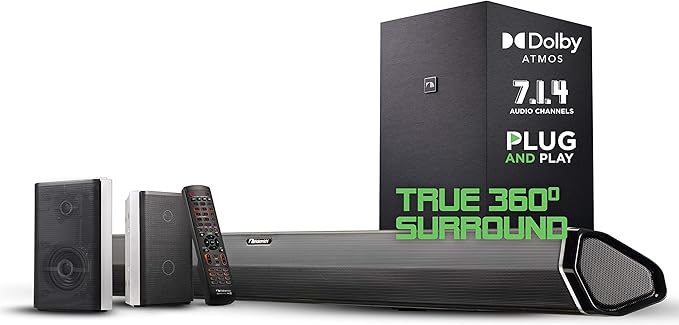
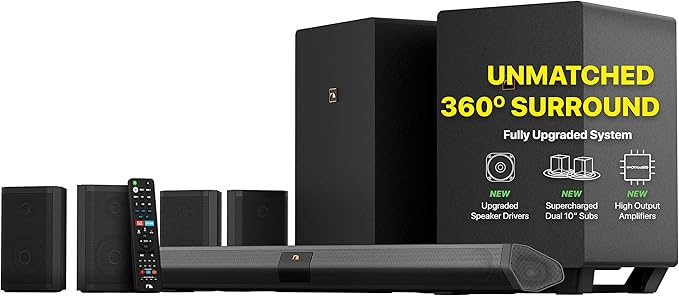
Nakamichi approaches features from an uncompromising home theater architecture standpoint, pioneering multi-subwoofer arrangements and proprietary Spatial Surround Elevation (SSE) Max processing. While JBL favors clean wireless simplicity, Nakamichi provides expansive multi-channel setups—up to 11.4.6 channels on flagship platforms like the Dragon—incorporating dedicated upward-firing and side-firing drivers in separate satellite towers. Nakamichi's connectivity suite includes dual HDMI 2.1 inputs capable of handling 4K 120Hz and 8K passthrough with VRR and ALLM for high-end gamers, alongside advanced sound profiling that allows users to independently tune center, surround, height, and bass crossover frequencies via an information-rich remote interface.
Performance
In acoustic performance, JBL is renowned for its authoritative low-end impact and articulate high-frequency response, largely attributable to Harman's industry-standard target curves. JBL systems frequently deploy massive 10-inch downward-firing subwoofers that generate visceral, cinematic sub-bass capable of pressurizing medium-to-large listening spaces with tactile presence. Dialogue intelligibility is another major strength; JBL uses dedicated center-channel drivers paired with proprietary PureVoice processing to keep spoken vocals clear and prioritized, even during chaotic action sequences with heavy explosions and active musical scores.
Nakamichi delivers an undeniably more envelopment-focused sonic experience, particularly in the domain of spatial object-based formats like Dolby Atmos and DTS:X. By employing dual subwoofers across many of their standard systems, Nakamichi mitigates room modes and standing waves, yielding a much tighter, more even bass distribution across multiple seating positions compared to JBL's single-subwoofer setups. High-frequency delivery is crisp and analytical, powered by AMT (Air Motion Transformer) tweeters on flagship models, which creates lightning-fast transient response and a towering, three-dimensional sound bubble that few traditional soundbar systems can match.
Design
From an industrial design standpoint, JBL opts for an understated, Scandinavian-adjacent aesthetic that blends harmoniously into contemporary interior decor. Their soundbars and subwoofers feature rounded corners, sleek matte-black or graphite plastics, and seamless metal grilles that conceal driver arrays without attracting undue visual attention. The magnetic docking mechanism for the detachable satellites is an engineering marvel, snapping cleanly into the main unit with tactile precision and concealing the modular nature of the system when not deployed into rear surround configurations.
Nakamichi adopts a much more aggressive, hardware-first design language that visually conveys acoustic horsepower. The chassis of Nakamichi soundbars and satellite towers lean toward sharp angles, industrial venting, and substantial physical footprints that demand considerable display space. While models like the Nakamichi Dragon incorporate luxurious brushed aluminum and backlit touch displays, the sheer number of physical enclosures—often requiring two distinct subwoofers and multiple satellite speakers that require power cabling—makes integrating a Nakamichi system a deliberate interior design choice rather than a discreet accent.
Compare current retail pricing, active promotions, and verified stock availability directly from authorized stores: