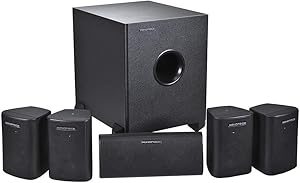
JBL vs Monoprice: Overview
Comparing JBL and Monoprice helps you determine which brand is best suited for your needs in Home Theaters. Both brands offer strong choices depending on your budget and key feature requirements.
Key Features & Comparison
Evaluate factors such as build quality, warranty, customer satisfaction, and total value before making your final purchase choice between JBL and Monoprice.
Features
In terms of feature sets and technological integration, JBL excels at modern digital connectivity, smart ecosystem compatibility, and wireless modularity. A prime example is found in JBL’s flagship soundbar lines (such as the Bar series), which feature truly wireless, battery-powered detachable rear surround speakers that eliminate cable clutter entirely while supporting uncompressed Dolby Atmos and DTS:X processing. JBL units frequently incorporate advanced room correction via built-in calibration microphones, HDMI eARC with comprehensive 4K Dolby Vision passthrough, and native streaming integration covering AirPlay 2, Google Cast, and Spotify Connect. These features are designed to minimize installation friction and make high-channel-count spatial audio immediately accessible without the need for outboard amplification or routing cables through walls.
Conversely, Monoprice approaches features through the lens of dedicated, component-grade versatility and strict adherence to cinema reproduction standards. Monoprice's standout Monolith lineup prioritizes physical connectivity and acoustic standards over wireless streaming bells and whistles, heavily investing in balanced XLR inputs, heavy-gauge binding posts, multi-channel modular amplifier topologies, and official THX Select and Ultra certifications. Monoprice’s subwoofers often feature variable tuning modes via included foam port plugs and sophisticated onboard DSP controls to tackle room modes directly. While Monoprice lacks the proprietary wireless ecosystems and frictionless smartphone app integrations that JBL provides, it offers custom-install integrators and audio hobbyists the essential hardware features required to build deeply tailored, high-output theater setups.
Performance
Acoustic performance between the two brands reveals distinct tuning priorities and physical sound characteristics. JBL is celebrated for its dynamic, high-impact presentation, largely driven by its proprietary compression drivers and High-Definition Imaging (HDI) waveguide geometry. This engineering ensures exceptional high-frequency detail, high sensitivity, and an expansive soundstage that closely mimics the lively, tactile dynamics of a commercial movie theater. JBL’s active subwoofers and soundbar systems deliver punchy, articulate mid-bass that anchors movie soundtracks with immediate, visceral energy, though some audiophiles may find the stock tuning slightly forward or V-shaped in certain consumer-tier configurations.
Monoprice, on the other hand, prioritizes flat, reference-grade frequency response and raw, distortion-free output, particularly in its Monolith line. Monolith subwoofers regularly benchmark among the most capable in the industry, utilizing massive magnets, multi-layer voice coils, and rigid cones to reproduce clean, linear bass extension down to 16Hz or lower with minimal port noise. Monoprice’s speakers, incorporating ribbon or silk-dome tweeters and Kevlar/carbon-fiber drivers, deliver an analytical, neutral, and uncolored sound signature that satisfies critical listeners and home theater calibrators. For consumers seeking sheer infrasonic authority and transparent acoustic neutrality, Monoprice frequently outperforms JBL dollar-for-dollar, whereas JBL remains the master of wide dispersion, effortless speech intelligibility, and energetic cinema dynamics.
Design
Design and build aesthetics highlight starkly different approaches to living-space integration and manufacturing philosophy. JBL products showcase premium, contemporary consumer electronics industrial design, characterized by smooth contours, minimalist matte finishes, refined metal grilles, and cohesive form factors that blend naturally into modern living rooms. Their soundbars and satellite speakers are engineered for compact footprints and low visual impact, hiding substantial acoustic engineering behind sleek enclosures. Even JBL’s traditional passive speakers, such as the HDI and Studio series, feature furniture-grade wood veneers, curved cabinets that reduce internal standing waves, and carefully styled front baffles that make a deliberate design statement.
Monoprice embraces a functional, industrial design aesthetic where form strictly follows function, often resulting in utilitarian and physically imposing hardware. Monolith subwoofers and tower speakers are notoriously massive, built with ultra-dense, internally braced high-grade MDF cabinets covered in simple black ash vinyl or utilitarian matte paint, emphasizing structural rigidity over decorative elegance. Monoprice amplifiers and components mimic commercial rack-mount gear, featuring thick, brushed-aluminum front panels, exposed heatsinks, and substantial weight indicative of large toroidal transformers. While Monoprice hardware may dominate a room and demand dedicated floor space, its overbuilt structural integrity ensures that cabinet resonance is kept to an absolute minimum, serving the pure performance goals of dedicated home theater rooms.
Compare current retail pricing, active promotions, and verified stock availability directly from authorized stores: