JBL vs Energy: Overview
Comparing JBL and Energy helps you determine which brand is best suited for your needs in Home Theaters. Both brands offer strong choices depending on your budget and key feature requirements.
Key Features & Comparison
Evaluate factors such as build quality, warranty, customer satisfaction, and total value before making your final purchase choice between JBL and Energy.
Features
JBL thoroughly outpaces Energy when it comes to contemporary feature sets and technological integration. JBL’s modern home theater systems, particularly within their Bar and Synthesis series, are packed with advanced digital processing, including native Dolby Atmos and DTS:X decoding, eARC connectivity, and automated room calibration tools such as Multibeam. Furthermore, JBL has pioneered practical consumer conveniences, such as truly wireless, battery-powered detachable rear surround speakers that eliminate the friction of running speaker wire across a living room. On the streaming front, JBL seamlessly incorporates Wi-Fi 6, Apple AirPlay 2, Google Cast, and modern Bluetooth codecs directly into their active speaker architectures.
In contrast, Energy remains dedicated almost entirely to traditional passive acoustic solutions that offload feature management to external audio/video receivers (AVRs). While this passive design ensures long-term longevity and prevents obsolescence driven by shifting wireless standards, it fundamentally lacks the plug-and-play convenience that modern consumers expect. Energy's primary technological feature set lies within proprietary acoustic hardware innovations, such as their Convergent Source Module (CSM) for coherent axis dispersion and Ribbed Elliptical Surround technology, which minimizes distortion on woofer excursions. While mechanically sophisticated, Energy offers virtually zero active DSP, network connectivity, or onboard surround decoding compared to JBL's integrated feature ecosystems.
Performance
In acoustic performance, JBL is renowned for its cinematic impact, effortless dynamic headroom, and articulate high-frequency projection. Utilizing their signature horn-loaded compression drivers, such as the High-Definition Imaging (HDI) waveguides, JBL systems excel at reproducing the explosive transients, rapid velocity, and pinpoint directional cues demanded by blockbuster movie soundtracks. The low-end presentation in JBL systems is consistently robust, powered by high-excursion subwoofers tuned for physical bass impact down to subterranean frequencies. However, some critical listeners may find JBL’s forward sound signature slightly aggressive or hyper-revealing during delicate, two-channel musical playback unless tamed with room equalization.
Energy presents a contrasting sonic profile characterized by natural neutrality, flat frequency response, and an expansive soundstage with exceptionally smooth mid-to-high transitions. The implementation of the Convergent Source Module places the tweeter and midrange drivers in close acoustic proximity, eliminating lobing artifacts and creating a wide sweet spot that allows multiple listeners to experience identical acoustic balance. Dialogue clarity is a distinct strength for Energy center channels, delivering warm and lifelike vocal timbre without acoustic fatigue. Nevertheless, Energy packages generally lack the sheer volume capabilities, deep dynamic reserves, and bone-rattling low-frequency extension that JBL commands, requiring careful subwoofer pairing to achieve comparable theatrical scale.
Design
From an industrial design standpoint, JBL balances professional-grade utility with modern consumer aesthetics. Their lifestyle soundbar solutions emphasize clean, low-profile forms wrapped in acoustically transparent metal grilles and matte polymer enclosures designed to integrate discretely beneath slim modern televisions. In their higher-tier floorstanding and architectural collections, JBL leans into bold, purposeful aesthetics characterized by exposed waveguides, distinctive transducer geometries, and premium real-wood veneer finishes. The physical construction feels robust, precision-engineered, and unmistakably modern, reflecting a brand confident in both its sonic prowess and its visible presence within a contemporary living space.
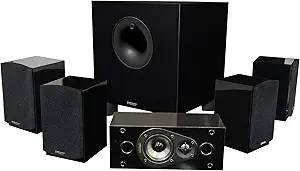
Energy’s design language leans toward classic, understated audio furniture, frequently employing traditional MDF cabinetry wrapped in high-gloss piano black or subtle wood-grain finishes. Their compact satellite systems, such as the venerated Take Classic, are masterclasses in efficient acoustic packaging, offering solid, resonance-dampened enclosures that occupy minimal real estate while delivering surprising volume. However, the styling across much of Energy's catalog can feel somewhat utilitarian or dated compared to current minimalist design trends. While the fit and finish are consistently high for their respective price categories, Energy does not offer the same ultra-sleek, wire-free modern integration options that define JBL's contemporary lineup.
Compare current retail pricing, active promotions, and verified stock availability directly from authorized stores: