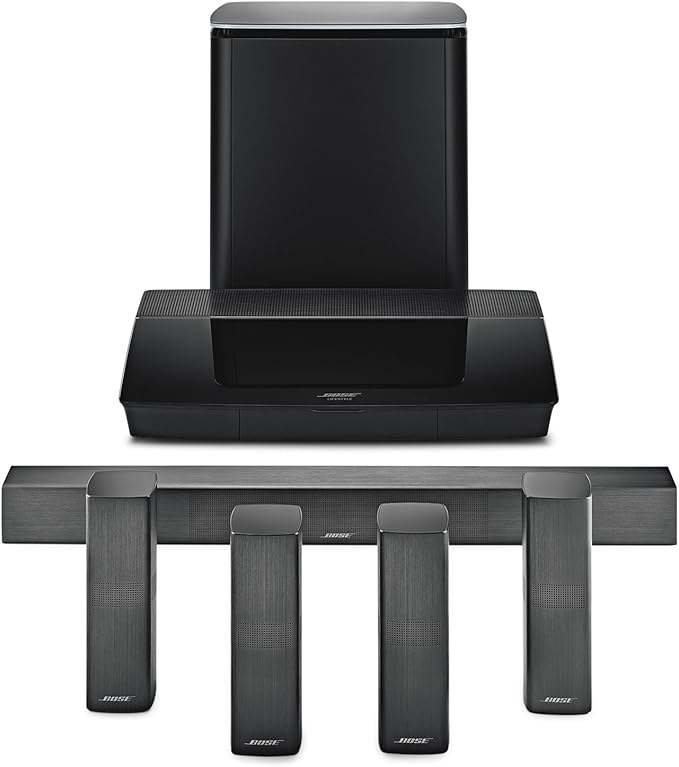
Bose vs Enclave: Overview
Comparing Bose and Enclave helps you determine which brand is best suited for your needs in Home Theaters. Both brands offer strong choices depending on your budget and key feature requirements.
Key Features & Comparison
Evaluate factors such as build quality, warranty, customer satisfaction, and total value before making your final purchase choice between Bose and Enclave.
Features
Bose establishes a strong lead in software sophistication, streaming versatility, and smart home automation. Modern Bose systems feature comprehensive connectivity including HDMI eARC, Wi-Fi, Apple AirPlay 2, Spotify Connect, and Bluetooth. Their native integration with Amazon Alexa and Google Assistant allows for complete hands-free control, complemented by Voice4Video technology that lets voice commands control both the sound system and the connected television. Furthermore, Bose utilizes the Bose Music App for precise multi-room audio grouping, EQ customization, and automated room correction via ADAPTiQ, which calibrates the soundstage specifically to the acoustic properties of the room.
Enclave focuses its feature suite almost entirely on high-fidelity wireless transmission protocols rather than streaming ecosystems. The cornerstone of Enclave's feature set is the CineHub, which leverages a dedicated 24-bit/96kHz wireless transmitter operating on its own frequency spectrum to bypass congested home Wi-Fi networks. While Enclave supports Dolby Audio, DTS Digital Surround, and uncompressed PCM via eARC/optical connections, it consciously omits integrated voice assistants, Wi-Fi streaming, and broad multi-room functionality. Setup is strictly plug-and-play for surround sound, requiring the Enclave mobile app solely for setup, channel level adjustments, and firmware updates rather than daily content management.
Performance
In acoustic execution, Bose is a masterclass in psychoacoustic engineering. Through proprietary technologies like PhaseGuide and TrueSpace, Bose soundbars project sound off walls and ceilings to mimic the height and width of a multi-speaker system from a single, low-profile enclosure. Bass modules pack immense low-end energy relative to their footprint, delivering punchy, cinematic rumble that pleases casual moviegoers and music lovers alike. However, because Bose relies heavily on DSP manipulation, the midrange can occasionally sound processed, and the physical limits of a soundbar mean that true rear-channel localization is compromised unless expensive physical surround satellites are added.
Enclave, by contrast, delivers the undeniable acoustic advantage of discrete, physically separated drivers positioned around the listener. Because each CineHome speaker is an independently amplified, dedicated acoustic channel with custom-tuned drivers and tweeters, Enclave creates an authentic 360-degree soundfield with pin-point directional accuracy that virtual soundbars simply cannot match. Dialogue reproduction through the dedicated center channel is crisp, full-bodied, and devoid of the phase-smearing that sometimes plagues DSP-heavy bars. While Bose may offer a warmer, more polished signature for casual music listening, Enclave provides superior dynamic range, transient attack, and theatrical impact during complex film soundtracks.
Design
Design and material quality are areas where Bose commands a visible premium. Bose products feature sleek, minimalist aesthetics characterized by impact-resistant tempered glass tops, precision-drilled metal grilles, and seamless contours that disappear under modern television panels. The manufacturing quality is industrial-grade yet tailored for high-end home decor, offering finishes in both triple black and arctic white. The physical presence of Bose components is intentionally discreet, maximizing floor space and prioritizing visual harmony within contemporary living environments.
Enclave adopts a more utilitarian, traditional speaker design that prioritizes acoustic cabinet volume over ultra-slim lifestyle profiles. The CineHome speakers are bulkier, wrapped in classic speaker fabric, and engineered with ported MDF enclosures designed to optimize driver resonance. While Enclave eliminates the need to run speaker cables across the room back to a central AVR, each speaker still requires its own independent AC power cable, which can present aesthetic challenges regarding cable management near floor outlets. Enclave’s styling will appeal more to traditionalists who appreciate the look of dedicated monitor speakers, whereas Bose decisively wins the battle of living-room integration.
Compare current retail pricing, active promotions, and verified stock availability directly from authorized stores:
Compare current retail pricing, active promotions, and verified stock availability directly from authorized stores: