Acoustic Audio vs Energy: Overview
Comparing Acoustic Audio and Energy helps you determine which brand is best suited for your needs in Home Theaters. Both brands offer strong choices depending on your budget and key feature requirements.
Key Features & Comparison
Evaluate factors such as build quality, warranty, customer satisfaction, and total value before making your final purchase choice between Acoustic Audio and Energy.
Features
From an integrated features standpoint, Acoustic Audio leans heavily into versatile, standalone functionality that bypasses the need for an external audio-video receiver (AVR). Many of Acoustic Audio's flagship multi-channel packages incorporate powered subwoofers with built-in multi-channel amplifiers, onboard Bluetooth streaming, digital optical inputs, and direct media playback via USB and SD card ports. This self-contained setup includes remote controls and full wiring harnesses right in the box, giving the user immediate, modern connectivity for quick setup with smart televisions, mobile devices, and gaming consoles without demanding complex AV configuration.
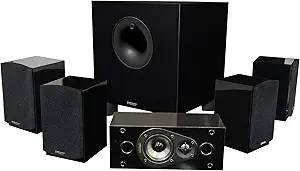
Energy takes a traditional, purist approach by focusing its engineering resources on superior speaker componentry rather than integrated digital multimedia features. Most Energy home theater packages, such as the renowned Take Classic 5.1 system, are purely passive satellite-and-center configurations coupled with a dedicated, discrete active subwoofer. They deliberately omit onboard Bluetooth, optical decoders, and integrated amplification in favor of heavy-duty gold-plated binding posts, robust internal crossover networks, and clean signal pass-through. While this requires the consumer to purchase a standalone AV receiver to handle decoding, room calibration, and signal switching, it offers far superior expandability, format support (such as Dolby Atmos and DTS:X), and amplification headroom compared to Acoustic Audio's all-in-one architectures.
Performance
In acoustic performance, Energy holds a definitive technical advantage thanks to proprietary driver technologies developed over decades of psychoacoustic testing. Energy speakers are widely celebrated for their Convergent Source Module (CSM) architecture and patented Ribbed Elliptical Surround technology, which dramatically lowers distortion while optimizing voice-coil excursion. The result is exceptionally wide, uniform dispersion, pinpoint soundstage imaging, and transparent dialogue clarity through the center channel. Their subwoofers deliver tight, articulate, and tuneful low-frequency extension that blends seamlessly with the satellite modules, avoiding the boomy, localized mid-bass resonance that often plagues entry-level theater gear.
Acoustic Audio provides energetic, impactful performance with sufficient volume output to fill small-to-midsize rooms, but it lacks the refined micro-detail and tonal neutrality of Energy. Because Acoustic Audio cabinets and passive crossover networks are engineered with cost reduction in mind, their frequency response can exhibit noticeable peaks in the treble and upper-midrange regions, alongside relatively loose low-end reproduction from their subwoofers. At moderate listening levels, Acoustic Audio delivers plenty of cinematic punch and immersion for movie nights, but when pushed to reference sound pressure levels, the internal amplifiers and drivers encounter distortion earlier than Energy's robust, low-resonance enclosures.
Design
Aesthetically, Acoustic Audio embraces a bold, modern, and occasionally gamer-centric design language. Many of their powered subwoofers feature integrated LED illumination, bright digital status displays, and exposed front-facing drivers with prominent branding. The enclosures are typically fabricated from lightweight MDF with black vinyl veneers or high-gloss plastic front baffles. While these designs make a strong, tech-forward statement in game rooms and casual spaces, the materials and lightweight structural dampening reflect their budget-friendly nature, making the cabinets somewhat susceptible to structural resonance during high-output playback.
Energy adopts a refined, understated aesthetic that integrates effortlessly into contemporary living spaces and upscale media rooms. Featuring compact form factors with deep, multi-layer high-gloss piano black finishes, Energy enclosures communicate a premium, sophisticated build quality. Beyond surface beauty, Energy's industrial design is functionally acoustic: the cabinets utilize heavy-density, internally braced composite enclosures with gently radiused baffles engineered explicitly to minimize edge diffraction. The compact footprints of their satellite modules allow for discrete wall mounting or shelf placement without dominating the room's visual décor, maintaining a subtle yet elegant profile.
Compare current retail pricing, active promotions, and verified stock availability directly from authorized stores: