Samsung vs Bosch: Overview
Comparing Samsung and Bosch helps you determine which brand is best suited for your needs in Dishwashers. Both brands offer strong choices depending on your budget and key feature requirements.
Key Features & Comparison
Evaluate factors such as build quality, warranty, customer satisfaction, and total value before making your final purchase choice between Samsung and Bosch.
Features
Bosch’s feature development revolves around optimizing the fundamentals of dishwashing, focusing heavily on racking ergonomics, water distribution, and acoustic dampening. Flagship innovations like the PrecisionWash system utilize intelligent sensors to scan the wash load continuously, adjusting cycle intensity and water usage dynamically. Furthermore, Bosch's Rackmatic adjustable upper rack offers multiple height positions to accommodate tall stemware or oversized platters, while their specialized third racks, such as the MyWay rack, provide dedicated clearance for chef's knives and deep ladles. However, Bosch is relatively conservative with smart features; while Home Connect is present on newer models, its application is pragmatic, prioritizing remote diagnostics, detergent tab counters, and cycle-complete notifications rather than flashy digital interfaces.
In contrast, Samsung excels at incorporating hyper-modern conveniences and high-tech novelties designed to simplify daily chores. Standout features include the StormWash+ and WaterWall technologies, which deploy specialized high-pressure rotating jets or horizontal moving spray bars to blast away baked-on grime without requiring pre-rinsing. Samsung also leads in hands-free post-cycle management with its AutoRelease door feature, which automatically pops the door ajar at the end of a cycle to allow steam to escape and fresh air to circulate. Additionally, Samsung's SmartThings ecosystem provides superior smart-home integration, allowing users to remotely monitor energy consumption, integrate cycle tracking into broader home automation routines, and control settings directly via smartphone or voice assistants.
Performance
In terms of cleaning and drying performance, Bosch consistently holds a technical advantage due to its refined European wash logic and market-leading drying innovations. Rather than relying on exposed, high-wattage heating elements that can melt plastics, Bosch employs closed condensation drying systems across its base units, graduating to AutoAir and the revolutionary CrystalDry technology in higher tiers. CrystalDry utilizes natural volcanic minerals known as Zeolite to absorb moisture and generate intense heat, successfully drying even complex polypropylene plastics and Tupperware without excessive energy consumption. Operationally, Bosch dishwashers run virtually silently, with mid-to-high-tier units registering between 38 and 44 decibels, making them virtually imperceptible in modern open-concept floor plans.
Samsung provides respectable wash performance, driven by vigorous mechanical agitation and high-pressure targeting zones that aggressively tackle heavily soiled cookware. However, its cleaning efficacy can be somewhat inconsistent depending on load placement, particularly along the periphery of the racks when compared to the uniform water dispersion of Bosch's alternating spray arms. For drying, Samsung primarily leans on the physical venting of steam through its AutoRelease mechanism paired with standard condensation techniques. While effective for ceramics, glassware, and heavy metals, it occasionally leaves residual moisture on plastic items and concave container bases. Acoustically, Samsung has made massive strides, with premium units hovering around 39 to 42 decibels, though lower-tier models tend to produce slightly more mechanical pump hum than equivalent Bosch offerings.
Design
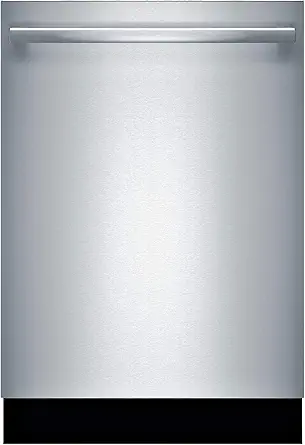
The exterior and interior design language of Bosch is defined by understated, functional minimalism. Available in pocket-handle and traditional bar-handle variations with hidden top-control panels, Bosch dishwashers blend seamlessly into custom or transitional kitchens. The interior architecture is built with an emphasis on durability, featuring full stainless steel tubs that insulate sound, resist staining, and withstand high-temperature sanitizing cycles across almost the entire portfolio. Bosch prioritizes tactile feedback, utilizing heavy-gauge wire racks, sturdy tines with flexible folding zones, and smooth-gliding ball-bearing rails that feel robust and stable under the weight of fully loaded ceramic dinnerware.
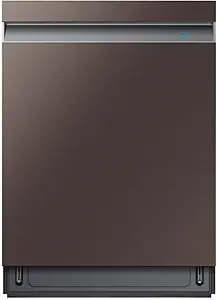
Samsung, by comparison, delivers a decidedly modern, design-forward aesthetic that mirrors luxury contemporary trends. The brand is renowned for introducing bold finish options such as fingerprint-resistant black stainless steel, Tuscan stainless, and customizable glass-paneled Bespoke finishes that match modern architectural styling. Samsung's exterior displays, whether recessed or hidden, feature crisp LED readouts and sleek digital touch interfaces that enhance the user experience. Internally, while higher-tier models feature stainless steel construction, some mid-range units still mix plastic bases with stainless walls. The interior layout is spacious and adaptable, though the plastic components and rack glide mechanisms generally lack the heavy, industrial-grade solidity found in Bosch's framework.
Compare current retail pricing, active promotions, and verified stock availability directly from authorized stores: