












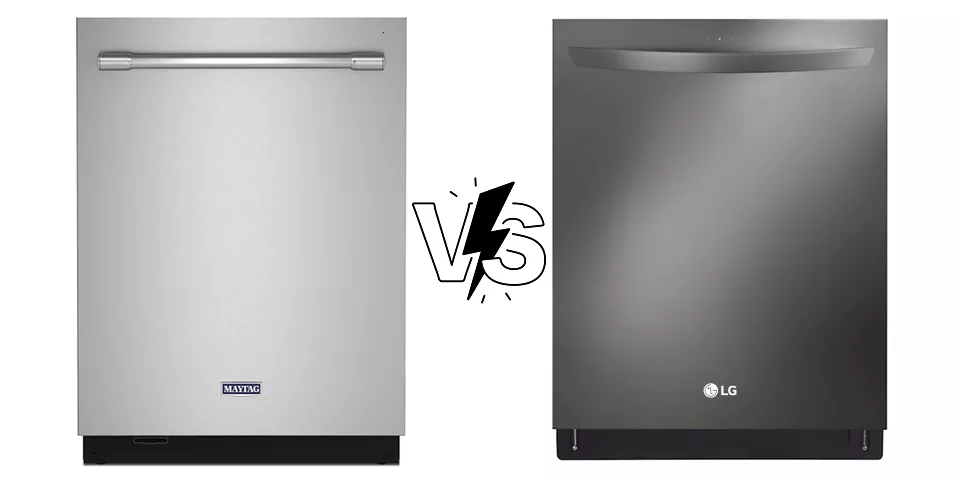
Stuck between LG and Maytag dishwashers? These two brands frequently come up in discussions when shopping for a new dishwasher. For consumers trying to decide between these two brands, it’s essential to understand their strengths and weaknesses. This in-depth comparison explores key aspects such as washing performance, efficiency, build quality, and affordability, helping you determine which dishwasher brand aligns best with your needs and preferences.
By the end of this article, you’ll have a clear idea of which brand fits your lifestyle and kitchen setup.
LG vs. Maytag: Head-to-Head Breakdown
Features
LG excels in delivering a rich suite of advanced technological features focused on hygiene, ergonomics, and automation. A hallmark of LG's upper-tier lineup is TrueSteam technology, which injects high-temperature steam during the wash and rinse phases to penetrate baked-on residues and significantly reduce water spots on glassware. Additionally, LG's QuadWash system incorporates four multi-directional spray arms—two of which oscillate back and forth—to maximize water coverage from varying angles. Digital functionality is another major differentiator; LG’s ThinQ platform allows users to download specialized wash cycles, monitor energy consumption, and receive proactive maintenance alerts directly to a smartphone, elevating the user experience through genuine smart home integration.
Maytag, by contrast, prioritizes mechanical features engineered to eliminate manual labor rather than digital novelties. Its defining technical asset is the integrated 4-blade stainless steel chopper, which actively pulverizes solid food particles during the cycle to prevent drain clogs and eliminate the need for frequent manual filter cleanings. Maytag also equips many models with the Dual Power Filtration system, combining microfiltration with mechanical shredding for continuous water clarity. While Maytag's smart connectivity options are more limited across its mid-range catalog, its physical interface offers utilitarian strengths such as the PowerBlast cycle and dedicated heated drying elements that deliver reliably dry plastics, proving that its feature set is unapologetically optimized for heavy-duty kitchen duty.
Performance
In real-world cleaning assessments, both brands deliver top-tier results, but they accomplish clean dishes through fundamentally different methods. LG relies on hydro-dynamic precision, micro-droplet steam penetration, and precise variable water pressure generated by its Inverter Direct Drive motor. This allows LG machines to alternate between intense pressure on the lower rack for pots and pans and gentler pressure on the upper rack for fragile stemware. In terms of acoustic performance, LG is an industry frontrunner, with many models operating between 40 and 44 dBA, making them virtually imperceptible in adjacent living spaces—a major performance metric for modern homeowners.
Maytag approaches cleaning performance through sheer force and thermal intensity. The brand's signature PowerBlast cycle combines high-pressure wash jets, elevated water temperatures, and extended cycle times to strip away stubborn, baked-on proteins like cheese and egg yolk with minimal pre-washing. Where Maytag truly stands out from many modern competitors is its drying performance; by utilizing traditional exposed heating elements paired with venting systems, Maytag consistently achieves bone-dry results, even on porous plastic containers. The primary trade-off is noise: while Maytag has substantially quieted its lineup, most models operate in the 47 to 50 dBA range, making them audibly louder than comparable LG units.
Design
From an aesthetic perspective, LG delivers a minimalist, flush-fitting exterior profile characterized by pocket handles, hidden top controls, and fingerprint-resistant finishes such as PrintProof Stainless and Black Stainless Steel. Internally, LG shines in terms of ergonomics and adaptability. Its EasyRack Plus system features color-coded, foldable tines and a height-adjustable middle rack that can be shifted with one hand to accommodate oversized stockpots or tall baking sheets below. Higher-end models also incorporate an adjustable third rack with independent height customization, providing dedicated space for flatware, ladles, and small espresso cups without sacrificing vertical clearance.
Maytag adopts a bolder, industrial aesthetic that telegraphs durability and classic American kitchen styling. Featuring prominent towel-bar handles, cast-metal badge branding, and heavy-gauge stainless steel door panels, Maytag dishwashers make a deliberate, substantial visual statement. Internally, Maytag favors thick, vinyl-coated nylon racks supported by sturdy ball-bearing glides, often featuring bright metal accents on the rack handles that reinforce the brand's rugged image. While Maytag's internal layout is slightly less modular than LG's highly articulated tine systems, it excels in rugged simplicity, offering deep, wide baskets and ample spacing that effortlessly accommodates heavy cookware, thick-rimmed ceramic plates, and bulky mixing bowls.
Conclusion
Ultimately, both LG and Maytag dishwashers offer strong performance and reliability, but the right choice depends on your needs. If you’re looking for a high-tech, feature-rich dishwasher with smart capabilities, LG is the better choice. If you prefer a powerful, durable, and budget-friendly dishwasher, Maytag is the way to go. Regardless of which brand you choose, both LG and Maytag provide high-quality dishwashing solutions, ensuring clean and spotless dishes after every cycle.







