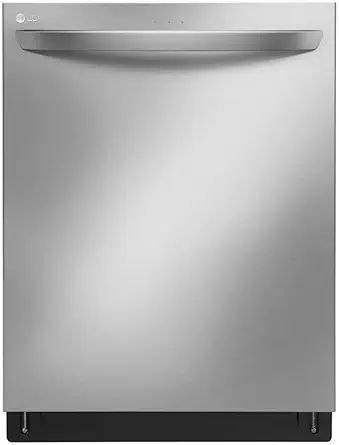
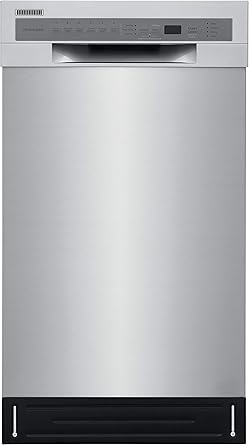
Choosing the perfect dishwasher can be overwhelming, especially with two major players like LG and Frigidaire offering such compelling choices. LG has the latest innovations and premium designs for those who want top-of-the-line performance, while Frigidaire delivers straightforward, affordable options that don’t skimp on quality. This review breaks down both brands to help you choose the best option for your home and for your budget.
Features
When evaluating feature sets in the dishwasher category, LG positions itself on the cutting edge of consumer-facing technology, engineering its machines with advanced sanitization, drying, and smart connectivity capabilities. The hallmark of LG’s engineering is its QuadWash system, which employs four spray arms with multi-directional rotation instead of the industry-standard two, ensuring superior wash coverage without dead zones. Furthermore, LG integrates TrueSteam technology, utilizing pure steam generators to penetrate baked-on food residues and reduce water spots by up to 60%, drastically minimizing the need for manual pre-rinsing. On the drying front, LG ranges from hybrid condensation systems to advanced dynamic venting with auto-door-release, preventing trapped moisture from condensing back onto plastics. Paired with ThinQ Wi-Fi integration—which offers remote monitoring, personalized cycle downloads, and proactive smart diagnostics—LG provides a feature-dense ecosystem engineered for meticulous cleaning performance and modern convenience.
Conversely, Frigidaire approaches dishwasher features through a lens of utility, simplicity, and rapid turnaround, focusing on mechanical effectiveness over digital sophistication. Frigidaire’s core engineering highlight is the OrbitClean (or Dual OrbitClean) wash system, which uses a multi-directional rotating disc at the base of the spray arm to deliver four times more water coverage than conventional fixed arms. For consumers who prioritize throughput, Frigidaire excels with dedicated rapid cycles, notably its Quick Clean feature that washes dishes in roughly 30 minutes—significantly faster than most equivalent LG cycles. Instead of complex steam systems, Frigidaire predominantly leans on traditional exposed or concealed heating elements paired with fans (EvenDry technology) to provide reliable, bone-dry results on ceramics and glassware, albeit with higher energy consumption and a risk of melting plastics placed on the lower rack. Smart features are largely absent from standard Frigidaire models, deliberately keeping the user interface straightforward and the internal circuitry less prone to electronic faults.
Ultimately, the practical trade-offs between the two brands come down to technological versatility versus straightforward utility. LG’s feature profile—highlighted by highly adjustable EasyRack Plus racking, third racks with height adjustments, ultra-quiet brushless Inverter Direct Drive motors, and gentle yet effective steam cycles—caters to modern households handling delicate stemware and demanding soils. However, these advanced features result in longer cycle runtimes and potential software-dependent friction. Frigidaire sacrifices granular rack customizability, Wi-Fi connectivity, and whisper-quiet decibel levels in favor of mechanical dependability, intuitive push-button control layouts, and aggressive heated drying. Buyers seeking sophisticated soil sensing, steam sanitization, and app-driven control will find LG distinctly superior, while those demanding faster baseline cycles, robust traditional drying, and utilitarian simplicity will favor Frigidaire’s pragmatic feature architecture.
Performance
When evaluating cleaning and drying performance, LG establishes a significant technological advantage through its advanced wash systems and motor engineering. Most notably, LG’s QuadWash technology utilizes four multi-motion spray arms equipped with specialized reverse-rotating jets that dynamically alter spray angles, providing exceptionally thorough hydrodynamic coverage compared to traditional two-arm setups. Furthermore, LG incorporates its TrueSteam technology in mid-to-high-end models, which penetrates baked-on food residues and noticeably minimizes water spots on glassware, virtually eliminating the need for pre-rinsing. Drying performance is reinforced by hybrid condensation systems and, on select premium units, an auto-open door feature that naturally exhausts humid air. Underpinning this performance is LG’s Inverter Direct Drive motor, which allows for precise, variable-speed water pressure regulation across cycles while keeping operational decibel ratings whisper-quiet, often ranging between 40 and 46 dBA.
Frigidaire targets an entirely different consumer segment, favoring robust, high-volume mechanics and aggressive drying over whisper-quiet digital sophistication. Frigidaire's performance is driven by its BladeSpray and OrbitClean wash systems, which use an oscillating circular spray disk at the end of the lower arm to maximize water droplet coverage across stubborn dish loads. While effective at removing typical soil levels, Frigidaire relies on conventional, alternating single-speed motors that operate noticeably louder than LG's direct-drive assemblies. Where Frigidaire frequently outperforms LG, however, is in pure post-cycle dish dryness. By retaining traditional exposed electric heating elements and pairing them with its EvenDry and MaxBoost fan-assisted systems, Frigidaire consistently produces bone-dry plastics and dinnerware, avoiding the pooled moisture that occasionally plagues condensation-only drying units.
The practical trade-offs between these two brands come down to wash precision versus heating intensity. LG delivers a refined, highly adaptable performance suited for delicate stemware and heavy pots alike, characterized by superior water efficiency, whisper-quiet operation, and targeted steam cleaning, though users must occasionally accept slightly damp synthetic dishware. Conversely, Frigidaire delivers raw, utilitarian capability: it aggressively tackles heavily soiled pots and guarantees dry dishes, but it trades away the fine-tuned rack adjustments, energy efficiency, acoustic comfort, and long-term motor reliability found in LG's lineup. For consumers prioritizing cutting-edge coverage and spot-free glassware, LG holds the upper hand, whereas Frigidaire remains a compelling budget-to-midrange choice for households demanding straightforward cleaning coupled with bone-dry results right out of the machine.
Design
When evaluating the design philosophy of dishwashers, LG consistently leans into a sleek, contemporary aesthetic backed by sophisticated mechanical engineering. LG units, particularly those in the QuadWash and Studio lines, prioritize modern minimalism with flush-mount pocket handles, seamless PrintProof stainless steel finishes, and hidden top-control capacitive touch panels with subtle LED feedback. Internally, the engineering highlights versatility and sound dampening. LG's standout design asset is the EasyRack Plus system, which employs color-coded, adjustable tines and height-variable racks to accommodate oversized cookware, alongside a dedicated, height-adjustable third rack for flatware. The mechanical footprint is further refined by LG's Inverter Direct Drive motor, which eliminates traditional belts and pulleys to drastically reduce internal vibration, yielding whisper-quiet operations (often between 40 and 44 dBA) while freeing up internal basin volume.
In contrast, Frigidaire—especially through its core and Gallery series—adheres to a more utilitarian, pragmatic design language that focuses on robust, straightforward ergonomics rather than ultra-modern styling. While Frigidaire Gallery models offer smudge-proof stainless finishes and integrated top controls, the exterior silhouettes are generally more traditional, featuring exposed handles and more industrial profiling. Mechanically, Frigidaire excels in targeted wash-delivery design through engineering innovations like the OrbitClean and Dual OrbitClean wash arms, which utilize a rotating disc at the end of the spray arm to create a multi-directional spray pattern. However, Frigidaire's interior architecture trades some modular refinement for cost-effectiveness; its racking systems are generally sturdier but feature fewer foldable tines and less vertical flexibility than LG's counter-options, with entry-level units occasionally relying on plastic tubs rather than the full, seamless stainless-steel tubs standard in LG's mid-to-high tier offerings.
The practical trade-offs in design ultimately divide these brands by user priorities and installation environments. LG’s design strength lies in spatial optimization, whisper-quiet motor placement, and refined smart-home integration with ThinQ Wi-Fi diagnostics, making it the superior design choice for open-concept kitchens where visual cohesion and acoustics are paramount. Conversely, Frigidaire provides a mechanically unpretentious design with components that are often more accessible and straightforward to service or replace. While Frigidaire sacrifices the high-end tactile feel of glide rails, extensive interior adjustability, and ultra-low decibel acoustics found in LG's portfolio, it delivers a durable, highly functional layout optimized for straightforward loading and intensive, uninterrupted water dispersion at a more accessible price point.
Conclusion
Both LG and Frigidaire are excellent in their own unique ways. LG offers the newest technology, smart features, connectivity, and modern designs, so it is perfect for those who value the latest technology and aesthetics. Frigidaire, on the other hand, provides excellent value with reliable performance and straightforward features, making it ideal for budget-conscious consumers. The decision is simply a matter of your personal taste: innovation and high-end features versus practicality and affordability.