LG vs Samsung: Overview
Comparing LG and Samsung helps you determine which brand is best suited for your needs in Dishwashers. Both brands offer strong choices depending on your budget and key feature requirements.
Key Features & Comparison
Evaluate factors such as build quality, warranty, customer satisfaction, and total value before making your final purchase choice between LG and Samsung.
Features
In terms of specialized cycle options and functional technology, both manufacturers offer distinct, high-value proprietary systems designed to streamline kitchen chores. LG's signature feature is TrueSteam technology, which utilizes a built-in steam generator to saturate dishes before the main wash cycle begins, significantly loosening baked-on food residues and reducing water spots without the need for manual pre-rinsing. Furthermore, LG’s QuadWash system utilizes four multi-motion spray arms that rotate back and forth while spinning, paired with high-pressure jets to provide thorough coverage from multiple angles throughout the wash chamber, alongside a highly practical height-adjustable third rack designed to accommodate everything from flatware to small espresso cups.
Samsung counters with features focused on heavy-duty spot cleaning and post-cycle moisture evacuation. Flagship Samsung models feature the StormWash+ or Zone Booster systems, which dedicate targeted high-intensity spray zones in the lower rack to scour heavily soiled pots and pans without subjecting delicate glassware in adjacent areas to harsh pressures. Another standout Samsung feature is the AutoRelease door mechanism, which automatically pops the door ajar at the conclusion of the cycle to allow moist air to vent out and ambient air to circulate naturally, drastically improving plastic drying performance without consuming extra heating energy. Both brands feature expansive Wi-Fi connectivity via LG ThinQ and Samsung SmartThings, offering cycle monitoring, leak alerts, and downloadable specialty cycles directly to a smartphone.
Performance
Cleaning efficacy and drying performance reveal distinct mechanical approaches that dictate day-to-day results. LG's QuadWash and TrueSteam engineering consistently deliver top-tier cleaning across a wide variety of load types, showing particular prowess in breaking down starchy, baked-on soils and eliminating film on glassware. When it comes to drying, LG relies predominantly on dynamic condensation drying enhanced by hybrid heating elements in select lines; while glass and ceramics dry nearly flawlessly, users may occasionally notice residual moisture trapped within the crevices of Tupperware and other plastics, although this is mitigated in higher-end models that incorporate dual-fan convection exhaust systems.
Samsung's wash performance is generally competitive, with its targeted spray zones providing exceptional concentrated scrubbing power for casseroles and baking sheets, though baseline coverage across heavily crowded racks can occasionally be slightly less uniform than LG's four-arm sweep. Where Samsung pulls ahead noticeably is in final-stage drying; the automated door-pop feature leverages physical ventilation to release steam rapidly, leaving both standard dishware and synthetic plastics remarkably dry to the touch with virtually zero chemical rinse-aid compromise. Acoustic performance between the two brands is nearly identical, with both manufacturers offering ultra-quiet operation ranging from an imperceptible 39 dBA to a quiet 44 dBA, making either brand ideal for open-concept floor plans.
Design
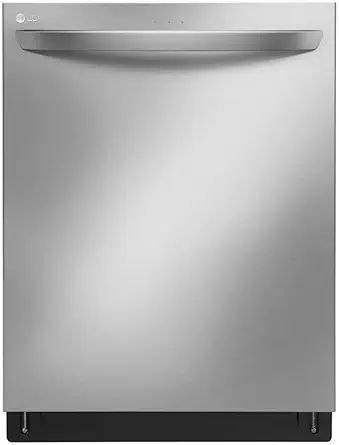
From an aesthetic and ergonomics standpoint, both brands bring a distinctly modern, minimalist edge to the kitchen, abandoning clunky hardware in favor of clean lines and integrated controls. LG champions an architectural simplicity characterized by PrintProof smudge-resistant stainless steel finishes, recessed pocket handles, and discrete top-control panels equipped with responsive capacitive touch interfaces. Internally, the EasyRack Plus system utilizes color-coded, foldable tines that provide clear visual cues for customization, allowing users to effortlessly adapt the interior layout for stockpots, oversized platters, or deep stemware while maintaining structural rigidity under heavy loads.
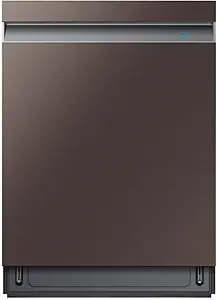
Samsung leans heavily into contemporary lifestyle aesthetics, headlined by its customizable Bespoke line, which allows homeowners to select colored glass or steel panels—such as navy, white, or emerald—to harmonize with surrounding cabinetry or create a dramatic kitchen accent piece. The interior is equally flexible, featuring a modern full-stainless-steel tub across most price tiers, smooth ball-bearing glides, and an adjustable middle rack that can be modified with one hand. While LG's fit and finish focus on long-lasting mechanical ergonomics and sturdy interior components, Samsung undeniably leads in modern exterior flair and architectural adaptability, making it the preferred choice for design-forward kitchen transformations.