TP-Link vs Google Nest: Overview
Comparing TP-Link and Google Nest helps you determine which brand is best suited for your needs in Wi-Fi Routers. Both brands offer strong choices depending on your budget and key feature requirements.
Key Features & Comparison
Evaluate factors such as build quality, warranty, customer satisfaction, and total value before making your final purchase choice between TP-Link and Google Nest.
Features
In terms of feature depth, TP-Link offers a vastly superior suite of network management tools, catering to advanced users who require precise control over their local environment. Through both its robust web management interface and the Tether app, TP-Link facilitates detailed port forwarding, dual-WAN configurations, VPN server/client support (including OpenVPN and WireGuard), dynamic DNS, and customizable quality of service (QoS) rules. Additionally, TP-Link frequently integrates multi-gigabit Ethernet ports (2.5GbE and 10GbE) and versatile USB ports for local network-attached storage or print sharing, alongside the HomeShield security suite for automated network defense and parental controls.
Conversely, Google Nest strips away technical complexity in favor of curated smart home functionality managed entirely within the Google Home app. Advanced networking features like deep port routing, split-band SSID management, and VPN configurations are either heavily simplified or entirely absent. However, Google Nest compensates with unique smart-ecosystem capabilities, such as built-in smart speakers, Google Assistant integration on certain mesh points, and native support for the Matter smart home standard and Thread border routing. This makes Google Nest an intelligent automation hub, whereas TP-Link functions as a high-performance network engine designed for customized data transmission.
Performance
Performance benchmarks heavily favor TP-Link, primarily due to the brand's rapid adoption of cutting-edge wireless standards and powerful internal silicon. TP-Link routinely deploys multi-band architectures (Tri-Band and Quad-Band) featuring Wi-Fi 6E and Wi-Fi 7 technologies, wide 160MHz and 320MHz channel bandwidths, and high-gain external antenna arrays. These specifications translate to significantly higher peak throughput, superior multi-gigabit wireless backhaul speeds, and lower latency under heavy local congestion. Whether handling multi-stream 8K video, high-throughput cloud backups, or competitive gaming, TP-Link's hardware handles dense, simultaneous client connections with minimal thermal throttling or packet loss.
Google Nest delivers competent, reliable performance tailored to standard everyday residential use, but it lags behind TP-Link in raw metrics and technical capability. Often slower to adopt the newest Wi-Fi generations, Google Nest systems typically rely on dual-band or entry-level tri-band Wi-Fi 6 architectures with internal antennas. While Google's sophisticated background channel optimization and band-steering algorithms ensure consistent coverage and seamless roaming without dropped connections, the system suffers from lower ceiling throughput and diminished range through dense building materials. For average streaming and browsing, Google Nest is exceptionally steady, but it cannot match TP-Link's raw speed or bandwidth capacity.
Design
The aesthetic approaches of TP-Link and Google Nest could not be more sharply contrasted. Google Nest has long been the gold standard for minimalist consumer product design, crafting soft, pebble-like nodes with matte finishes, hidden status lights, and discreet cable management. Intended to be placed in plain sight on bookshelves, side tables, or countertops, Google Nest nodes organically blend into contemporary home decor. Because mesh systems perform best when elevated and unobstructed, this discreet, domestic industrial design actively promotes optimal physical placement, naturally improving wireless coverage without looking like an eyesore.
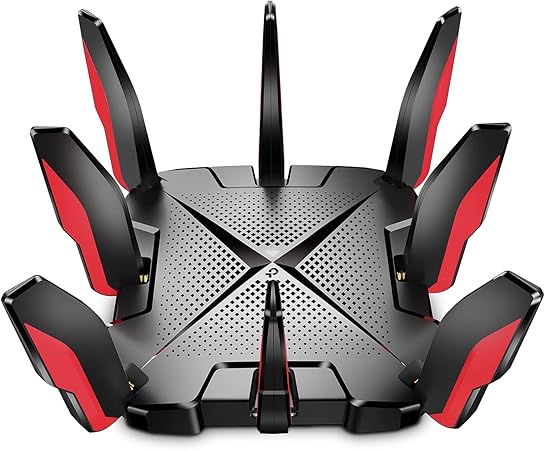
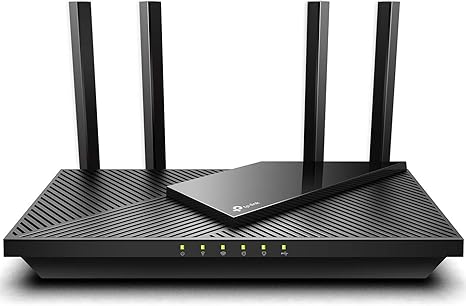
TP-Link's design language historically skews toward the utilitarian and aggressive aesthetic common to high-performance computing hardware. Many of its standalone routers feature angular, vented chassis bristling with numerous large, external antennas, while their gaming lines feature prominent RGB lighting and stealth-bomber motifs. While TP-Link has made strides toward subtler, cylindrical aesthetics with its Deco mesh line, the brand still prioritizes thermal management, port density, and antenna articulation over pure minimalist appeal. TP-Link designs prioritize functional airflow and signal mechanics, whereas Google Nest designs prioritize seamless domestic camouflage.