Asus vs TP-Link: Overview & Brand Philosophy
In the home and small-business networking landscape, Asus and TP-Link represent two of the most dominant forces, yet they approach connectivity from fundamentally different philosophies. Asus has carved out a premium reputation by catering to power users, competitive gamers, and technology enthusiasts who demand granular control, cutting-edge hardware specifications, and robust onboard software. Originating as a motherboard and PC component powerhouse, Asus treats the router not merely as a passive utility, but as an active, high-performance computing node within the modern digital home.
Conversely, TP-Link has established its market dominance on the pillars of accessibility, exceptional price-to-performance ratios, and mass-market scalability. Headquartered globally to serve both budget-conscious consumers and sprawling enterprise networks, TP-Link’s philosophy centers on democratizing new networking standards like Wi-Fi 6, 6E, and Wi-Fi 7 rapidly and affordably. Their hardware designs emphasize clean, unobtrusive aesthetics that blend seamlessly into home environments, supported by software that prioritizes intuitive, set-it-and-forget-it deployment over deep technical tinkering.
Ultimately, this comparison pits Asus’s feature-rich, high-overhead performance engineering against TP-Link’s streamlined, value-optimized manufacturing ecosystem. While both vendors produce top-tier routers capable of handling gigabit-plus bandwidth and congested device environments, your choice between them depends heavily on whether you value deep customization and network autonomy over straightforward setup, mass-market value, and appliance-like simplicity.
Key Differences & Technological Comparison
To understand how these brands diverge, one must examine their hardware architectures, management interfaces, mesh ecosystems, and subscription models:
- Firmware and Customization: Asus routers run on the proprietary AsusWRT platform, widely regarded as the gold standard for stock router firmware. It provides native support for open-source alternatives like Asuswrt-Merlin, deep Quality of Service (QoS) controls, Dual-WAN capabilities, and integrated VPN client/server functionality (including WireGuard and OpenVPN). TP-Link relies on its Tether mobile application and simpler web GUIs, which, while exceptionally responsive for average consumers, often lock advanced routing parameters, detailed traffic analysis, and fine-tuned wireless controls behind simplified menus.
- Security and Subscription Models: Asus partners with Trend Micro to deliver AiProtection Pro, an enterprise-grade commercial security suite embedded directly into the router that includes intrusion prevention, malicious site blocking, and advanced parental controls. Critically, Asus offers this suite free for the lifespan of the product. In contrast, TP-Link utilizes HomeShield (also powered by Avira/Trend Micro depending on the model), which places its most advanced parental controls, real-time IoT protection, and comprehensive bandwidth reporting behind a paid monthly or annual subscription tier.
- Mesh Networking Integration: Both manufacturers excel in whole-home coverage, but via different paths. Asus incorporates AiMesh into nearly all its standalone routers, allowing users to pair different generations, form factors, and price points into a unified mesh network without buying dedicated nodes. TP-Link approaches mesh via its dedicated, aesthetically polished Deco lineup, as well as EasyMesh/OneMesh across its traditional Archer router series. While Deco offers one of the smoothest consumer mesh experiences on the market, it lacks the cross-compatibility depth and protocol flexibility found in Asus AiMesh.
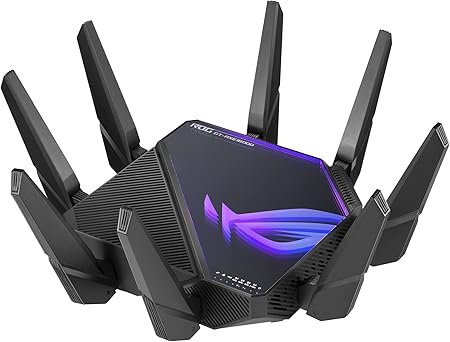
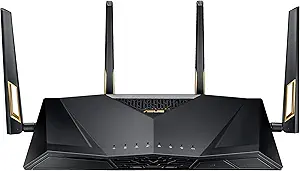
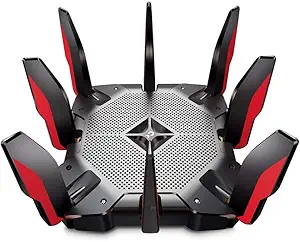
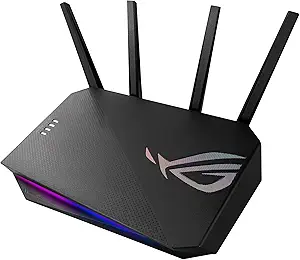
- Hardware Design and Thermals: Asus routers, particularly within the ROG (Republic of Gamers) and TUF lines, often feature aggressive angular designs, prominent external antennas, multi-gigabit Ethernet configurations, and heavy internal heatsinks to mitigate thermal throttling during intense data transfers. TP-Link opts for minimalist, contemporary chassis designs that prioritize lower production costs and discrete domestic placement, occasionally running slightly warmer under sustained, heavy I/O workloads.
Pros & Cons Comparison
Asus
- Pros:
- AsusWRT provides peerless granular control, traffic monitoring, and advanced networking features.
- AiProtection security suite and advanced parental controls require no recurring subscription fees.
- Versatile AiMesh technology allows backward compatibility across diverse Asus router models.
- Industry-leading native VPN support (WireGuard, OpenVPN, IPsec) with client/server routing.
- Heavy-duty thermal dissipation designs ensure rock-solid stability under heavy loads.
- Cons:
- Significantly higher entry price point compared to equivalent hardware tiers.
- Mobile management application can feel intimidating or cluttered to non-technical users.
- Aggressive gaming aesthetic on higher-tier units may clash with living room decor.
TP-Link
- Pros:
- Unbeatable price-to-performance ratio across entry-level, mid-range, and Wi-Fi 7 models.
- Tether and Deco mobile applications deliver a frictionless, beginner-friendly setup process.
- Clean, modern product aesthetics that fit naturally into residential spaces.
- Rapid adoption and rollout of modern Wi-Fi standards at accessible price thresholds.
- Extensive, reliable portfolio of dedicated plug-and-play mesh systems (Deco).
- Cons:
- Advanced security features, deep analytics, and premium parental controls are locked behind a HomeShield subscription.
- Limited advanced networking controls for prosumers (e.g., restricted VLAN and VPN flexibility on budget tiers).
- Inconsistent mesh protocol compatibility across legacy Archer lines (OneMesh vs. EasyMesh).
Performance, Durability & Value Analysis
From an absolute performance and durability perspective, Asus typically commands a lead in sustained multi-client throughput, heavy-packet processing, and longevity. Because Asus equips its mid-to-high-tier routers with robust multi-core Broadcom or MediaTek processors, abundant RAM, and substantial thermal architecture, these units handle persistent workloads—such as simultaneous 4K streams, local NAS transfers, and low-latency gaming—with virtually no performance degradation. Furthermore, Asus’s historical software support is exceptional; legacy routers regularly receive security patches and feature updates many years after release, dramatically elevating their long-term ownership value.
TP-Link, however, dominates the pure financial value proposition. For standard households seeking reliable, high-speed wireless coverage without technical intervention, spending double the money on an Asus unit often yields diminishing real-world returns. TP-Link routers deliver exceptional raw Wi-Fi speeds at close and medium range, reliably saturating modern fiber-optic connections. While their long-term firmware update windows tend to be shorter than Asus's, and the introduction of subscriptions for advanced software tools slightly diminishes their lifetime value, TP-Link remains the undisputed leader in delivering modern wireless technology to the widest possible audience at the lowest upfront capital cost.
Final Verdict: Which Brand Should You Choose?
The decision between Asus and TP-Link ultimately hinges on your technical literacy, tolerance for ongoing subscriptions, and networking objectives:
Choose Asus if: You are an enthusiast, remote worker, or gamer who requires granular oversight of your local network. Asus is the clear winner for anyone needing deep VPN configuration, subscription-free commercial security, advanced traffic prioritization, or the ability to construct a modular mesh network out of repurposed standalone routers over time. If you view your network infrastructure as an active utility requiring precision tuning, the premium investment in Asus pays immediate dividends.
Choose TP-Link if: You prioritize seamless setup, clean interior aesthetics, and maximum bandwidth per dollar spent. If your household’s primary demands revolve around reliable streaming, smart home device connectivity, and whole-home Wi-Fi coverage without the urge to navigate subnets, routing tables, or firewall rules, TP-Link offers the most sensible, cost-effective, and user-friendly experience on the market today.
Features
When evaluating the feature ecosystems of Asus and TP-Link, the architectural divide lies between open, enthusiast-grade control and accessible, mainstream utility. Asus routers are renowned for the depth and granularity of their native firmware, AsusWRT. Even on mid-tier models, Asus provides comprehensive networking suites without recurring fees, notably AiProtection (powered by Trend Micro), which delivers robust commercial-grade intrusion prevention and parental controls indefinitely. Advanced users benefit immensely from multi-WAN support, sophisticated port-forwarding matrixes, integrated VPN servers and clients (including modern protocols like WireGuard), and the proprietary AiMesh technology, which allows backward-compatible mesh node deployment across vastly different Asus hardware generations. Furthermore, Asus’s engineering often supports third-party custom firmware like Asuswrt-Merlin, cementing its reputation as the benchmark for technical flexibility, real-time traffic monitoring, and granular Quality of Service (QoS) management.
TP-Link takes a divergent, mass-market approach with its HomeShield platform and the companion Tether application, prioritizing seamless onboarding, aesthetic UI design, and automated optimization over low-level configuration. While TP-Link’s feature set is physically expansive—offering tri-band configurations, robust Wi-Fi 6E/7 implementations, and competitive multi-gigabit port allocations at accessible price points—its software capabilities suffer from a segmented monetization strategy. Essential advanced features such as comprehensive malicious site blocking, time limits, and granular IoT security are frequently locked behind the HomeShield Pro subscription paywall. TP-Link’s proprietary mesh technology, OneMesh and the newer EasyMesh standard, provides rock-solid whole-home coverage and efficient dynamic backhaul steering, but it lacks the enterprise-style diagnostic tools and cross-platform flexibility inherent to Asus’s ecosystem.
The practical trade-offs regarding features boil down to operational transparency versus turnkey simplicity. Asus secures a decisive victory for power users, remote workers, and gamers who demand native dual-WAN failover, built-in OpenVPN/WireGuard tunnels at the router level, and lifetime subscription-free network defenses. Conversely, TP-Link provides an exceptionally polished, zero-friction experience ideal for standard residential deployments where mobile app management and automated, hands-off performance are preferred, provided buyers accept the trade-off of shallower out-of-the-box telemetry and the recurring software costs associated with unlocking the hardware's full functional suite.
Performance
When evaluating performance, Asus generally positions itself at the enthusiast and high-demand tier, leveraging superior processing hardware and aggressive thermal engineering to deliver exceptional throughput and sustained reliability. Across its flagship and gaming-centric lines (such as the ROG Rapture and RT series), Asus consistently deploys multi-core Broadcom or MediaTek processors backed by massive heat sinks and generous RAM allocations. This robust hardware architecture pays dividends during heavy network congestion, preventing thermal throttling and packet loss under the strain of simultaneous 4K streams, large file transfers, and low-latency gaming sessions. Furthermore, Asus’s custom-tuned Quality of Service (Adaptive QoS) and its proprietary AiMesh technology offer elite traffic prioritization and seamless node-to-node roaming speeds, ensuring minimal latency spikes even at extreme physical ranges.
TP-Link, by contrast, takes a highly pragmatic, efficiency-driven approach to performance that maximizes real-world speeds per dollar. Through its mainstream Archer router lineup and Deco mesh ecosystems, TP-Link utilizes well-optimized Qualcomm and Broadcom chipsets that excel at handling baseline multi-gigabit connections and high-density smart home device loads. While TP-Link’s entry-to-midrange units often match or slightly exceed comparable Asus models in raw, short-range 5 GHz and 6 GHz throughput tests, they tend to exhibit shallower sustained performance curves under peak CPU load. TP-Link’s simplified HomeShield traffic management lacks the granular packet-level customization found in Asus’s firmware, which can lead to marginally higher jitter in multi-user gaming environments, though their intelligent beamforming and BSS coloring implementations provide remarkably stable and predictable whole-home coverage for the average consumer.
The practical trade-off between the two brands centers on peak capability versus cost-effective optimization. Asus is the superior technical performer for power users, competitive gamers, and complex local networks requiring relentless multi-client throughput, heavy-duty VPN client processing, and low-jitter packet scheduling. However, this level of sustained performance demands higher retail pricing and physically bulkier hardware to manage heat dissipation. TP-Link represents the benchmark for price-to-performance efficiency, delivering plug-and-play bandwidth that fully saturates typical residential broadband connections without unnecessary overhead, making it the more sensible choice for standard households where ultra-low latency under extreme concurrent loads is not a primary concern.
Design
When evaluating the physical and industrial design of Wi-Fi routers, Asus and TP-Link approach hardware engineering with distinctly different philosophies. Asus predominantly embraces an aggressive, gamer-centric aesthetic, particularly within its dominant ROG (Republic of Gamers) and TUF lines, characterized by angular chassis, customizable Aura RGB lighting, and menacing, multi-antenna arrays. Beyond the bold styling, Asus demonstrates superior thermal engineering; their housings often incorporate thick aluminum heatsinks, extensive venting on all sides, and occasionally integrated cooling fans to prevent thermal throttling under heavy CPU loads. While this focus on performance and robust structural rigidity creates exceptionally durable units, it results in an undeniably conspicuous footprint that can clash with minimalist home decor. Conversely, Asus's ZenWiFi mesh lineup pivots toward discreet, modern column designs, though even these maintain internal antenna arrangements engineered for high passive heat dissipation.
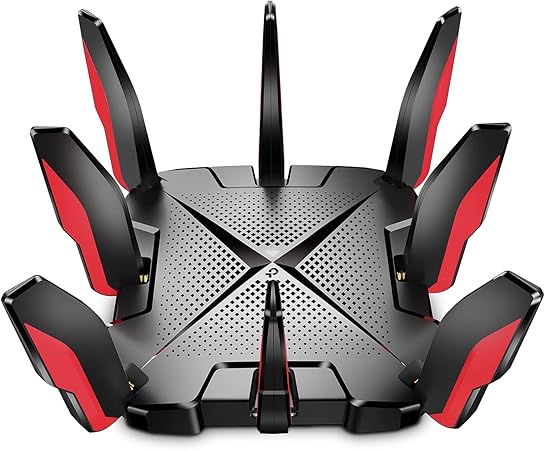
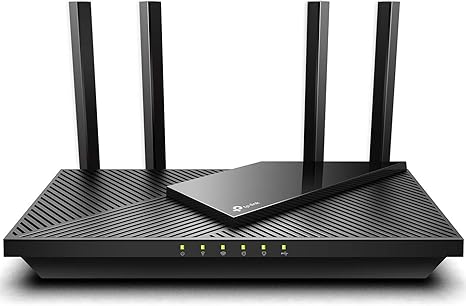
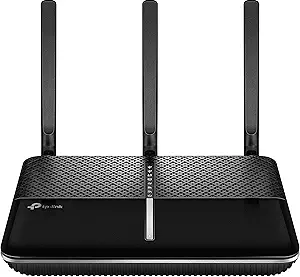
TP-Link takes a more balanced, consumer-friendly approach to industrial design across its standard Archer and Deco product families. The Archer series favors a sleek, geometric profile—often integrating low-profile casing, piano-black accents, and folding antennas—that blends seamlessly into modern entertainment centers and home offices without demanding visual attention. Where TP-Link truly innovates in design is its Deco mesh ecosystem, which champions clean, Nordic-inspired cylinders and pods stripped of external antennas, aggressive branding, and distracting LED arrays. This lifestyle-oriented engineering makes TP-Link units significantly easier to integrate into living spaces. However, the trade-off for these compact, decorative form factors is often tighter internal tolerances and less robust passive cooling compared to Asus, which can lead to warmer operating temperatures during sustained multi-gigabit throughput.
From an ergonomics and port-layout perspective, both brands exhibit distinct technical strengths. Asus leans into functional utility for power users, offering sturdy, wall-mountable bases, dedicated physical toggles (such as hardware buttons for LED sleep modes or WPS), and carefully spaced rear I/O panels that prevent high-gauge Ethernet cables from crowding multi-gigabit ports or adjacent USB 3.2 storage drives. TP-Link designs for plug-and-play simplicity, often utilizing flush, minimalist port recesses that look tidy but can feel cramped when fully populated with thick shielded cables. Ultimately, Asus wins on heavy-duty build quality, aggressive thermal performance, and utilitarian port engineering, while TP-Link holds the advantage for consumers prioritizing understated aesthetics, spatial efficiency, and non-intrusive home integration.