Asus vs Google: Overview
Comparing Asus and Google helps you determine which brand is best suited for your needs in Wi-Fi Routers. Both brands offer strong choices depending on your budget and key feature requirements.
Key Features & Comparison
Evaluate factors such as build quality, warranty, customer satisfaction, and total value before making your final purchase choice between Asus and Google.
Features
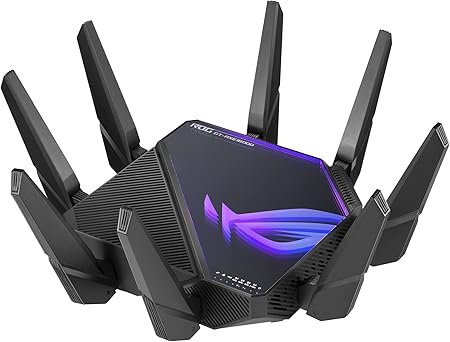
In terms of features, Asus offers one of the most comprehensive and customizable software suites available on consumer networking gear through its ASUSWRT operating system. Power users benefit from built-in commercial-grade AiProtection powered by Trend Micro, enterprise-level VPN client and server configurations (including WireGuard and OpenVPN), dual-WAN support for network redundancy, and native AiMesh capability to repurpose older Asus hardware into mesh nodes. Gamers also enjoy triple-level game acceleration, port forwarding presets, and precise Adaptive QoS tools. Furthermore, the availability of open-source third-party firmware like Asuswrt-Merlin extends hardware lifespan and functionality far beyond standard commercial thresholds.
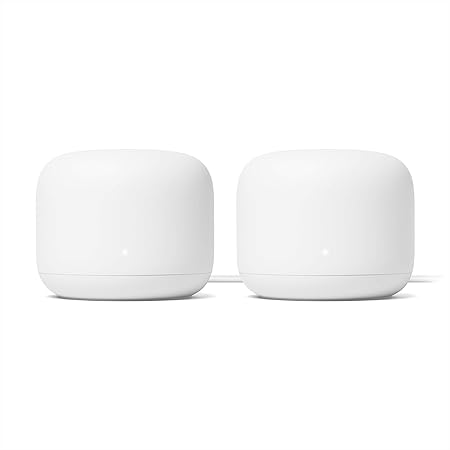
Google takes a strictly curated, minimalist approach, relying on the Google Home mobile application rather than a dedicated web interface. Key features are streamlined to focus on household usability, such as scheduled family Wi-Fi pauses, automated device grouping, and simplified guest network deployment. While Google Nest routers do feature built-in smart speakers, Thread border routers, and Matter support in newer iterations, they deliberately omit advanced enterprise-lite tools; port forwarding is limited, dynamic DNS is rigid, and alternative DNS or VPN controls are substantially restricted. For users who value deep operational control and network-level security tools, Asus wins decisively, whereas Google excels solely at everyday household accessibility.
Performance
Performance benchmarks showcase Asus as a leader in raw throughput, sustained multi-client handling, and low-latency transmission. Asus routers are typically engineered with multi-gigabit WAN/LAN ports (frequently 2.5Gbps or 10Gbps), dedicated external high-gain antennas, and robust multi-core Broadcom processors accompanied by substantial thermal heatsinks. This architecture enables Asus devices to achieve blistering speeds over Wi-Fi 6E and Wi-Fi 7, excel at long-range line-of-sight propagation, and minimize jitter during intensive online gaming sessions or multi-stream 4K/8K media playback, even under heavy network saturation.
Google’s Nest Wifi devices, while dependable, are engineered with an emphasis on seamless roaming and balanced mesh saturation rather than absolute top-tier throughput. Because Google generally relies on internal antenna arrays and conservative thermal profiles, real-world peak speeds and extended-range transmission fall short of equivalent Asus hardware. Furthermore, many Google Nest nodes rely on dual-band setups without a dedicated wireless backhaul band, leading to throughput degradation across satellite points unless wired via Ethernet. While Google’s automated band-steering algorithm provides solid, uninterrupted connectivity for everyday browsing and video conferencing, Asus remains the superior performer for demanding local file transfers, gigabit-plus broadband tiers, and latency-sensitive gaming.
Design
The industrial design of both brands mirrors their underlying target audiences, standing at polar opposite ends of modern consumer aesthetics. Asus leans heavily into assertive, aggressive styling—particularly within its TUF and ROG lines—characterized by sharp geometric angles, matte black chassis, bold ventilation grilles, and customizable Aura Sync RGB lighting. While functional by virtue of passive cooling and external antenna articulation, these bulky, angular designs are difficult to integrate discreetly into common living spaces, often demanding placement in home offices, media cabinets, or dedicated server corners.
Google, by contrast, approaches networking hardware through the lens of modern interior decor and Scandinavian minimalism. Nest Wifi units feature smooth, rounded cylindrical forms, matte ceramic-like finishes, and warm, muted color palettes that blend effortlessly onto bookshelves, coffee tables, or kitchen countertops. By integrating functional components like smart speaker microphones and gentle downward-firing status lights, Google treats its nodes as welcoming household accessories. This discreet styling serves a key technical objective: placing mesh nodes out in the open rather than behind television consoles fundamentally improves wireless radio propagation throughout the home.