TP-Link vs Netgear: Overview
Comparing TP-Link and Netgear helps you determine which brand is best suited for your needs in Wi-Fi Routers. Both brands offer strong choices depending on your budget and key feature requirements.
Key Features & Comparison
Evaluate factors such as build quality, warranty, customer satisfaction, and total value before making your final purchase choice between TP-Link and Netgear.
Features
TP-Link distinguishes itself by delivering an exceptionally comprehensive software experience out of the box without hidden costs. Through the Tether and Deco mobile applications, alongside granular web GUIs, TP-Link provides intuitive network administration, robust parental controls, and comprehensive IoT management. A key competitive advantage is their TP-Link HomeShield suite; while it features a premium tier, the baseline free tier remains genuinely useful for standard security audits and QoS management. Furthermore, TP-Link’s OneMesh and EasyMesh integration allows users to seamlessly expand coverage using inexpensive legacy hardware or standalone extenders, maximizing utility and long-term modularity.
Netgear takes an aggressive, performance-centric approach to software features, particularly within its Nighthawk gaming and Orbi systems. Netgear’s software architecture shines with advanced capabilities like tri-band and quad-band radio routing, dedicated wireless backhauls, and deep packet inspection via Netgear Armor (powered by Bitdefender). However, Netgear faces valid criticism for locking critical network features—such as comprehensive parental controls and advanced threat protection—behind annual subscriptions after brief trial periods. While tech-savvy users benefit from custom firmware support (like DD-WRT) on select legacy models, Netgear's native feature set prioritizes cutting-edge radio management over unrestricted, free onboard software tools.
Performance
In real-world performance benchmarks, TP-Link routers demonstrate remarkable balance, delivering stable throughput and low latency that often exceed expectations for their price class. Leveraging efficient processing silicon from Qualcomm, Broadcom, and MediaTek, TP-Link devices handle multiple concurrent streams with admirable thermal stability. Across standard Wi-Fi 6 and Wi-Fi 7 implementations, TP-Link devices deliver consistent near-field speeds and reliable wall penetration. While extreme long-range attenuation and heavy multi-client bandwidth throttling can occasionally reveal the limitations of their budget RF front-end modules, they easily satisfy the bandwidth requirements of 4K streaming, teleconferencing, and casual gaming.
Netgear, however, tends to capture peak performance accolades in demanding RF environments and extreme throughput scenarios. By employing high-power internal and external radio amplifiers, sophisticated beamforming algorithms, and dedicated multi-gigabit WAN/LAN ports, Netgear routers excel at sustaining high bandwidth over long distances and through dense building materials. The Orbi mesh line notably maintains superior speeds at distant satellite nodes thanks to patented dedicated 5GHz or 6GHz wireless backhaul channels. For extreme multi-device congestion, multi-gigabit ISP connections, and latency-sensitive gaming, Netgear's superior hardware architecture typically outmuscles TP-Link under heavy processing loads.
Design
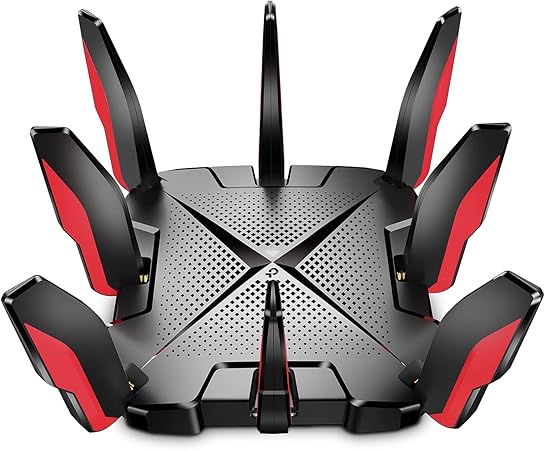
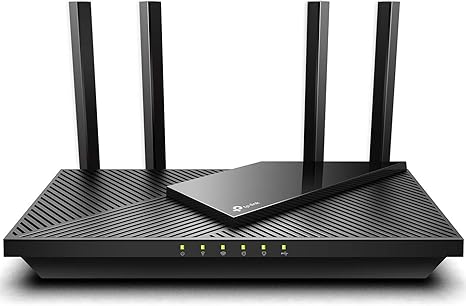
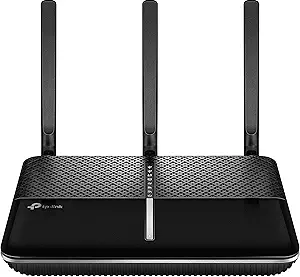
From an industrial design standpoint, TP-Link emphasizes understated practicality and consumer-friendly aesthetics. Their Deco mesh units feature minimalist, cylindrical or pebble-like white enclosures that integrate effortlessly into modern home decor without broadcasting their technological presence. On the standalone Archer front, TP-Link balances traditional external-antenna router aesthetics with modern geometric vent patterning and efficient passive heat dissipation. The physical build quality favors lightweight, cost-effective plastics, but the overall engineering is coherent, practical, and designed to minimize desktop footprint and visual clutter.
Netgear embraces a dramatically bolder, more aggressive industrial design language that overtly signals performance and engineering power. The Nighthawk line is iconic for its angular, stealth-bomber chassis, prominent status LEDs, and large, articulate antennas engineered for optimal directional tuning. Meanwhile, the flagship Orbi systems present substantial, monolithic desktop sculptures with integrated high-gain internal antenna arrays. Netgear generally uses heavier, premium-grade plastics and robust internal heatsinks designed to withstand sustained thermal stress from high-power transceivers, resulting in a more commanding physical presence and exceptional build durability.