TP-Link vs Arris: Overview & Brand Philosophy
When selecting a home networking solution, consumers frequently encounter TP-Link and Arris, two giants that approach connectivity from distinct engineering philosophies. TP-Link has established itself as a global leader in consumer networking by democratizing cutting-edge technology. Founded in China and now co-headquartered in Singapore and the United States, TP-Link focuses on rapid consumer innovation, offering expansive product lines that include standalone Wi-Fi routers, mesh systems, and smart home peripherals. Their design philosophy centers on user accessibility, feature-dense software ecosystems, and highly competitive pricing, allowing average consumers to adopt the latest Wi-Fi standards without a prohibitive financial barrier.
Conversely, Arris—now a core brand under CommScope—traces its lineage deep into the telecommunications and enterprise infrastructure sectors. Historically recognized as the standard-bearer for cable modems and gateway hardware deployed directly by major Internet Service Providers (ISPs), Arris approaches consumer Wi-Fi through the lens of industrial reliability, DOCSIS standards, and raw throughput integrity. Rather than bombarding users with frequent hardware revisions, Arris focuses on carrier-grade stability, dedicated gateway solutions (modem-router combos), and specialized high-performance mesh architectures under its SURFboard banner.
Ultimately, the choice between these two brands highlights a fundamental consumer fork in the road: TP-Link champions customizable, standalone routing with bleeding-edge consumer features, while Arris excels in utilitarian, ISP-integrated hardware engineered for plug-and-play durability and carrier-level compatibility.
Key Differences & Technological Comparison
A technical assessment of TP-Link and Arris reveals distinct priorities regarding hardware configuration, software interfaces, and network architecture:
Product Line Diversity & Routing Specialization: TP-Link offers an extensive catalog spanning budget-friendly dual-band routers, high-performance Archer-series tri-band gaming platforms, and the Deco whole-home mesh ecosystem. They were among the earliest manufacturers to roll out consumer-accessible Wi-Fi 6E and Wi-Fi 7 hardware featuring multi-gigabit WAN/LAN ports. In contrast, Arris's consumer presence is concentrated around its SURFboard series. While Arris produces standalone routers and mesh systems (such as the SURFboard mAX), its core technological competency lies in integrated cable gateway units that combine high-spec DOCSIS 3.1 modems with internal Wi-Fi routing.
Software Architecture and Network Management: Software usability forms a major point of differentiation. TP-Link utilizes the Tether application alongside robust web-based interfaces. The company integrates HomeShield (powered by Avira in many configurations), offering built-in network security, dynamic Quality of Service (QoS) throttling, extensive parental controls, and IoT device isolation. Arris relies on the SURFboard Central application, which prioritizes seamless setup, ISP provisioning, and basic network mapping. However, Arris delivers significantly fewer granular controls over network parameters, lacking the deep advanced routing, VPN client/server hosting, and customizable gaming optimizations found natively in TP-Link firmware.
Internal Engineering and Thermal Dissipation: TP-Link routers often employ modern, multi-antenna designs (both internal and high-gain external arrays) designed to maximize physical beamforming and spatial streaming across sprawling residential layouts. Arris hardware reflects its enterprise pedigree, typically utilizing monolithic, external-antenna-free enclosures with vertical internal heat sinks. This design promotes passive convection cooling, ensuring long-term hardware survival in tight spaces or network closets where continuous operation under heavy load is required.
Pros & Cons Comparison
TP-Link
- Pros:
- Aggressive deployment of new standards (Wi-Fi 6E, Wi-Fi 7, 10Gbps ports) at accessible price tiers.
- Feature-rich administrative firmware including HomeShield, VPN server/client support, and deep QoS customization.
- Broad standalone catalog ranging from sub-$50 budget units to ultra-premium tri-band/quad-band gaming routers.
- Highly rated, intuitive mobile management via the TP-Link Tether and Deco applications.
- Cons:
- Select advanced security and parental control features are locked behind recurring HomeShield Pro subscriptions.
- Plastic chassis construction on mid-to-lower tier models can feel lightweight and less durable.
Arris
- Pros:
- Market-leading integration of DOCSIS 3.1 cable modems and Wi-Fi routers in single, space-saving enclosures.
- Exceptional hardware reliability, passive cooling, and rock-solid carrier compatibility across major cable ISPs.
- SURFboard mAX mesh systems deliver exceptionally strong backhaul throughput across extended footprints.
- Uncluttered, enterprise-derived hardware designs without sprawling external antennas.
- Cons:
- Significantly smaller product selection for pure, standalone routing environments.
- Mobile and web interfaces lack granular technical settings, advanced traffic shaping, and robust VPN management.
- Premium mesh and gateway units carry higher initial price tags relative to their feature sets.
Performance, Durability & Value Analysis
From a raw performance standpoint, the user experience varies depending on the specific network topology. For high-bandwidth activities such as local NAS data transfers, competitive low-latency gaming, and multi-device 8K streaming, TP-Link typically holds a performance edge. Their top-tier Archer and Deco units incorporate multi-core processors that handle high concurrent connections without throttling, alongside versatile band-steering and explicit beamforming arrays. However, Arris matches this performance in dedicated backhaul mesh scenarios; the SURFboard mAX system leverages high-capacity 4x4 internal antenna arrays that excel at delivering uniform, wall-penetrating speeds across expansive structures without significant packet degradation.
In terms of durability and long-term value, Arris benefits immensely from its telecom infrastructure pedigree. Arris gateways and routers are engineered for sustained operational lifespans with minimal hardware failures or need for frequent power cycling. Value-wise, choosing an Arris gateway allows consumers to eliminate monthly ISP equipment rental fees, delivering an immediate return on investment within 10 to 14 months. Conversely, TP-Link dominates the pure price-to-specification ratio. Dollar-for-dollar, a TP-Link standalone router will virtually always provide faster Wi-Fi throughput ratings, more Ethernet interfaces, and deeper software management tools than a comparably priced Arris routing unit.
Final Verdict: Which Brand Should You Choose?
The definitive decision between TP-Link and Arris hinges on your existing internet delivery method, technical proficiency, and hardware expectations:
Choose TP-Link if: You already have a standalone modem or a fiber/ONT terminal and require a dedicated, high-performance router. TP-Link is the superior choice for tech-savvy users, gamers, smart-home enthusiasts, and budget-conscious buyers who want advanced features such as guest network segmentation, VPN functionality, comprehensive parental controls, and early access to the latest wireless standards without paying enterprise premiums.
Choose Arris if: You are a cable internet subscriber (such as Xfinity, Spectrum, or Cox) looking to streamline your hardware footprint by replacing rented ISP equipment with an all-in-one cable modem and Wi-Fi router gateway. Arris is ideal for users who prioritize enterprise-grade passive durability, plug-and-play network stability, and minimal administrative overhead over deep software customization.
Features
When evaluating the feature ecosystem of Wi-Fi networking hardware, TP-Link and Arris represent fundamentally divergent engineering philosophies. TP-Link positions itself as a feature-forward brand, aggressively packing its Archer and Deco lineups with consumer-centric software and versatile hardware interfaces. Users investing in TP-Link benefit from robust feature sets including the proprietary HomeShield security suite, integrated VPN client and server configurations (supporting OpenVPN, WireGuard, and PPTP), granular Quality of Service (QoS) controls, and multi-gigabit WAN/LAN auto-sensing ports on mid-to-high-tier models. Furthermore, TP-Link’s implementation of EasyMesh and OneMesh protocols allows users to effortlessly integrate range extenders and secondary routers into a unified mesh network. In contrast, Arris approaches routing with a carrier-grade, telecommunications-first methodology through its SURFboard family. The feature set in Arris devices is decidedly streamlined, prioritizing foundational network stability, high-throughput DOCSIS 3.1 channel bonding on gateway devices, and essential routing mechanics over extensive software customizability.
From an operational standpoint, the practical trade-offs between the two brands center on the balance between advanced user control and hands-off appliance reliability. TP-Link’s Tether and Deco mobile applications, alongside its comprehensive web GUI, empower power users with deep network visibility, advanced parental controls with content filtering, IoT device isolation, and USB-based sharing for localized NAS or Apple Time Machine backups. Conversely, Arris relies on a more utilitarian administrative interface—frequently criticized for being minimalist and less intuitive—that focuses primarily on base Wi-Fi settings, port forwarding, firewall parameters, and parental scheduling. Where Arris excels technically is in its radio engineering, internal antenna isolation, and seamless modem-router convergence; its Wi-Fi Max mesh units and combined gateways eliminate hardware clutter and deliver exceptional physical PHY-rate consistency, yet they notably lack the complex VPN tunneling, dynamic DNS versatility, and extensive modular software add-ons championed by TP-Link.
Ultimately, TP-Link captures the competitive edge in overall feature diversity, delivering a versatile playground for both smart-home enthusiasts and prosumers who demand expansive protocol support and active traffic shaping right out of the box. Arris, while engineering exceptional hardware capable of handling massive raw throughput and ISP-level interoperability, deliberately constrains its feature ceiling to reduce consumer configuration errors and minimize technical support overhead. For households seeking advanced network administration, multi-layered cybersecurity suites, and dynamic mesh expansion, TP-Link is vastly superior; for consumers seeking an integrated, set-it-and-forget-it gateway where raw ISP handoff and fundamental signal integrity supersede software bells and whistles, Arris provides a functional, albeit feature-conservative, alternative.
Performance
When evaluating performance, TP-Link and Arris cater to fundamentally different networking architectures, reflecting distinct engineering philosophies. TP-Link specializes in dedicated standalone routers and modular mesh systems, such as their Archer and Deco lineups, which are aggressively engineered for maximum local throughput, low latency, and expansive wireless coverage. Featuring modern Wi-Fi 6, 6E, and Wi-Fi 7 standards, TP-Link units boast powerful multi-core processors, extensive beamforming antenna arrays, and advanced channel-width capabilities (up to 320 MHz on Wi-Fi 7 models). This hardware allows TP-Link to excel in environments requiring intense local network communication, multi-gigabit wireless transfers, and seamless high-density client management through dynamic Quality of Service (QoS) engines and smart roaming protocols.
Conversely, Arris approaches performance primarily through the lens of WAN reliability, infrastructure stability, and integrated gateway designs, prominently featured in their SURFboard series. While Arris offers standalone mesh setups like the SURFboard mAX, their core engineering strength lies in modem-router combo units powered by enterprise-grade DOCSIS 3.1 technology and certified directly by major internet service providers (ISPs). Arris devices deliver exceptional downstream and upstream consistency from the cable line, minimizing packet loss and ISP-level bottlenecks. However, their consumer-facing Wi-Fi technology is typically more conservative than TP-Link’s; Arris prioritizes signal retention and baseline connectivity over blistering raw wireless speeds or cutting-edge Wi-Fi protocols, often lacking the fine-grained channel customization and gaming-optimized latency enhancements found in TP-Link’s software suite.
The performance trade-off ultimately hinges on where the user requires maximum technical optimization. TP-Link is the superior performer for advanced home networks, bandwidth-heavy smart homes, and local intranet operations where multi-device concurrent streaming, virtual reality, and competitive gaming demand ultra-low latency and peak throughput. In contrast, Arris shines in streamlining hardware footprints and delivering uninterrupted, plug-and-play ISP throughput directly from the street. While an Arris gateway provides a rock-solid, low-maintenance pipeline for everyday high-speed internet, TP-Link provides the modern radio engineering, broader spectral efficiency, and raw horsepower necessary for cutting-edge wireless performance across larger footprints.
Design
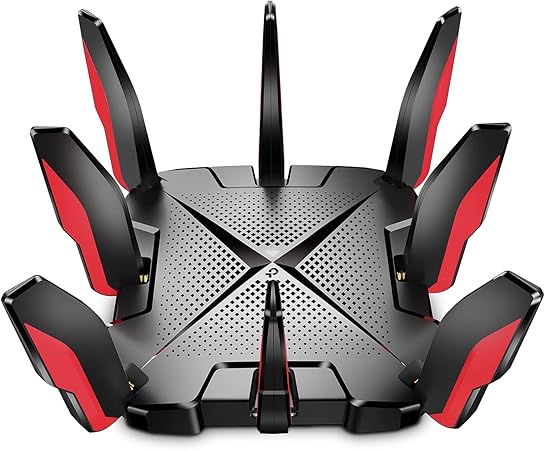
From an engineering and industrial design standpoint, TP-Link and Arris approach consumer networking from fundamentally different philosophies. TP-Link embraces an aggressive, feature-forward aesthetic, particularly within its Archer and high-performance gaming lines. These routers frequently feature low-profile, angular chassis dominated by arrays of prominent, externally mounted, and articulated antennas. While this unapologetically high-tech appearance can clash with living room decor, it is technically purposeful. TP-Link’s housing maximizes passive thermal dissipation through extensive vented surfaces on the top, bottom, and flanks of the unit, while articulated antennas allow users to mechanically optimize beam polarization for multi-story coverage. However, the brand also shows versatility through its Deco mesh series, which pivots 180 degrees into soft, cylindrical, minimalist designs that discreetly integrate internal antennas to satisfy modern interior design sensibilities.
Conversely, Arris relies on an infrastructure-first, telecommunications-derived design language, a byproduct of its long-standing pedigree as an OEM provider for major cable and internet service providers. Whether dealing with standalone Wi-Fi routers or their ubiquitous SURFboard cable modem-router gateways, Arris heavily favors an upright, monolithic form factor. The technical strength of this vertical orientation lies in its natural convective cooling; heat naturally rises out of the top exhaust without requiring active, noisy fans, while simultaneously minimizing the device's physical footprint on a desk or shelf. Arris predominantly utilizes internal antenna arrays engineered with fixed radiation patterns. While this makes their hardware far less visually intrusive and easier to tuck away, it removes the user's ability to physically adjust signal vectors to overcome specific architectural obstacles, representing a direct trade-off between spatial neatness and deployment flexibility.
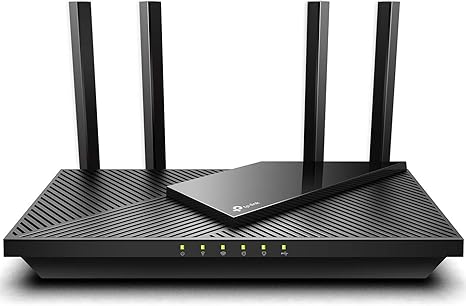
When weighing practical design trade-offs, the choice between the two brands largely hinges on user intent and placement logistics. TP-Link provides far greater operational transparency on the hardware itself; their chassis often feature customizable, per-port LED indicator banks and dedicated physical toggle buttons for Wi-Fi, WPS, and LED night modes. In contrast, Arris minimizes physical interaction, frequently opting for a singular, multi-color status light that relies on distinct blinking patterns to communicate network health—a clean design choice that can complicate immediate troubleshooting. For consumers demanding targeted spatial coverage, thermal headroom for sustained multi-gigabit throughput, and tactile hardware controls, TP-Link’s design engineering offers superior versatility. For users prioritizing small-footprint vertical stability, clean cable dressing, and hardware that blends unobtrusively into an office or utility space, Arris delivers an exceptionally stable, utilitarian build.
Compare current retail pricing, active promotions, and verified stock availability directly from authorized stores: