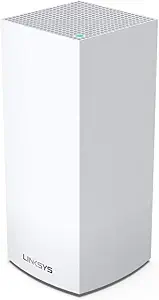
Linksys vs Netgear: Overview
Comparing Linksys and Netgear helps you determine which brand is best suited for your needs in Wi-Fi Routers. Both brands offer strong choices depending on your budget and key feature requirements.
Key Features & Comparison
Evaluate factors such as build quality, warranty, customer satisfaction, and total value before making your final purchase choice between Linksys and Netgear.
Features
Feature sets between Linksys and Netgear diverge significantly in how each company packages advanced management, security, and gaming optimization. Netgear's software ecosystem is heavily feature-laden, offering robust security integration via Netgear Armor (powered by Bitdefender), sophisticated parental controls, and dedicated DumaOS software on its Nighthawk Pro Gaming routers to actively minimize latency and packet jitter. However, a major point of friction for consumers is Netgear's reliance on recurring subscription models to unlock the full potential of its security and parental control suites, turning high-end hardware into an ongoing operational expense.
Linksys takes a more utilitarian, consumer-friendly approach to its feature stack. Its Intelligent Mesh technology dynamically optimizes channel selection and backhaul routing across nodes without requiring manual user intervention, while its Linksys Shield feature provides capable parental filtering. Linksys generally includes the core functionality out of the box with fewer ongoing paywalls, though its advanced networking features—such as deep packet inspection, complex QoS tuning, and extensive third-party integration—are less granular than what Netgear provides. For users who demand exhaustive port aggregation, dual-WAN configurations, and hyper-specific traffic shaping, Netgear holds the clear technical advantage, whereas Linksys is ideal for those who prefer set-and-forget simplicity.
Performance
In real-world performance metrics, Netgear frequently leads benchmark comparisons, particularly at long ranges and under heavy network congestion. By outfitting its flagship Orbi and Nighthawk units with powerful quad-core processors, high-performance power amplifiers, and dedicated 5GHz/6GHz wireless backhaul channels, Netgear consistently achieves higher sustained throughput across large multi-story spaces. Netgear routers excel at beamforming efficiency and handling simultaneous multi-gigabit workloads, maintaining low latency even when dozens of IoT devices, 4K streaming streams, and competitive online gaming sessions contend for bandwidth.
Linksys is no slouch in throughput, but its engineering emphasizes steady, sustained latency and seamless client handoffs rather than breaking raw speed records. In multi-node Velop configurations, Linksys shines with exceptionally smooth roaming protocols, ensuring smartphones, tablets, and laptops transition cleanly between access points without dropped video calls or network hiccups. While Linksys hardware occasionally shows slight throughput drop-offs at extreme maximum distances compared to equivalent Netgear Orbi setups, its thermal management and operational stability mean users rarely experience connection throttling, bufferbloat spikes, or the need for frequent hardware reboots.
Design
The hardware design philosophies of Linksys and Netgear reflect opposite aesthetic and mechanical objectives. Netgear embraces a bifurcated design strategy: its Nighthawk line adopts an unapologetically aggressive, angular, and stealth-fighter-inspired aesthetic with prominent external antennas, which appeals strongly to the gaming demographic. Conversely, its premium Orbi mesh systems lean into modern, sculptural monoliths with internal antenna arrays designed to blend into high-end interior decor. Across both lines, Netgear products prioritize expansive thermal heatsinks and generous physical footprints, ensuring superior cooling for their high-draw network processors.
Linksys adopts a much more understated, minimalist architectural language across its product catalog. The company's Velop mesh towers are clean, compact white or black columns featuring concealed internal antennas, subtle LED status rings, and bottom-recessed port wells that hide cabling clutter effectively. Even their standalone traditional routers, such as the Hydra series, balance external antennas with tidy, symmetrical venting that avoids looking excessively industrial. Linksys's focus on compact, unobtrusive form factors makes its hardware substantially easier to integrate into conventional living spaces without dominating shelves or media consoles.
Compare current retail pricing, active promotions, and verified stock availability directly from authorized stores: