Google vs Arris: Overview
Comparing Google and Arris helps you determine which brand is best suited for your needs in Wi-Fi Routers. Both brands offer strong choices depending on your budget and key feature requirements.
Key Features & Comparison
Evaluate factors such as build quality, warranty, customer satisfaction, and total value before making your final purchase choice between Google and Arris.
Features
Google’s feature architecture is deeply integrated into the Google Home ecosystem, offering advanced automated management, intuitive parental controls, and native Google Assistant integration in select satellite points. Key software advantages include cloud-orchestrated machine learning that continually optimizes channel selection to avoid congestion, simplified device pausing, and family safety scheduling. However, Google intentionally omits several advanced networking capabilities; users will find no native dynamic DNS setups, granular port triggering, complex QoS configuration, or deep firewall customization, which can frustrate technical power users seeking absolute control over their local area network.
Conversely, Arris embraces a traditional, feature-rich firmware approach that appeals directly to network administrators and advanced home users. Arris routers and gateways offer deep administrative access via comprehensive web graphical user interfaces, allowing users to configure detailed DHCP reservations, custom IPv6 settings, port forwarding rules, and specific firewall operational modes. Furthermore, many Arris units feature integrated high-tier DOCSIS 3.1 cable modems, eliminating the need for a separate ISP modem unit. The primary compromise with Arris is the user experience; its management apps and browser interfaces can feel dated, clinical, and significantly less polished than Google's consumer-friendly ecosystem.
Performance
Performance profiles between the two brands reveal distinct operational priorities. Google's Nest Wifi family is engineered specifically for whole-home coverage and low latency across distributed mesh nodes rather than pushing theoretical single-client speed limits. Google utilizes robust algorithmic steering that effortlessly transitions client devices between the 2.4 GHz and 5 GHz bands (and 6 GHz on Pro models) to maintain balanced network equilibrium. While overall throughput is exceptionally stable for 4K streaming, video calls, and typical domestic traffic, Google routers often show modest peak download speeds on a single device compared to dedicated high-performance standalone routers.
Arris hardware is built for sustained throughput and high-concurrency environments, often delivering superior raw transfer rates at close to medium range. Their multi-gigabit gateways equipped with 2.5 Gbps Ethernet ports allow users to fully exploit high-speed internet tiers that exceed conventional gigabit caps. Additionally, Arris models typically feature high-capacity internal antenna arrays that pierce through structural interference and thick walls more aggressively than compact mesh satellites. For households with immense simultaneous bandwidth demands, heavy competitive gaming, or local network file transfers via NAS, Arris routinely outperforms Google in raw gigabit execution and latency stability under extreme saturation.
Design
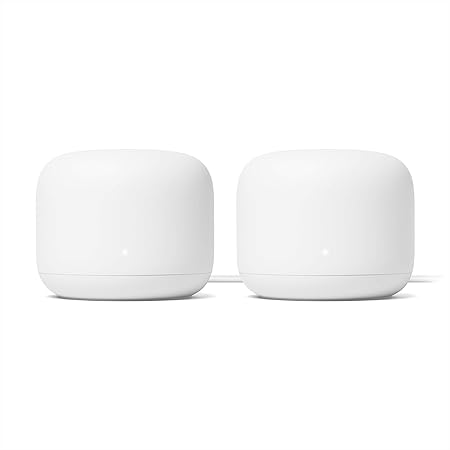
Google revolutionized home networking aesthetics by designing routers meant to be displayed openly rather than hidden inside closets or entertainment centers. Nest Wifi units boast soft, organic contours, matte ceramic-like finishes, and minimalist silhouettes that blend effortlessly into modern home decor. This aesthetic choice is functional as well as visual; by encouraging users to place points out in the open, Google hardware benefits from unobstructed line-of-sight propagation, which directly improves wireless efficiency. The physical footprint is remarkably compact, though this comes at the expense of rear input connectivity, as Google units typically offer only one or two gigabit Ethernet ports.
Arris adheres to an unapologetically utilitarian, industrial design language that reflects its enterprise and service-provider pedigree. Characterized by vertical chassis layouts, prominent passive ventilation grilles, and front-facing diagnostic LED indicators, Arris units are designed to dissipate heat efficiently under heavy compute cycles. While less visually refined than Google's discreet enclosures, Arris hardware excels in utility. The rear panels are thoroughly populated with robust connectivity options, frequently including multiple gigabit LAN ports, dedicated coaxial cable inputs, and multi-gigabit WAN interfaces, prioritizing physical versatility and thermal endurance over living room aesthetics.
Compare current retail pricing, active promotions, and verified stock availability directly from authorized stores: